자기의 나쁜 습관을 고치고 남의 좋은 습관을 배우려고 하는 이유는 습관을 바꾸면 성품이 바뀌고, 성품이 바뀌면 운명이 바뀌기 때문이다. 그럼 어떻게 습관이 바뀐다고 성품이 바뀌는 것일까? 도대체 내 운명을 바꾸는 진정한 성품이란 무엇일까?
최근에는 외모도 경쟁력이란 생각에, 젊은 사람들부터 중년들까지도 여기 저기에서 몸을 만들고 성형수술을 하며, 새로운 화장법에 따른 카멜레온 같은 놀라운 변신들을 보여주고 있다.
비록 나름 힘든 노력이나 비법이 있어 보이지만, 겉으로 보이는 외모는 이렇게 노력에 따라 상당 부분 바꿀 수 있는 것이라 생각한다. 지금은 헤어스타일, 패션, 화장만 바꾸어도 쉽게 이미지를 만들 수도 있는 세상이기 때문이다.
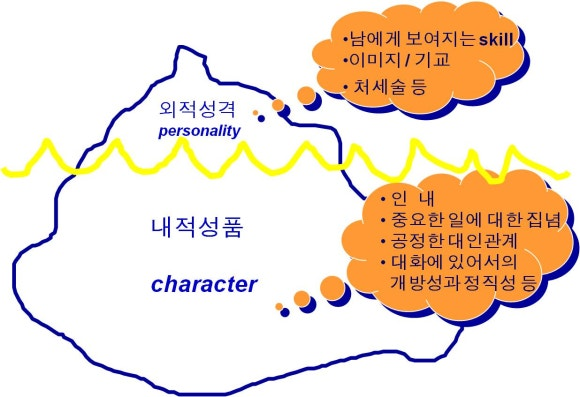
하지만 우리가 보는 외모나 또는 겉으로 드러난 성격, 남에게 보여지는 이미지나 기교, 처세술과 같은 외적인 성품들은 한 사람의 전부인 양 오인되어 보이지만, 실상 극히 작은 빙산의 일각일 뿐이다. 이런 것들은 아무리 바꾼다 해도 자신의 본질이 바뀌는 것이 아니기 때문에 소용이 없다.
스티븐 코비의 <성공하는 사람의 7가지 습관 (7 Habits)>에 의하면 우리가 습관을 통해 인생의 운명이 바뀐다는 것은, 바로 바다 밑에 숨겨진 거대한 보이지 않는 존재, 즉 인내심, 집념, 정직성, 개방성 등과 같은 자신의 내적인 성품이 고쳐져야 한다는 것이다.
반복된 행동이 습관을 정복하여 저절로 바뀌어지는 것은 바로 이 내적성품이기 때문이다.
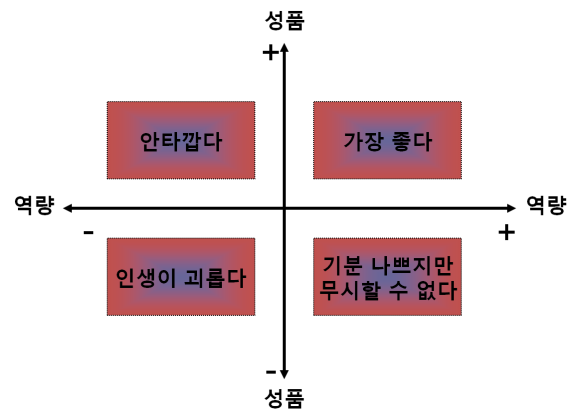
그렇다고 사람이 성품만 좋으면 만사형통일까? 당연히 아니다. 성품이 좋지만 역량이 떨어지는 사람이 있다면 사람들은 말한다. “참 안타깝다. 조금만 더 일 좀 잘하면 금상첨화일텐데…” 그는 뭐라고 잔소리를 해도 허허, 욕을 해도 허허, 전혀 변화가 없고 발전이 없다. 그저 안타까울 뿐이다.
그리고 성품도 좋지 않은 사람이 역량도 떨어진다면, 일도 못하는 것이 싸가지도 없다고 욕 먹기 딱 십상이다. 이 사람은 자신뿐만 아니라 주변 사람들에게도 민폐를 끼치는 조직에서는 없어져야 될 사람일 것이다.
그러면 반대로 성품이 좋지 않은데 역량이 뛰어나면 어떨까? 솔직히 기분 나쁘지만 무시할 수 없는 사람이다. 이런 사람은 한국 드라마에 꼭 나오는 재수없는 사람 중에 하나이다.
이런 사람 주변에는 어쩔 수 없이 처음엔 사람들이 따르지만, 결국 말로는 비참하게 외로이 쓸쓸히 끝나는 경우가 대부분이다. 더러운 연못이 오래가지 못하듯이 성품이 바뀌지 않는 한 주변에 오래도록 머무는 사람은 없을 것이다.
따라서 성품도 좋고 역량도 좋다면 최상의 사람일 것이다. 그리고 이쯤 되면 역량이라는 것도 반복된 노력, 즉 습관에 의해 만들어지는 것을 모두들 알 것이다.
그러니 더 이상 무엇이 필요하겠는가? 앞의 뭔가 부족한 세 가지 경우에 속한다고 생각하는 사람들은 자신이 부족한 점이 무엇인지 스스로 인식하고, 부족한 부분을 바꾸기 위해 지속적이고 반복적인 노력을 해야만 한다.
내가 부족한 점, 내가 잘못된 점을 찾아 채우고 고치고 습관으로 만들어 성품과 역량을 모두 키운다면, 그 습관이 우리들 인생과 운명을 바꾸게 할 것이기 때문이다.
파스칼은 말했다. “습관은 제 2의 천성이며, 제 1의 천성을 파괴한다.”
결국 습관을 바꾸기 위해서 필요한 것은 또 다른 새로운 습관을 만드는 것뿐이다.
고루하고 편협된 태도를 버리자.
내 운명을 결정지을 새로운 습관을 만들자.
Attitude, 태도가 바뀌면 습관이 바뀌고, 습관이 바뀌면 운명이 바뀐다.
The reason we strive to correct our bad habits and learn from others’ good ones is that changing habits changes character, and changing character changes destiny. So, how is it that changing habits changes character, and what is the true essence of the character that transforms our destiny?
In recent times, with the belief that appearance is a form of competitiveness, people—ranging from young adults to middle-aged individuals—have been transforming themselves through various methods. They engage in body sculpting, cosmetic surgery, and mastering new makeup techniques, showcasing astonishing chameleon-like transformations.
Although these transformations seem to require considerable effort and unique techniques, outward appearance can largely be changed with effort. In today’s world, simply changing hairstyles, fashion, or makeup can easily create a new image.
However, external appearances, visible personality traits, public image, social skills, and techniques—what may be perceived as the sum of a person—are, in reality, merely the tip of the iceberg. These external aspects, no matter how much they change, do not alter one’s essence, rendering such changes meaningless.
According to Stephen Covey’s The 7 Habits of Highly Effective People, the reason our destiny changes through habits lies in the vast and hidden foundation beneath the surface—qualities such as patience, perseverance, honesty, and openness. It is these inner qualities of character that are transformed through habits.
The repetitive actions that conquer and transform habits naturally lead to changes in this inner character.
Does good character alone guarantee everything? Of course not.
- Good character but poor capability: A person with good character but insufficient competence often evokes sympathy from others. People may remark, “What a pity. If only they were a bit better at their job, it would be perfect.” No matter how much advice or criticism they receive, they remain unchanged and make no progress, leaving others feeling frustrated.
- Neither good character nor capability: If someone lacks both character and competence, they are likely to be criticized as being not only incompetent but also rude and unpleasant. Such individuals can be disruptive to their organizations and are seen as burdensome.
- Poor character but strong capability: While such individuals may be competent, their bad character makes them unpleasant to deal with. They often resemble the antagonistic characters seen in Korean dramas—people who are hard to ignore despite their unpleasantness. While people might follow them initially due to their skills, they eventually end up isolated, as a filthy pond cannot last long without drying up. Without changing their character, they cannot maintain lasting relationships.
- Good character and strong capability: This is the ideal person. By now, it is clear that even competence is cultivated through repeated effort—in other words, habits.
So, what more is needed? For those who find themselves in one of the less desirable categories, the first step is self-awareness: recognizing their shortcomings and working to address them. Through sustained and repetitive efforts, these weaknesses can be corrected and transformed into habits that improve both character and capability.
When we identify, address, and transform our shortcomings into habits, we can strengthen both our character and competence, and these habits will, in turn, reshape our lives and destinies.
Pascal once said, “Habit is a second nature that destroys the first.” In the end, the only way to change old habits is to create new ones.
Let us cast off rigid and narrow attitudes. Let us form new habits that will shape our destinies.
Attitude changes habits, habits change character, and character changes destiny.
Through new habits, we can transform our attitudes, our characters, and ultimately, our lives.