

나는 책을 읽을 때 메모보다는 밑줄을 그으며 한번 책 전체를 다 읽고 나서, 밑줄 부분을 작게 소리 내어 다시 한번 읽으며, 그 내용이 지금 나에게 어떤 의미로 다가오는지를 깊이 생각하는 습관이 있다. 나도 모르게 오래 전부터 주자의 독서삼도를 조금이나마 따라 하고 있었던 것이다.
이것이 앞서 얘기한 대로 메모를 하지 못한다면 밑줄이라도 그어야 하는 이유이다. 마치 소의 되새김질처럼 책도 다시 한번 꺼내 뇌로 씹어 소화하고, 그 영양분을 사색이라는 핏줄기를 통해 마음 속 깊이 전달해 주는 과정은 메모만큼 강력한 힘을 가지고 있다.
책을 읽은 후의 사색은 다시 한번 과거를 돌이켜 보고 지금 현재와 미래의 상황에 책의 내용들을 대비해 봄으로써, 스스로 깨우침을 갈구하는 수도자의 의식과도 같은 과정이다.
식물이 영양분을 흡수하여 광합성을 해야만 꽃을 만개할 수 있듯이 배움도 그런 것이다. 새로운 지식은 배움이라는 식물에 영양분을 주는 것이며, 학습과 사색은 식물이 햇빛을 만나 광합성을 하듯이 그 지식들을 내 경험에 녹여 지혜로 만들어 가는 과정이다. 그런 과정이 있어 지식은 지혜와 통찰력이라는 꽃을 피우게 해준다.
통찰력은 사색을 통해서 만들어진다. 책으로 지식을 쌓고 현장에서 다져진 경험이라도 사색이 이루어지지 못하면 피상적인 현상으로만 머물게 된다.
사색은 정해진 틀에서 벗어나 자유로운 상상을 통해 생각의 범주를 넓히기도 하지만, 밖에서 들어온 지식과 경험을 속으로 쌓아가는 작업이기 때문이다. 하지만 이에 하나를 더해 그 사색의 결과를 글로 남긴다면 독서는 60% 이상 확실하게 나의 것이 될 것이다.


예전에는 대학입시가 끝나면 명문대 수석 합격자와 인터뷰하는 것이 TV에 방영되었다. 그런데 그들이 얘기하는 공부비법을 들으면 웬만한 시청자들은 울화통이 치밀어 오를 것이다.
매번 수업시간 열심히 듣고 예습 복습을 철저히 한 것뿐이라고 말한다. 사람들은 뭔가 다른 비법이 있을 것이라 매년 기대하지만 결과는 허무하게도 누구나 다 알고 있는 뻔한 거짓말 같은 것이다. 하지만 그 뻔한 거짓말은 사실이다.
독일의 심리학자 에빙하우스(Ebbinghaus Hermann)는 기계적 학습과 기억 측정 방법을 연구하여, 시간의 경과에 따라 기억력이 사라지는 정도를 나타내는 망각곡선이라는 연구결과를 발표하였다.
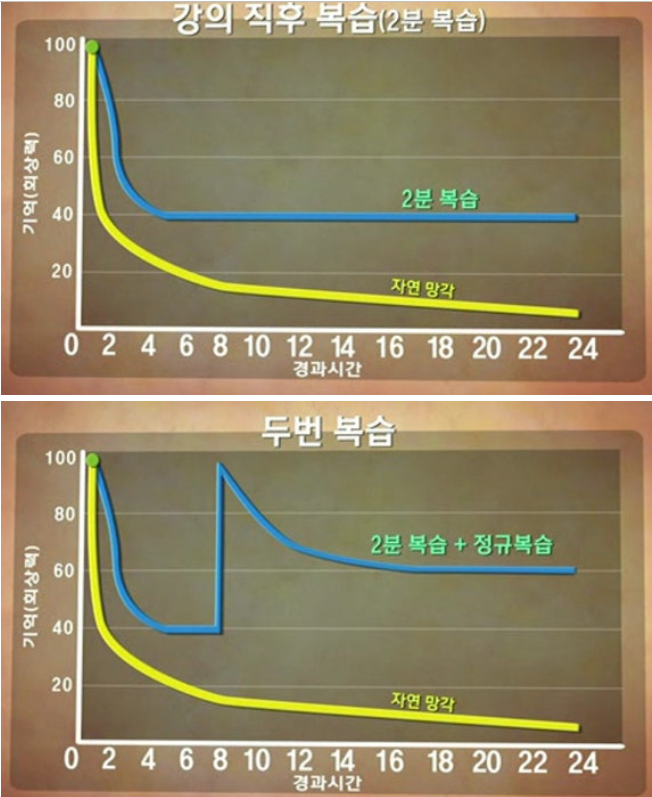
그에 의하면 강의를 받은 후 하루가 지나면 대부분의 사람들은 기억이 거의 사라져 강의 내용의 약 20%정도만 기억에 남는다고 한다. 그러나 만약 강의 직후 2분만 복습을 하여도 강의 내용의 40%를 기억할 수 있으며, 몇 시간이 지난 후 두 번째 복습하였을 경우에는 강의 내용의 60%를 기억할 수 있다고 한다.

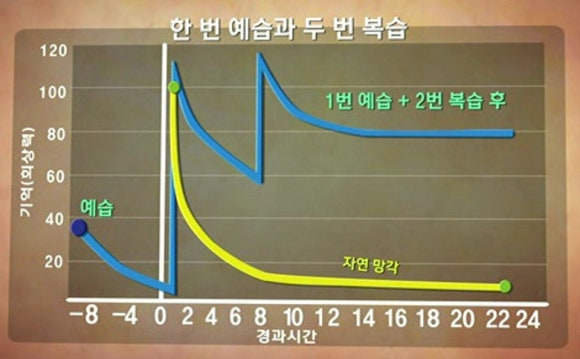
또한 사전에 강의 받을 내용을 예습하고, 앞서 말한 방법대로 강의를 받고 나서 두 번 복습을 한다면, 강의 내용의 80%를 기억할 수 있다는 결과를 얻었다. 수업 시간 전에 미리 예습한 후 강의를 열심히 집중해서 듣고, 그 날 바로 복습하는 습관이 공부를 잘하게 만든다는 당연한 결과임을 그는 입증한 것이다.

이렇듯 책에 밑줄 친 부분을 다시 한번 읽고 독후감을 쓴다는 것은 공부로 치면 두 번 복습하는 것과 같으므로, 에빙하우스의 연구결과처럼 나중에 독후감도 쓴다면 60% 이상은 책의 내용을 기억하게 될 것이다. 그리고 그렇게 남긴 글은 나중에 책의 내용이 다시 필요할 때 100% 책을 나의 것으로 만들어 주는 매우 유익한 길라잡이가 될 것이다.
—————
When I read a book, instead of taking notes, I have a habit of underlining key passages and reading through the entire book first. Then, I go back and read the underlined sections aloud, contemplating their meaning and relevance to my life. Without realizing it, I have been following Zhu Xi’s “Three Ways of Reading” (독서삼도) to some extent for a long time.
This is why, as I mentioned earlier, if you cannot take notes, you should at least underline important sections. Just like a cow ruminates its food, rereading a book and mentally digesting its content allows its nutrients to be absorbed deep into the mind through the veins of contemplation. This process is as powerful as taking notes.
Reflecting on what we have read is like a monk’s pursuit of enlightenment—looking back on the past, comparing it with the present and future, and seeking personal realization. Just as plants need to absorb nutrients and undergo photosynthesis to bloom fully, learning follows a similar process. New knowledge nourishes the mind like nutrients to a plant, and the act of studying and reflecting is akin to photosynthesis, integrating knowledge with personal experience to cultivate wisdom. This process enables knowledge to bloom into wisdom and insight.
Insight is developed through contemplation. Even if one accumulates knowledge from books and experience from real-life practice, without deep reflection, this information remains superficial.
Contemplation not only expands the scope of thinking through free imagination but also serves as a way to internalize knowledge and experience. However, if one takes it a step further and records the results of these reflections in writing, more than 60% of the acquired knowledge will truly become one’s own.
In the past, after the college entrance exam season, television programs would air interviews with top-ranking students from prestigious universities. However, when asked about their study secrets, their answers often frustrated viewers.
They would simply say, “I paid close attention in class and thoroughly reviewed the material before and after each lesson.” Every year, people expected to hear some extraordinary study secret, only to be met with what seemed like an obvious, almost disappointing answer. However, this seemingly dull response is actually the truth.
The German psychologist Hermann Ebbinghaus studied rote learning and memory retention, publishing his findings on the forgetting curve, which illustrates how memory fades over time.
According to his research, most people forget nearly everything they learned in a lecture after just one day, retaining only about 20% of the information. However, reviewing the material for just two minutes immediately after the lecture helps retain 40% of the content. If a second review is conducted a few hours later, memory retention increases to 60%.
Furthermore, if students preview the material before class, actively listen to the lecture, and then review it twice afterward using the above method, they can retain up to 80% of the content. Ebbinghaus’ research scientifically validates that previewing lessons, actively focusing in class, and reviewing immediately afterward are the most effective ways to excel academically.
Similarly, rereading underlined sections and writing a book report is equivalent to reviewing a lesson twice in terms of studying. According to Ebbinghaus’ findings, writing a book report afterward can help retain more than 60% of the book’s content. Moreover, the written reflections serve as a valuable guide, ensuring that when the book’s content is needed again in the future, it can be fully internalized and made one’s own.