

이 시대에는 과연 누가 이기는 게임을 하고 있는가? 과거에는 큰 기업이 작은 기업을 이겼고, 빠른 기업이 느린 기업을 이겼지만, 현재에는 변화하는 기업이 변화하지 못하는 기업을 이기고 있다. 그러면 어떻게 변화해야 하겠는가? 고객 관점의 전환을 통하여 답을 찾을 수 있을 것이다.
듀퐁(Dupont)사의 CMO였던 다이앤 굴리아스(Diane H.Gulyas)는 “불행하게도 제품을 파는 데 있어서 위대한 기술의 영향력은 약해졌다. 이제 영업과 마케팅이 중요하다.”라고 말한 바 있다.
하지만 그녀의 말도 이제는 과거의 이야기이다. 이제는 단순히 마케팅이나 영업 부서에서만 고객 마인드를 고민하는 것이 아니라, 전사적으로 고객을 향한 관점의 전환이 이루어져야 고객들의 감춰진 마음을 진정으로 들여다 볼 수가 있다.
영국의 이코노미스트(Economist)지는 “Brand Manager의 종말”이란 컬럼에서 “고객 중심 경영 시대에 마케팅은 개별기능이 아니라 전사에 체화되어야 하는 가치이다.”라고 역설하며, 전사적인 마케팅, 전사적인 고객 마인드를 강조하였다. 따라서 기업은 아직도 고객에 대해 잘 모르고 있다는 사실을 깨우치고, 전사적으로 고객을 연구하기 위해 더욱 시간과 노력을 투자해야 한다. 그것이 바로 고객 마인드로 관점을 전환하는 시발점이다.
그러나 아무리 많은 조사를 하여도 고객에 대한 통찰은 매우 어려운 일이다. 그 이유는 (1) 고객도 자신의 니즈를 잘 알지 못하는 경우가 많으며(특히 신기술 제품), (2) 고객은 니즈를 알더라도 잘 표현하지 못하는 경우가 많고, (3) 고객은 자신의 니즈를 표현함에 있어서 솔직하지 않게 응답하는 경향이 있다. 이는 앞서 애쉬의 실험에서 살펴본 바와 같이 사회적 당위성의 법칙에 동조하는 응답을 하기 때문이다.
하버드 경영대 잘트만 교수는 “인간의 사고는 95%가 무의식 중에 일어나며, 나머지 5% 조차도 언어로써 표현할 수 없는 경향이 많다.”고 말했다. 따라서 기업이 고객의 95%를 차지하는 무의식을 찾아내기 위해 끊임없는 노력을 한다 하여도 전사적인 고객마인드 전환이 이루어지지 않으면 피상적인 연구결과에 지나지 않을 것이다.
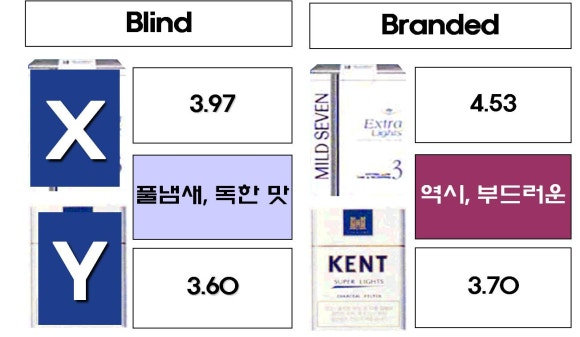
한 담배회사에서 소비자들에게 브랜드를 가린 상태에서 담배를 피우게 하고 7점 만점으로 평가를 하게 하였다. 조사 결과 그리 좋지 않은 3.97을 받으며 독한 맛이라는 평가를 받은 브랜드가 있었는데, 다름 아닌 마일드세븐이었다. 그러나 마일드세븐은 브랜드 네임에서 풍기는 의미처럼 부드러운 담배로 소비자에게 인식되어 있기 때문에, 브랜드를 보여주며 평가를 받았을 때는 역시 부드럽다는 평가와 함께 4.53의 높은 평점을 받았었다.
참고로 마일드세븐은 세계보건기구(WHO)로부터 고객에게 담배를 부드럽다고 오인하게 하여 흡연을 조장한다는 이유로, 브랜드 네임을 ‘뫼비우스’로 바꾸었다. 이는 브랜드가 가지는 강력한 영향력 때문이다. 바로 브랜드는 제품이라는 실제(What It Is)가 아닌, 고객의 인식(What They Perceive)의 문제라는 것을 입증하는 사례이다.

———————–
In today’s era, who is truly winning the game? In the past, large companies defeated smaller ones, and fast companies outpaced slower ones. But now, it is the companies that embrace change that overcome those that cannot. Then how must one change? The answer lies in shifting to the customer’s perspective.
Diane H. Gulyas, former CMO of DuPont, once said, “Unfortunately, the power of great technology in selling products has diminished. Now, sales and marketing are what matter.” However, even this statement is now a thing of the past. Today, it’s not just the marketing or sales departments that need to consider the customer mindset. A full-scale, organization-wide shift in perspective toward the customer is essential to truly understand their hidden intentions.
In its column titled “The End of the Brand Manager,” The Economist emphasized, “In an era of customer-centric management, marketing is no longer a functional silo but a value that must be embedded across the organization,” advocating for company-wide marketing and customer-centric thinking. Therefore, companies must first recognize how little they truly understand about their customers and invest more time and effort into studying them across the organization. That is the starting point for shifting to a customer mindset.
However, gaining insight into the customer is extremely difficult, no matter how extensive the research. This is because: (1) customers often don’t fully understand their own needs, especially when it comes to new technology products; (2) even if they do understand their needs, they often cannot express them well; and (3) customers tend not to respond honestly when articulating their needs. As seen in Asch’s conformity experiment, people tend to give socially desirable responses.
Harvard Business School professor Gerald Zaltman has stated, “95% of human thought occurs in the unconscious, and much of the remaining 5% is difficult to articulate in words.” Therefore, even if a company makes ongoing efforts to uncover that 95% of unconscious thought, unless there is a company-wide transformation to a customer mindset, the results will remain superficial.
One example illustrates this clearly. A tobacco company had consumers smoke cigarettes with the branding concealed and rate them on a 7-point scale. A particular brand received a low score of 3.97 and was criticized for its harsh taste—this brand was Mild Seven. However, when the brand name was revealed and the same test was conducted, it received a significantly higher score of 4.53, with evaluations describing it as mild. This was due to the brand name, “Mild Seven,” which evoked a perception of smoothness among consumers.
As a result, the World Health Organization (WHO) pressured the company to change the brand name, claiming it misled consumers into believing the product was less harmful and thus encouraged smoking. The name was eventually changed to “Mevius.” This case proves the powerful influence of branding. A brand is not about the product as it is (What It Is), but about the perception it creates in the customer’s mind (What They Perceive).