

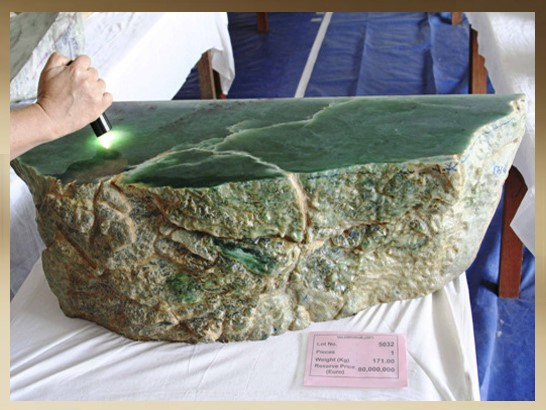
시경에는 절차탁마(切磋琢磨)라는 말이 나온다. 끊임없이 노력하고 경주해야 한다는 뜻의 이 말은 과거에 길고 힘든 옥을 다듬는 과정에서 유래한 말이다.
옥의 원석을 구했을 때는 여러 돌과 함께 붙어있는 옥을 먼저 분리해야 하는데, 이 과정이 바로 자른다는 의미의 절(切)이다. 다음에 옥을 내가 원하는 크기로 썰어내야 하니 바로 차(磋)이며, 다음으로는 디자인대로 모양을 만들기 위해 도구로 쪼아내는 탁(琢)의 과정을 걸쳐, 마지막으로 부드럽고 윤기 나게 갈고 닦는 마(磨)의 과정이 있어야 비로소 우리가 보는 아름다운 옥이 탄생하는 것이다.
어느 날 뚝딱 좋은 옥이 탄생하는 것이 아니라 바로 절차탁마라는 과정과 시간이 아름다운 옥을 완성하듯이 인간의 삶도 마찬가지이다. 기나 긴 과정과 기간을 끈질기게 참고 극복해야 진정한 빛을 볼 수가 있는 것이다. 한 순간의 유혹에 성급하게 달려들거나, 한 번의 달콤한 성공에 취해 쉽게 안주한다는 것은 앞으로도 더 많은 삶의 과정을 쉽게 포기하는 것과 같다.
만약 내가 언제나 최선을 다하고 있다고 하더라도, 경쟁자 또한 그만큼 최선을 다하고 있음을 알아야 한다. 따라서 내가 최선이라고 만족하는 그 순간 “그래 이만하면 됐다”가 아니라, “그래 이만큼 했지만 조금만 더하자”가 되어야 할 것이다. 이처럼 한번 성공을 했다고 하더라도 그것에 안주하지 않고 또 다시 할 수 있다는 것을 아는 것이 중요하다.
사실 이 시대를 이끌고 있는 위대한 사람들은 어려서부터 똑똑하거나 천재인 사람이 아니라, 언제 그만둘지 모르고 꿈을 향해 멈추지 않았던 평범한 사람들이었다는 것을 알아야 한다.
“닳아 없어지는 것이 녹슬어 없어지는 것보다 낫다(It is better to wear out to rust out.).”라는 격언이 있다. 무쇠도 갈면 바늘이 된다는 속담처럼 끊임없이 움직여 한 몸 닳아 없어지는 한이 있더라도 계속 노력을 경주해야지, 약한 여자이기 때문에, 나이든 노약자이기 때문에, 한 번 성공해서 이젠 여한이 없기 때문에, 이제 그만 멈추어 쉬려고 하다가는 아무리 무쇠라도 녹슬어 무용지물이 된다는 경각의 말이다.
소크라테스의 완숙한 철학은 70세 이후에 이루어 졌으며, 플라톤은 50세까지 학생이었으며, 미켈란젤로가 시스티나 성당의 벽화를 완성한 것은 90세 때였고, 베르디는 오페라 “오셀로”를 80세 때, “아베마리아”를 85세 때 작곡했다고 한다. 또한 괴테는 대작 “파우스트”를 60세에 시작하여 82세에 마쳤으며, 모세는 80세에 하느님의 부름을 받아 이스라엘 민족 해방의 길에 나섰다.
인터넷에 돌아 다니는 이 출처 모를 명언은 나이는 숫자에 불과하며 오직 자신이 하고자 하는 일에 포기하지 않고 끈질기게 최선을 다한 사람이 바로 위대한 사람이 됨을 설명해 주고 있다.
이렇듯 우리 평범한 사람들도 유명해지던 아니던 분명 위대한 사람이 될 수가 있다. 그것은 길고도 긴 인생을 어떻게 살아가야 할 것인가의 문제이다. 내가 죽음에 이를 때까지 최선을 다하는 삶만이 가치있고 위대한 업적을 남기게 할 것이다.

——————-
he phrase “切磋琢磨” appears in the Book of Songs (詩經) and refers to the spirit of tireless effort and ongoing improvement. It originates from the long and arduous process of polishing raw jade.
When jade is first obtained, it is bound together with various types of stone. The first step is to separate the jade—this is “切,” meaning to cut. Next, the jade must be sliced to the desired size—this is “磋,” meaning to saw or trim. Then, to shape it into a design, the jade must be chiseled—this is “琢,” meaning to carve. Finally, to bring out its luster, the jade is ground and polished—this is “磨,” meaning to refine. Only after undergoing these steps does the beautiful jade we admire truly emerge.
Just as jade is not shaped into something precious in a single moment, but rather through a process of “切磋琢磨” over time, so too is human life. It takes patience and the endurance to overcome a long, painstaking journey to finally shine. To recklessly pursue fleeting temptations or become complacent after a single sweet success is to risk abandoning many more opportunities in life.
Even if you are always doing your best, you must recognize that your competitors are likely doing the same. So, at the moment you think, “This should be enough,” what you should actually be thinking is, “This is good, but I can do a bit more.” True success lies in refusing to rest on one’s laurels and believing that you can always do it again.
In truth, the great figures who have shaped this era were not necessarily brilliant or gifted from childhood—they were ordinary people who never gave up on their dreams, even when they had every reason to quit.
There is a saying:
“It is better to wear out than to rust out.”
Like the Korean proverb that even iron can be ground into a needle, we must keep striving, even if we wear ourselves out in the process. To stop just because one is a woman, elderly, or because one has succeeded once and feels satisfied—is to risk rusting away into irrelevance, no matter how strong the iron once was.
Socrates reached the peak of his philosophical maturity after age 70. Plato remained a student until he was 50. Michelangelo completed the Sistine Chapel ceiling at the age of 90. Verdi composed Otello at 80 and Ave Maria at 85. Goethe began writing his masterpiece Faust at 60 and completed it at 82. Moses received God’s calling at the age of 80 and led the Israelites to freedom.
These widely-circulated quotes, though their sources may be uncertain, all affirm one truth: age is just a number. Those who never give up on their purpose and continue to give their all become truly great.
In this way, even ordinary people—whether or not they become famous—can undoubtedly become great. The key lies in how one chooses to live a long life. A life devoted to giving one’s utmost until the very end is the only kind that leaves behind a legacy of true value and greatness.