마케팅 하면 일반적으로 광고나 홍보, 판촉, 바겐세일 등을 떠올린다. 마케팅을 단순히 영업을 위한 판촉지원 정도의 부수적인 일로만 생각하고, 심지어 어떤 사람들은 마케팅과 영업을 구분하지 못하고 모두 같은 것으로 생각하기도 한다. 그래서 중소기업에는 여전히 마케팅부와 영업부가 따로 분리되어 있지 않고 합쳐져 있는 곳도 많다.
그러나 이는 잘못된 오해이다. 그 이유는 마케팅에 대한 제대로 된 교육을 받았거나 책을 읽어보지 않은 경우가 대부분이기 때문이다. 마케팅은 어렵고 힘들다는 어떤 선입관들이 작용하여, 대부분 마케팅이 공부하기 쉽고 재미있다는 사실을 가로막고 있는 것 같다. 그래서 지금부터 아주 기초적이고 쉽게 마케팅을 이야기해 보고자 한다.
마케팅이란 용어가 나온 지 수십 년의 세월동안 대학 교과서에서부터 수많은 각종 마케팅 서적과 유명 마케팅 전문가들은 마케팅에 대한 정의를 각양각색으로 다양하게 내리고 있다.
실제로 마켓4.0 시대, 디지털 마케팅이 대세를 이루어가고 있는 현재는 과거와 많이 달라졌다. 그러나 나는 우선 정공법으로 마케팅계의 구루(Guru)인 필립 코틀러(Philip Kotler)의 마케팅 원론(Principles of Marketing)을 바탕으로, 마케팅의 가장 기초적인 정의를 풀어서 살펴보려고 한다.
“Marketing is (1) human activity directed at satisfying (2) needs & wants through (3) exchange process.”
해석하면, 마케팅이란 교환의 과정을 통해 니즈(Needs)와 원츠(Wants)를 만족시켜주는 인간의 활동이라는 말인데, 의미가 마음속에 그리 쉽게 다가오지 않는 것 같다. 그래서 하나하나 풀어가며, 먼저 마케팅이란 영어 단어부터 단순하게 살펴보겠다.
“Marketing = Market + ing” 이다. 영어 문법상 ~ing를 통해 동사가 동명사로 바뀔 수도 있지만, 나는 마케팅이 비록 명사임에도 불구하고 Market(시장)이 역동적으로 살아 움직이는 현재진행형이라 생각한다. 사실 이 내용은 영어공부 시간이 아니라 마케팅 공부 시간이니, 영문법과 다르게 해석하고 이해해도 좋을 것이다. 따라서 현재진행형으로 끊임없이 역동적으로 변하고 있는 시장에서의 모든 활동들, 그 자체가 바로 마케팅인 것이다.
(1) Human Activity (인간의 활동)
그렇다면, 우리가 흔히 말하는 시장, Market은 어디에 있는 것일까? 흔히들 제품을 사는 마트, 백화점, 편의점, 인터넷 쇼핑몰, 홈쇼핑 등 온오프라인으로 수많은 곳들이 존재하는데, 이런 곳들을 과연 시장이라 할 수 있을까? 그리고 과연 이런 시장들은 마케팅에서 말하는 역동적으로 움직이고 있는 곳일까?
그렇지가 않다. 이런 곳들은 진정한 시장이라 할 수 없고, 유통채널(Distribution Channel) 또는 마켓이 이루어지는 특정한 장소(Market Place)라 할 수 있다. 마케팅에는 Product, Price, Promotion, Place, 4가지 전략적 요소를 결합하여 마케팅전략을 수행해야 한다고 해서, 4P Mix 전략이라는 것이 있다. 그중 Place에 해당되는 것이 유통채널, Market Place이다. 즉 마케팅이 말하는 진정한 의미에서 Market이라고 할 수는 없다.
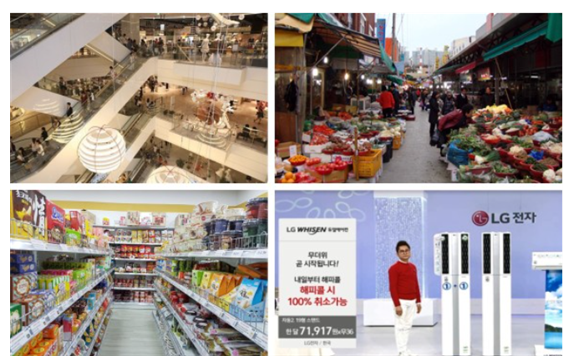
이런 장소들은 소비자들이 원하는 물건을 쉽게 살 수 있도록 편의를 제공하는 역할을 하는 마케팅의 한 부분일 뿐이다. 따라서 우리가 말하는 시장은 그런 특정된 장소가 아니라, 그 장소에 가는 사람, 소비자 그 자체라 할 수 있다.
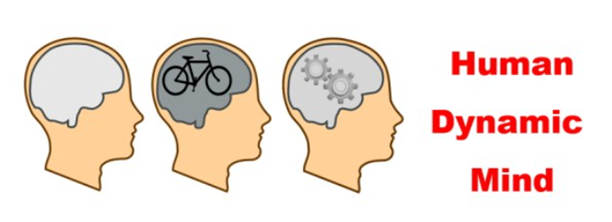
마케팅에서 시장이란 사람의 마인드 속에 있다. 쉴 새 없이 변하는 소비자의 마음 속 시장에서, 브랜드와 제품을 자리 잡게 하기 위해 마케팅을 해야 한다. 그래서 마케팅은 제품의 싸움이 아니라 인식의 싸움인 것이다.
그리고 모든 행위에는 언제나 원인과 결과가 있듯이 기업이 행하는 모든 마케팅 활동의 결과는 항상 기업의 이윤과 직결되어야 한다. 최근에 거론되고 있는 기업의 사회적 책임(CSR), 그린(Green) 마케팅 등의 활동도 근본적으로는 기업이 이윤이 나지 않으면 할 수 없는 일이다.
만약 결과론적으로 기업이 이윤을 내지 못하고 손실만 보다가 자본금 다 잃고 빚만 지고 도산을 한다면, 아무리 멋지고 훌륭한 마케팅을 실시했다고 해도 소용없는 일이 된다. 수많은 과정이야 좋든 나쁘든 간에, 결국 기업이란 이익을 내야 존재할 수가 있는 것이다.
그렇다고 나쁜 짓해서 돈 벌라는 말은 아니다. 돈이 목적이 되라는 말도 아니다. 근본적으로 매출을 해서 이익이 나야 기업이 지속적으로 돌아갈 수 있다는 것을 말하는 것이고, 그래서 마케팅이 필요한 것이다.
Marketing often brings to mind advertising, public relations, sales promotions, or bargain sales. People frequently view marketing as a mere auxiliary task supporting sales, and some even fail to distinguish between marketing and sales, treating them as identical. Consequently, many small and medium-sized enterprises still combine marketing and sales into a single department rather than keeping them separate.
However, this is a misconception. It stems mostly from a lack of formal education or reading on the subject. Preconceptions that marketing is difficult and complex seem to prevent people from discovering how accessible and enjoyable studying marketing can actually be. Therefore, I would like to talk about marketing in a very basic and easy-to-understand way.
Over the decades since the term “marketing” emerged, countless textbooks, literature, and renowned experts have offered a wide variety of definitions.
In today’s Era of Marketing 4.0, where digital marketing has become the mainstream, the landscape has changed significantly compared to the past. Nevertheless, I would like to take a straightforward approach based on Principles of Marketing by Philip Kotler, a guru in the field of marketing, to break down and examine the most fundamental definition of marketing:
“Marketing is (1) human activity directed at satisfying (2) needs & wants through (3) exchange process.”
Translating this, marketing refers to human activity directed at satisfying needs and wants through an exchange process, but the meaning may not immediately resonate in one’s mind. So, breaking it down step by step, let us first simply look at the English word “marketing” itself.
“Marketing = Market + ing.” In English grammar, the suffix “-ing” can transform a verb into a gerund, but even though marketing is a noun, I view it as the Market dynamically alive and moving in the present continuous tense. Since this is a marketing lesson rather than an English language class, interpreting and understanding it differently from formal English grammar should be perfectly fine. Thus, all the ongoing activities taking place dynamically within a constantly changing market—that itself is marketing.
(1) Human Activity
Where, then, is the market we so often speak of actually located? Numerous online and offline places exist—such as supermarkets, department stores, convenience stores, online shopping malls, and home shopping channels where people buy products—but can these truly be called the market? And are these places dynamically moving in the sense referred to in marketing?
That is not the case. Such places cannot be called the true market; rather, they are distribution channels or specific locations where a market takes place (Market Places). In marketing, there is a strategy known as the 4P Mix, which states that a marketing strategy must be executed by combining four strategic elements: Product, Price, Promotion, and Place. Among these, Place corresponds to distribution channels or the Market Place. In other words, it is not a Market in the true sense defined by marketing.
These locations are merely one part of marketing that serves to provide convenience so consumers can easily purchase the items they want. Therefore, the market we speak of is not a specific place like that, but rather the person who goes to that place—the consumer themselves.
In marketing, the market exists within the mind of the person. Within the consumer’s mind, which is a market in constant flux, marketing must be conducted to position brands and products. Hence, marketing is not a battle of products, but a battle of perceptions.
Furthermore, just as every action always has a cause and effect, the results of all marketing activities conducted by a company must always be directly tied to corporate profit. Recently discussed activities such as Corporate Social Responsibility (CSR) and green marketing are fundamentally things that a company cannot undertake unless it generates a profit.
If, in the end, a company fails to generate profits, suffers only losses, loses all its capital, goes into debt, and ultimately goes bankrupt, no matter how wonderful and splendid the marketing executed was, it becomes useless. Regardless of whether the numerous processes along the way were good or bad, a company can ultimately exist only if it turns a profit.
This is not to say that one should earn money through bad deeds, nor does it mean that money should be the sole objective. Fundamentally, it means that a company can continue to operate only when sales generate profits, and that is precisely why marketing is necessary.