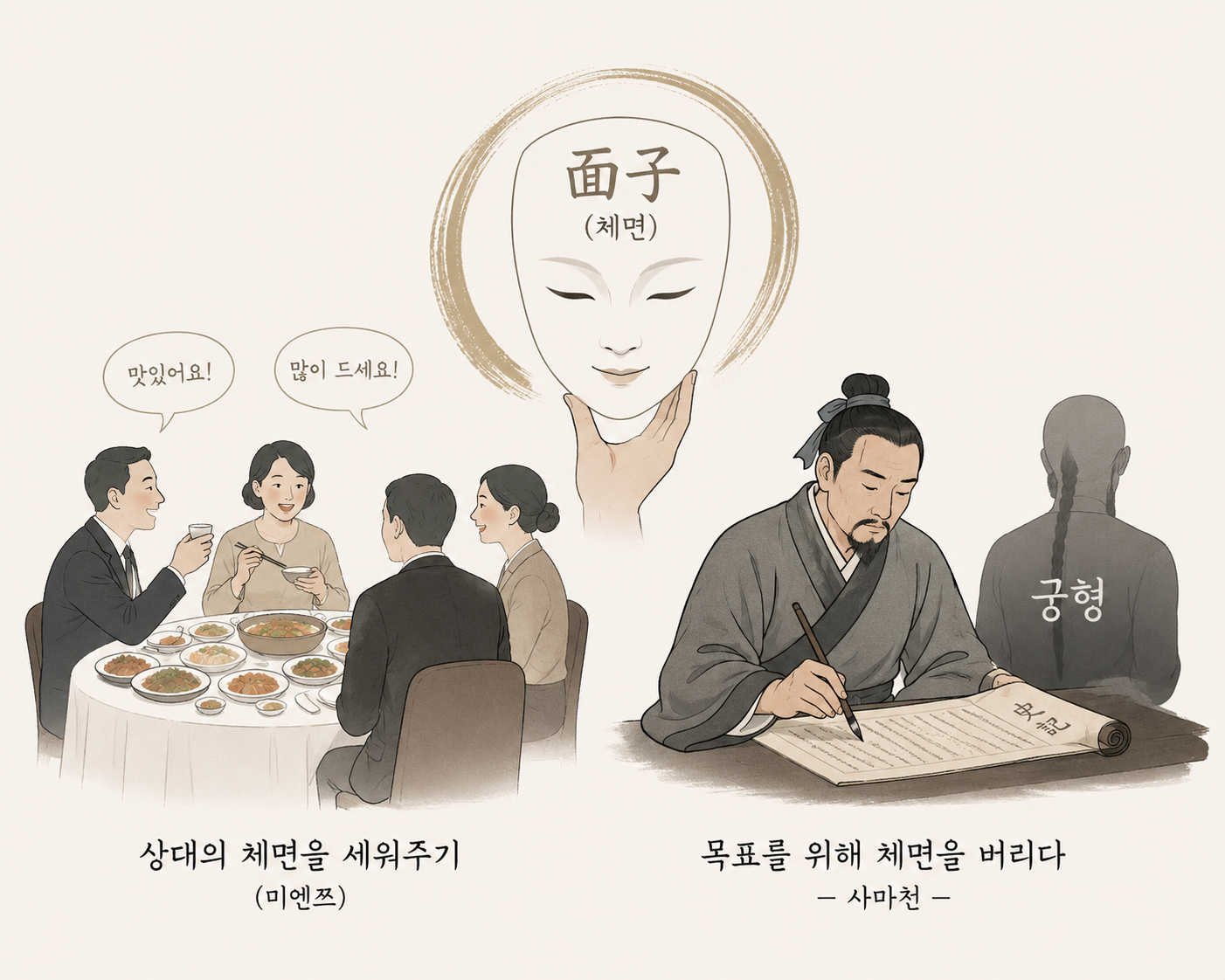
우리나라도 체면을 중시하는 경향이 있지만, 중국인들은 특히 더 미엔쯔를 중요하게 여기는데, 이는 식사를 하는 경우 특히 잘 나타난다.
손님을 초대한 사람은 손님과 자신의 미엔쯔를 위해서 다 먹을 수도 없을 만큼 한상 가득 음식을 차려 놓으며, 손님은 음식이 입에 맞지 않아도 초대한 사람의 미엔쯔를 위해 계속 맛있다고 하면서 먹어야 한다. 또한 반대로 음식이 맛있어서 다 먹는 것도 상대방의 미엔쯔를 깎는 일이니, 적당하게 먹고 음식을 남겨야 한다.
‘사기(史記)’를 지은 사마천의 경우는 인생의 목표를 위해 미엔쯔를 버린 경우이다. 한무제의 명령으로 흉노를 정벌하러 떠났던 이릉이란 장수가 패하여 포로가 된 사건이 일어나자, 이릉의 처리를 위해 무제가 중신 회의를 열었다.
그때 다른 신하들은 모두 이릉을 능지처참할 것을 주장하였으나, 사마천만은 이릉의 충절과 용감함을 두둔하다가 무제의 노여움을 사 사형을 받게 되었다. 당시엔 사형을 면하는 방법이 두 가지가 있었는데, 많은 벌금을 내거나 궁형(거세를 하는 벌)을 받는 것이었다. 하지만 돈이 없었던 사마천은 사형을 면하기 위해 궁형을 선택할 수밖에 없었다. 주변 사람들은 그가 당연히 죽음을 선택해야 한다고 했다.
그러나 그는 아버지로부터 이어받은 사기를 편찬한다는 목표를 위해 미엔쯔를 버리고 치욕적인 궁형을 선택하여 사람들로부터 비웃음을 샀다. 그래서 지금도 목숨보다 중요한 미엔쯔를 버린 사마천이 얼마나 큰 고통을 치른 것인 줄 잘 아는 중국인들이기에, 그가 더 위대해 보이는 것은 아닐까?
그런 만큼 미엔쯔를 상한 쉬 부총의 상실감은 죽음보다 더 큰 마음의 상처를 주었을 것이다. 그녀 입장으로 보면 다시 부총으로서 만회를 하기 위한 노력보다, 치욕적인 우리 회사와의 거래를 끊고 다른 곳에서 다시 시작하는 것이 더 나은 선택이었을 것이다. 이는 중국인에게 미엔쯔가 얼마나 중요한지를 다시금 일깨워 주는 대목이 아닐 수 없었다.
동북 지역의 영업은 이렇게 일장춘몽처럼 일 년 만에 무너져 버렸다. 영업 조직을 구축하기 위해 들어갔던 투자비만 해도 수억 원이었는데, 우리는 막대한 손실과 반품 재고를 떠안은 채 큰 위기를 맞이하게 되었다.
어느 한쪽에 치우친 영업은 그 바퀴만 비대해져 비뚤게 나가는 자동차와 같다. 우리는 이런 차를 타고 장거리 여행을 떠날 수가 없다. ‘모로 가도 서울만 가면 된다’라는 속담이 있다. 과정이야 어떻든 결과가 중요하다는 이 말은 지금 세상에서는 잘못된 말이다. 무조건 서울만 가면 되는 게 아니라, 이제는 어떻게 제대로 된 길로 안전하고 빠르게 가느냐 하는 것이 더욱 중요하다.
다른 곳은 어떻게 되든 내가 하기 편한 곳에서만 매출을 잘해서 무조건 전체 매출 목표 100퍼센트만 달성하면 된다는 식으로 영업을 한다면, 소홀했던 한 곳은 시장이 망가지고 만다. 세부적인 목표를 세워 달성하는 과정은 없고, 오직 주먹구구식의 한 뭉텅이 영업 방식으로 치우쳤기 때문이다.
장 상무가 돈과 판촉 지원으로 퍼주는 영업 방식은 회사의 이익이나 대리상의 안정화보다는 오직 매출 결과만 잘 나오면 되는 것이 아니냐는 식이었다.
이는 누구나 하기 쉬운 영업 방식으로써 처음엔 좋은 성과가 나오겠지만, 마약 같은 회사의 지원에 취한 대리상들의 과도한 욕심 때문에 유통 재고는 늘어나고 실판매는 이루어지지 않게 되어, 동북 사업부 외에도 점차 부실 대리상들을 양산하는 결과를 초래했다.
사상누각(沙上樓閣)이라고나 할까?
오래지 않아 회사 매출은 추락하기 시작했다. 영업의 기초 과정을 무시하고 매출 목표 달성에만 중점을 둔 장 상무의 잘못된 계획은 대리상들의 잘못된 행동을 초래하였고, 결론적으로는 대리상들을 몰락의 길에 들어서게 하였으며, 이것이 다시 부메랑이 되어 장 상무도 추락의 길을 가게 되었다. 그리고 회사에겐 안 하는 것보다도 못한 더 큰 손해를 끼치고 말았으니, 회사도 다시 한 번 큰 위기에 빠지게 되고 말았다. (계속)
The Chinese Concept of Mianzi (Face)
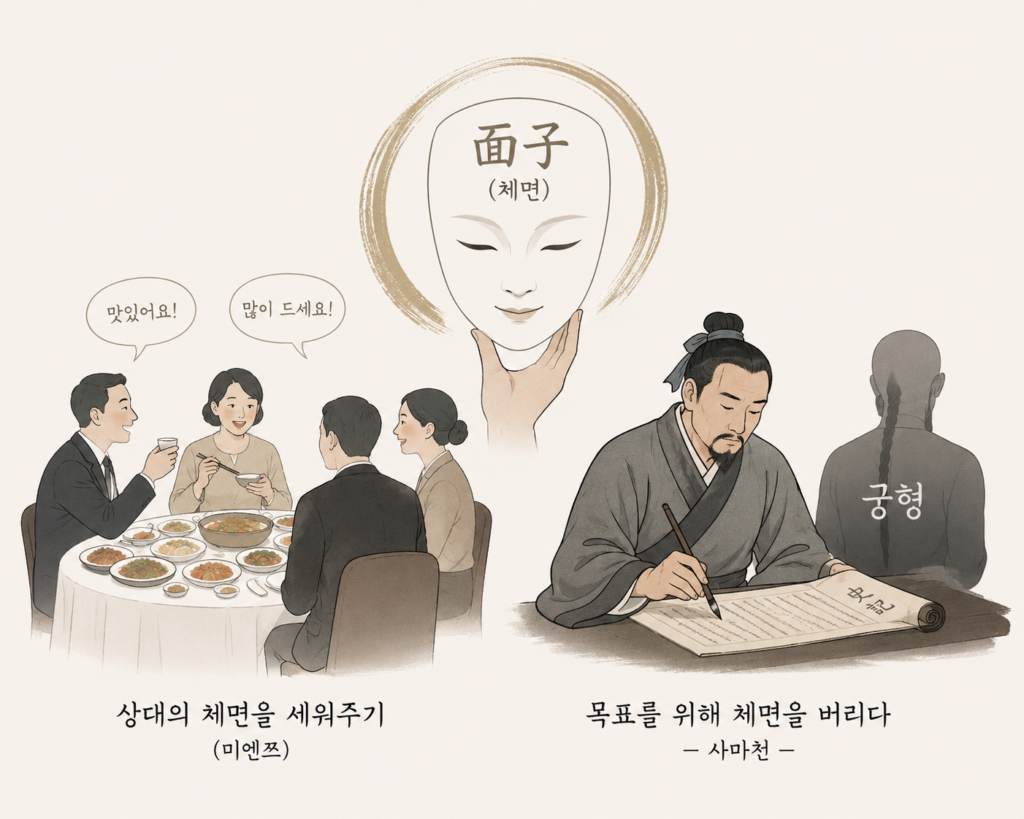
Although Koreans also tend to value personal dignity and social standing, the Chinese place even greater importance on mianzi (面子), or “face.” This is especially evident during meals.
When hosting guests, a Chinese host will prepare far more food than anyone could possibly eat in order to preserve both the guest’s mianzi and their own. Guests, in turn, are expected to keep complimenting the food and continue eating, even if it does not suit their taste, out of respect for the host’s mianzi. Ironically, finishing every dish is also considered inappropriate, because it may suggest that the host did not provide enough food. For that reason, guests are expected to leave some food on the table.
The famous historian Sima Qian, the author of Records of the Grand Historian (Shiji), is perhaps the best-known example of someone who sacrificed his mianzi for a greater purpose.
During the reign of Emperor Wu of the Han Dynasty, General Li Ling was defeated and captured while leading a campaign against the Xiongnu. Emperor Wu convened his ministers to determine Li Ling’s punishment.
While nearly every official argued that Li Ling should be executed in the most brutal manner, Sima Qian alone defended the general’s loyalty and courage. His outspoken defense enraged the emperor, who sentenced him to death.
At the time, there were only two ways to avoid execution: paying an enormous fine or accepting castration as punishment. Having no money, Sima Qian had no choice but to choose castration.
People around him insisted that he should rather die than endure such unbearable humiliation.
Yet Sima Qian abandoned his mianzi and accepted the shame of castration so that he could fulfill the mission he had inherited from his father—to complete the Shiji. As a result, he became the object of ridicule throughout society.
Perhaps this is precisely why the Chinese, who fully understand that Sima Qian sacrificed something they often regard as more precious than life itself, continue to admire him as an even greater historical figure.
Considering this cultural background, it is easy to imagine how devastating the loss of mianzi must have been for Deputy General Manager Xu. To her, the emotional wound was likely even more painful than death itself.
From her perspective, rather than trying to restore her reputation while remaining in her position, it must have seemed far better to sever ties with our company—the source of her humiliation—and make a fresh start somewhere else.
The experience reminded me once again of just how profoundly important mianzi is in Chinese culture.
Thus, our entire Northeast China operation, which had taken a year to build, collapsed like a fleeting dream.
We had invested hundreds of millions of Korean won in establishing the sales organization, yet we were left with enormous financial losses and a mountain of returned inventory, plunging the company into another major crisis.
A sales organization that grows disproportionately in only one area is like a car with one oversized wheel. No one could safely embark on a long journey in such a vehicle.
There is a Korean proverb that says, “It doesn’t matter how you get there, as long as you reach Seoul.” It implies that results matter more than the process.
In today’s business environment, however, that way of thinking is no longer valid.
Simply reaching the destination is not enough. What matters is getting there by following the right path—safely, efficiently, and sustainably.
If a sales organization focuses only on achieving the company’s overall sales target—regardless of whether some regions are neglected—then sooner or later those neglected markets will collapse. This happens because there is no disciplined process of setting and achieving detailed regional objectives. Instead, everything depends on rough, improvised sales tactics aimed solely at producing one large sales number.
Executive Director Zhang’s approach was based on pouring money into the market through discounts and promotional support. His philosophy seemed to be that nothing mattered as long as sales figures looked impressive, regardless of the company’s profitability or the long-term stability of its distributors.
At first, this strategy produced impressive results because it is one of the easiest ways to increase sales.
Over time, however, distributors became addicted to the company’s generous financial support, much like a drug. Their excessive greed led to ever-growing inventories sitting in warehouses while actual consumer sales failed to materialize. The result was not only the collapse of the Northeast Division but also the gradual creation of financially unstable distributors throughout the country.
It was, quite literally, a castle built on sand.
Before long, the company’s sales began to decline.
By ignoring the fundamental principles of sales management and focusing exclusively on hitting sales targets, Executive Director Zhang’s flawed strategy encouraged equally flawed behavior among distributors. Ultimately, it drove many of them toward failure. In the end, that failure returned like a boomerang, leading to Zhang’s own downfall as well.
Worse still, his approach inflicted losses on the company that were greater than if nothing had been done at all, pushing the company into yet another serious crisis.
(To be continued)