

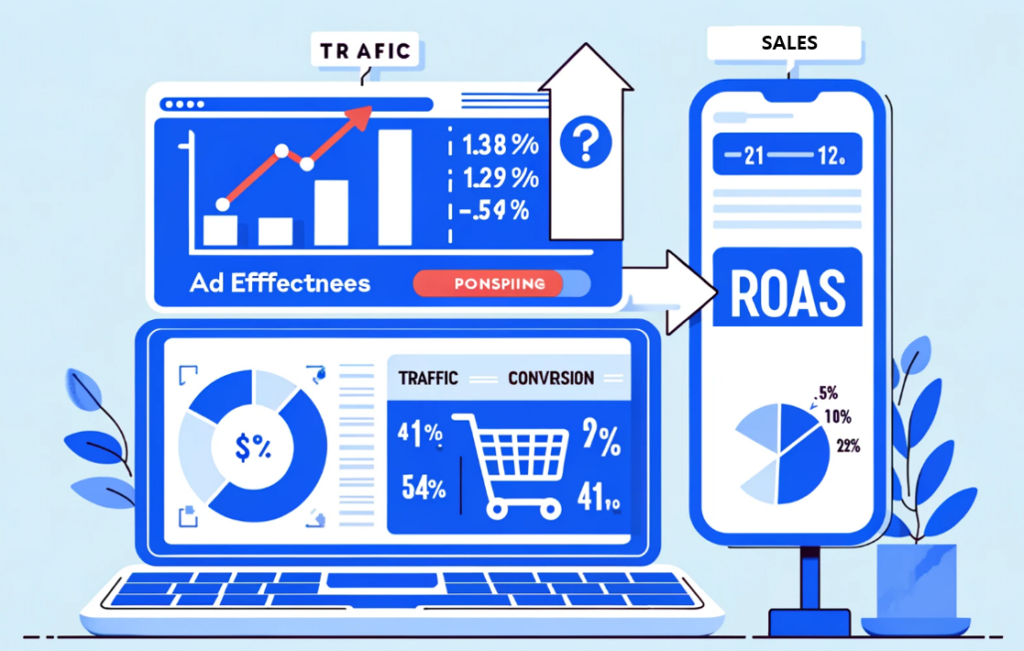
– 광고 효과 분석: 유명 포탈이나 쇼핑몰 등 타깃 고객이 많이 찾아오는 곳에서 광고를 하면, 링크를 타고 자사몰의 랜딩 페이지로 고객을 유입하고 구매전환을 꾀할 수 있다. 또한 광고활동은 검색엔진에서 자사 웹사이트를 높은 신뢰도와 권위성을 가진 것으로 판단하게 해서, 지속적으로 검색엔진에 상위 노출되게 한다.
그러나 광고를 한다고 무조건 매출이 잘 나오는 것은 아니다. 온라인 상에서 광고효과는 대부분 판매보다는 유입을 담당한다. 광고를 보고 들어온 고객이 제품을 구매하는 행동, 즉 구매전환을 하지 않는다면, 그것은 순전히 광고가 잘못됐기 때문이 아니라, 자사몰의 랜딩 페이지나 콘텐츠들이 구매동기를 유도하지 못했기 때문이다.
따라서 광고 효과가 좋다는 말은 고객유입 측면에서 평가하는 것이 바람직하고, 유입대비 구매전환율이 떨어진다면 자사몰 내부환경과 콘텐츠를 손봐야 할 것이다.
– ROAS(Return on Advertising Spend): ROAS는 다음과 같은 공식으로 계산된다.


앞서 나는 광고효율성 측면에서 ROAS를 얘기하면서, ROAS는 광고비에 대한 매출 분석이기 때문에 유의해야 한다는 말을 했다. 그런 점에서 ROI(Return On Investment)와 다르게 ROAS는 효율성 보다는 효과성에 초점을 두고 있다고 말할 수도 있다.
M사에서도 대행사가 ROAS가 400%로 높게 나와서 광고효과가 좋다고 주장했지만, 유의할 점은 업계평균 수준과 회사의 수익구조이다. 내가 대행사에게 동종업계의 ROAS에 대해 질문했더니, 대행사에선 자료를 보여주며 다른 곳은 400% 이하라고 말하며 M사가 좋은 결과라고 했다. 문제는 대행사에서 파악할 수 있는 회사가 한정되어서 비교대상이 고가의 제품을 파는 곳이었다는 것이다.
즉, ROAS는 좋게 나왔더라도, 수익성 측면에서 상대적으로 ROI는 좋지가 않았다는 사실이다. 따라서 항상 ROAS만 봤던 M사는 매출 400억이나 되는데도 수익이 좋지 않은 이유를 찾을 수 없었던 것이다. 그런 측면에서 나는 CEO에게 광고비를 점차 줄여서 매출의 9% 수준을 유지해야 하는 것을 제안할 수 있었다.
따라서 ROAS를 평가할 때는 같은 가격 대의 비슷한 스킨케어를 광고했을 때 평균 몇%의 ROAS가 나오는지, 특히 TV CF에 나오는 유명 브랜드가 아닌 비슷한 무명의 브랜드에서 동종의 제품의 ROAS가 어떤 지를 비교해야 한다. 물론 이런 비교자료는 대행사에 요청하면 제공받을 수 있겠지만, M사의 사례처럼 대행사가 제공하는 것을 곧이 곧 대로 받아들여선 안되고, 회사의 내부환경의 관점에서 분석할 수 있는 능력을 갖추어야 한다.
그리고 또 하나 유의할 점은 ROAS가 매출을 평가하고 있기 때문에, 그 매출이 과연 광고 때문인지도 확신하기 어렵다는 것이다. 어쩌면 당시 매출 요인이 자사몰의 파격적인 할인행사나, 인플루언서의 추천 때문일지도 모르는 일이기 때문이다. 다만 광고를 통해 유입된 고객이 제품을 구매했기 때문에 광고효과 때문이라고 추측하는 정도이다.
따라서 ROAS는 분명 마케팅 성과를 평가하고 추후 광고예산을 어떻게 조정할지 결정하는 데도 도움을 주지만, 복합적인 관점에서 단순히 매출이 아닌 전반적인 회사의 수익성도 반영하여 재평가해야 한다. 경영자는 회사의 원가와 비용구조를 반영한 손익현황에서 적절한 광고비 예산을 수립하기 위한 최적의 ROAS를 찾는 노력이 필요한 것이다.

——————————————
- Ad Effectiveness Analysis: When advertising on popular portals or shopping sites frequented by target customers, the goal is to drive traffic to your own mall’s landing page, converting visitors into buyers. Effective advertising also enhances the website’s credibility and authority, leading to higher search engine rankings and sustained visibility.
However, good sales are not guaranteed by advertising alone. Online ads mainly drive traffic rather than sales. If visitors don’t make purchases, it’s not solely the ad’s fault but could be due to the landing page or content failing to motivate the purchase. Therefore, evaluating ad effectiveness from a traffic perspective is ideal. If conversion rates are low, the internal environment and content of the mall need improvement.
- ROAS (Return on Advertising Spend):
ROAS is calculated as follows:


While discussing ad efficiency, I emphasized that ROAS, being an analysis of sales relative to ad spend, should be approached with caution. Unlike ROI (Return on Investment), ROAS focuses more on effectiveness than efficiency.
For instance, an agency claimed M Corporation had a high ROAS of 400%, indicating good ad effectiveness. However, it’s crucial to consider industry averages and the company’s profit structure. When I asked the agency for comparative ROAS data, they provided evidence that other companies had lower ROAS, but these were high-priced product sellers.
Despite a good ROAS, M Corporation’s ROI was relatively poor, explaining why they couldn’t understand why profits weren’t satisfactory despite 40 billion KRW in sales. Thus, I suggested to the CEO that ad spending should be gradually reduced to 9% of sales.
When evaluating ROAS, comparing similar price ranges and similar skincare ads is essential. Ask agencies for comparison data, but don’t take it at face value. Analyzing from an internal company perspective is crucial.
Moreover, since ROAS measures sales, it’s hard to attribute the sales solely to ads. The sales increase might be due to promotions or influencer recommendations rather than just ads. Although it’s inferred that customers bought products through ad-induced visits, this is speculative.
Therefore, while ROAS is useful for evaluating marketing performance and adjusting future ad budgets, it should be re-evaluated by reflecting overall company profitability. Managers must strive to find the optimal ROAS that accounts for the company’s cost and expense structure, ensuring an appropriate ad budget for profit and loss statements .