트리플 미디어 전략에서 언드(Earned) 미디어와 페이드(Paid) 미디어라는 중요한 자리를 차지하고 있는 소셜 미디어(SNS)는 디지털 마케팅 전략에서 없어서는 안될 가장 중요한 광고 및 홍보 전략의 한 부분을 차지하고 있다.
특히 작은 기업에서는 페이스북 등의 소셜 미디어를 통한 타깃팅 광고만 잘 해도 적은 비용으로 좋은 효과를 얻을 수 있다. 그러나 광고의 신뢰성에 민감한 소비자들은 쉽게 구매를 하지 않는 편이다. 따라서 이럴 때 필요한 것이 진실되거나 재미있고 유익한 콘텐츠를 이용하여 신뢰성을 확보하는 것이다.
삼성경제연구소에 의하면 기업은 아래와 같이 SNS에 대한 4가지 오해를 하고 있다고 한다.
– 의도한 바를 대중이 잘 이해할 것이다.
– 임직원의 자발적 참여가 이루어질 것이다.
– 쉽게 고객관계를 구축할 수 있을 것이다.
– 양방향 소통이 활발할 것이다.
그러나 기대와는 달리 SNS의 실상은 달랐다.
– SNS에서는 수많은 팬들보다 한 명의 열렬한 반대자가 더 무섭다.
– 고객관계 구축은 소통도구보다 콘텐츠의 진정성을 높이는 것이 중요하다. 따라서 고객에게 필요한 것이 무엇인지를 파악하고 니즈의 충족과 친밀감 등, 어떤 가치를 추구할지를 결정해야 한다.
– 사안에 따라 온라인과 함께 오프라인에서 고객관계를 강화하고 보완해야 한다.
– 기업과 고객 간의 SNS 소통은 대중매체보다도 더 실시간으로 지속적인 방법을 사용하여 접근할 필요가 있다.
최근의 디지털 환경에서 SNS 마케팅은 기업의 생존을 위하여 반드시 해야만 하는 일이 되었다. SNS는 곧 기업이고 사이트이자 어플이며 강력한 미디어가 되었다. 또한 SNS는 여러 사람들을 한곳으로 모으는 플랫폼, 즉 하나의 광장(場, Place)이다. 예로부터 장이 서면 사람들이 모이고, 그 장에 사람들이 많이 모이면 모일수록 돈이 된다.
그래서 많은 기업들이 SNS라는 장터에서 고객과 신뢰를 형성하고 팬들을 확보하려고 노력하고 있다. 이는 큰돈을 들여야만 하는 광고비용을 줄여주며, 보다 깊은 관계의 형성을 통해 궁극적으로는 매출로 연결시켜 준다. 플랫폼이란 이렇듯 한 개인 또는 기업이 수천만 명과 연결될 수 있는 힘이 있다. 이를 통해 기업은 원하는 메시지를 고객들에게 전달할 수 있으며, 지속적으로 팔로어 수를 증가시켜 자산 가치를 높일 수도 있다.
SNS 플랫폼은 상품과 같다. 하나의 상품이라고 생각하고 개발하고, 마케팅 전략과 비용도 당연히 들어간다. 따라서 최소한의 예산 집행은 불가피하다. 특히 초기 시드 구독자를 모으기 위한 효율적인 광고 집행은 필수이다. 그러나 전체 디지털 마케팅에서 SNS는 일부분일 뿐이다. 통합적인 디지털 마케팅으로 브랜딩을 하고 랜딩 페이지로 고객을 유입해서 고객을 사로잡고 구매전환을 이끌어내야 한다. 그렇기 위해선 사용할 수 있는 모든 플랫폼을 최대한 활용하여 끝없이 고객을 유입시켜야 한다.
그러나 이런 디지털 마케팅 채널들은 너무 많다. 네이버, 다음, 구글, 광고언론사, 페이스북, 인스타그램, 유튜브, 틱톡, 네이버 카페, 블로그, 유튜브 등…. 대기업이 아니면 모두 다 할 수 없으므로, SNS 마케팅에서 다음과 같은 점들을 고려해야 한다.
– 사전 조사: 주 SNS 채널에 비슷한 주제의 채널이 몇 개나 있고, 어떤 형태로 운영되는지, 콘텐츠 형태, 업로드 주기, 콘텐츠 내용 등을 조사한다.
– 어떤 주제로 할 것인가: 너무 좁고 전문적인 주제, SNS에 안 맞는 주제, 잘 모르는 주제, 꾸준히 할 수 없는 주제는 피하는 것이 좋다.
– 주 플랫폼은 어디로 할 것인가: 한정된 예산과 시간으로 최대 효과를 만들기 위해서, 성별, 나이, 주제에 따라 일단 1~2개의 핵심 플랫폼에 집중하고 나서, 이후 점진적으로 확장한다.
– 어떤 콘텐츠로 만들 것인가: 가장 좋은 콘텐츠 형태는 동영상이다. 그러나 물리적으로 어렵다면 이미지, 텍스트 등 콘텐츠 형태를 선정해야 한다. 그리고 경쟁 채널의 고객 유입 수와 콘텐츠 공유 수를 파악해서, 그보다 높은 수치를 목표로 콘텐츠 고도화 작업을 해야 한다. 콘텐츠에 열광하지 않으면 플랫폼은 망가진다. 플랫폼으로 경쟁하는 게 아니라 콘텐츠로 경쟁해야 한다. 중요한 것은 공유되지 않는 게시물은 콘텐츠가 아니라는 사실이다.
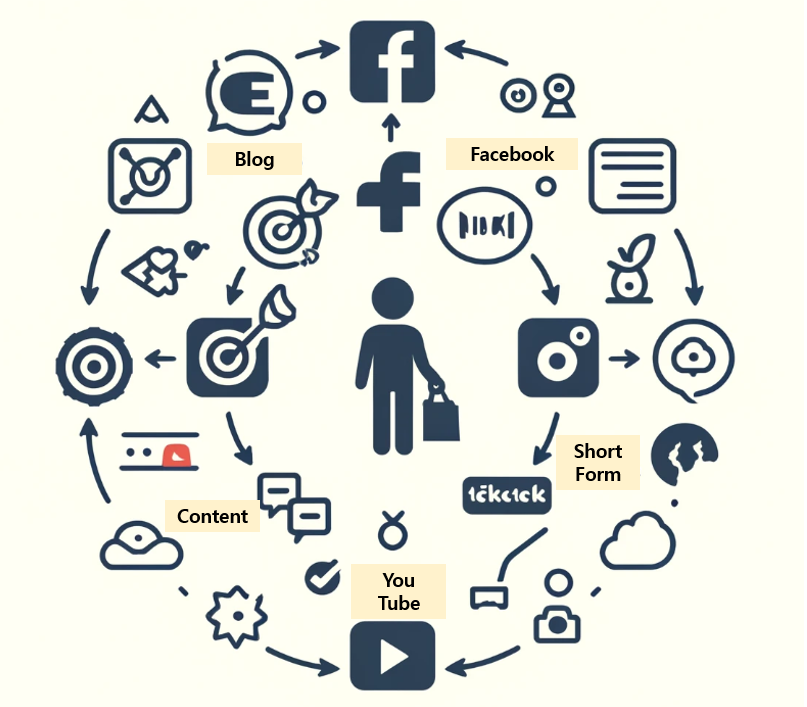
특히 콘텐츠는 각 플랫폼의 특성과 타깃 고객층을 고려하여 맞춤형으로 제작하는 것이 중요하다. 블로그, 페이스북, 유튜브, 틱톡 등 주요 플랫폼들의 특성에 맞는 활용 방법을 간략하게 제안해 본다.
In the Triple Media Strategy, social media (SNS), which occupies important positions as Earned Media and Paid Media, is an essential part of digital marketing strategies. Especially for small businesses, targeted advertising through social media like Facebook can yield good results with minimal costs. However, consumers who are sensitive to the credibility of advertisements are less likely to make purchases easily. Therefore, it is crucial to secure credibility by using truthful, entertaining, and useful content.
According to the Samsung Economic Research Institute, companies have four common misconceptions about SNS:
- The public will understand the intended message well.
- Employees will voluntarily participate.
- Customer relationships can be easily established.
- Two-way communication will be active.
However, the reality of SNS differed from expectations:
- One passionate opponent is scarier than numerous fans on SNS.
- Building customer relationships is more about enhancing the authenticity of content than communication tools. It is crucial to understand what customers need and decide what value to pursue, such as fulfilling their needs and building intimacy.
- Depending on the situation, it is necessary to strengthen and complement customer relationships offline as well as online.
- Communication between companies and customers via SNS requires a more real-time and continuous approach than mass media.
In the current digital environment, SNS marketing has become essential for the survival of businesses. SNS is a company, a site, an app, and a powerful medium. It is also a platform that gathers many people in one place, akin to a marketplace. Historically, when a market opens, people gather, and the more people gather, the more money is made.
Therefore, many companies are striving to build trust with customers and secure fans in the SNS marketplace. This reduces the cost of advertising and forms deeper relationships that ultimately lead to sales. Platforms allow individuals or companies to connect with millions of people, enabling businesses to deliver desired messages to customers and continuously increase followers, thereby enhancing asset value.
SNS platforms are like products. They should be developed and marketed with strategies and costs. Thus, a minimum budget is unavoidable. Effective advertising to gather initial seed subscribers is essential. However, SNS is only a part of the overall digital marketing strategy. An integrated digital marketing approach is necessary to build the brand, attract customers to the landing page, and convert them into buyers. This requires maximizing the use of all available platforms to endlessly attract customers.
However, there are too many digital marketing channels: Naver, Daum, Google, media outlets, Facebook, Instagram, YouTube, TikTok, Naver Cafe, blogs, etc. It’s impossible for non-large companies to do everything, so consider the following points for SNS marketing:
- Preliminary Research: Investigate how many channels with similar themes exist on the main SNS channel, how they operate, the content format, upload frequency, and content details.
- Choosing the Topic: Avoid topics that are too narrow and specialized, unsuitable for SNS, unfamiliar, or difficult to sustain.
- Selecting the Main Platform: To achieve maximum results with limited budget and time, focus on 1-2 key platforms based on gender, age, and topic, and then gradually expand.
- Creating Content: The best content format is video. If it’s physically challenging, select content formats like images or text. Understand the customer inflow and content sharing numbers of competing channels, and aim for higher figures through content enhancement. Compete with content, not platforms. Remember, a post that is not shared is not content.
Content should be customized considering the characteristics and target audience of each platform. Below are brief suggestions on how to utilize major platforms like blogs, Facebook, YouTube, and TikTok.