

북부여는 4세 단군에 이르러 역사적인 큰 전환점을 맞이하게 됩니다. BCE 109년, 흉노의 무릎을 꿇린 한 무제는 수륙 양군을 동원하여 우거(위만의 손자)가 다스리던 번조선을 침공하였습니다. 하지만 바다를 통해 번조선을 침공한 누선장국 양복도 육로로 침공한 좌장군 순체도 번조선 군대에게 패하였습니다. 무제는 어쩔 수 없이 강화회담에 임하였으나 사신 위산은 회담에 실패하고 그 대가로 무제에게 처형당하였습니다.
다시 전투가 재개되었지만, 몇 달이 지나도록 우거의 왕험성은 함락되지 않았습니다. 공격이 순조롭지 않자 두 장군 사이에 불화가 생겼고 이에 무제는 제남태수 공손수를 파견하였으나, 공손수마저 임의대로 군사 체제를 바꾼 죄로 처형당하였습니다.
한나라 군대는 번조선군의 굳센 수비에 막혔지만, 해를 넘긴 오랜 전쟁에 지친 번조선군 내부에 분열이 생긴 틈을 타서 이간책을 썼습니다. 번조선 조정의 니계상 삼으로 하여금 우거를 살해하게 만든 것입니다. 한나라는 우여곡절 끝에 왕검성을 함락시켰지만(BCE108), 결코 한나라가 승리한 싸움은 아니었습니다. 전쟁 후 논공행상에서 좌장군은 기시형을 당했고, 누선장군은 간신히 사형을 면하고 평민으로 살았습니다. 한이 패한 전쟁이었기 때문에 전쟁에 참여한 장군들이 모두 포상 대신에 처벌을 받았던 것입니다.
하지만 한 무제는, 우거왕을 죽여 위만정권 무너뜨리는 데 일조한 고조선의 신하들을 산동 지역의 제후로 봉하고 후대하였습니다. 이때 니계상 삼은 홰청 지역의 제후로, 고조선의 재상 한음은 추저의 제후로, 장군 황겹은 평주의 제후로, 죽은 우거의 아들 장강은 기지역의 제후로, 최(고조선의 재상 路人의 아들)는 죽은 아버지를 대신하여 온양의 제후로 봉해졌습니다.
이처럼 전쟁의 결과, 한나라의 장수는 모두 처벌을 받았는데 적국 고조선의 신하들은 제후가 되었습니다. 그러므로 이 전쟁에서 한나라는 패배한 것이 분명합니다. 한나라의 패전은, 한 무제가 고조선을 평정하고 사군을 설치하였다는 사기-조선열전의 기록이 결코 진실일 수 없는 뚜렷한 반등입니다. 전쟁에 패한 한나라가 어떻게 번조선, 즉 고조선의 요동과 요서 땅을 지배할 수 있으며 그곳에 식민지를 설치할 수 있었겠습니까.

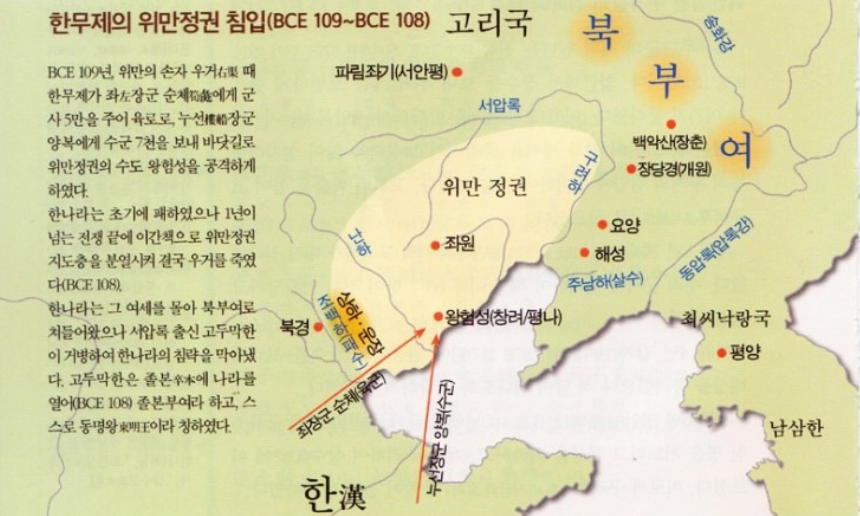
비록 실속 없는 정복이지만, 위만정권을 무너뜨린 한 무제는 내친 김에 BCE108 년에 요동을 넘어 북부여까지 침공하였습니다. 그런데 당시 북부여의 4세 고우로 단군은 심성이 나약하여 제대로 싸우지도 못하고 도중에 병사하고 말았습니다. 이 때 이를 지켜보던 고두막한이 분연히 의병을 일으켜 한나라 군대를 물리치고 나라를 구하였습니다. 이 때 졸본에서 나라를 열어(BCE108) 졸본부여라 하고 스스로 동명왕이라 칭하였습니다.
고조선을 계승한 북부여가 자칫 사라져 버릴 수도 있는, 한민족 상고 시대 최대의 위기에서 나라를 구한 동명왕은 구국영웅으로 추앙받아 북부여의 5세 고두막단군으로 즉위하였습니다. BCE86. 이처럼 동명왕 고두막한은 우리 상고사에서 중대한 의미를 갖는 인물이지만 그에 대한 기록은 북부여기를 제외한 다른 사서에서는 찾아볼 수 없습니다.
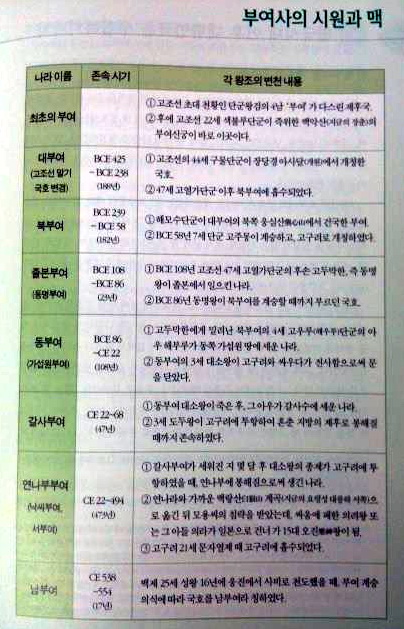
그런데 북부여기의 고두막단군 조에는 고두막의 다른 이름을 두막루라 합니다. 6세기 중반 북위의 역사서인 [위서]에 두락루국을 옛날의 북부여라 한 기록이 나오는 것으로 보아 두막루국의 국명은 고두막의 다른 이름인 두막루에서 나온 것으로 보입니다. 고두막단군의 등장으로 전기 북부여 시대가 끝나고 새 역사가 시작되었지만, 북부여는 고두막단군의 아들 6세 고무서단군에 이르러 182년(BCE 239~BCE58)의 짧은 역사를 끝내고 고구려고 계승됩니다. 그리고 이 고두막단군 때에 북부여에서 동부여가 갈라져 나왔습니다. 이것이 동부여의 탄생 배경입니다.
동부여는 고두막한에게 권력을 빼앗긴 해부루(고우루단군의 아우)가 차릉 지역에 세운 부여국입니다. 해부루는 제후로 강등되어, 국상 아란불의 주청으로 가섭원(지금의 흘굥강성 통하현)에 가서 나라를 세웠습니다. 그래서 동부여를 가섭원부여라고도 합니다.
동부여는 2세 금와왕을 거쳐 3세 대소왕 때에 고구려에게 망하여 갈사부부여와 연나부부여로 나누어졌습니다. 갈사부부여는 대소왕의 아우가 갈사수(지금의 두만강 유역)에 세운 부여입니다. 연나부부여는 대소왕의 종제가 연나부(지금의 요령성 개원)에 세운 부여로, 모국인 동부여의 서쪽에 있었다 하여 서부여라고도 부릅니다.
북부여가 고조선을 계승하였다는 사실은 한민족 고대사의 국통 맥을 바로잡는 핵심 요체입니다. 그런데도 한국의 강단사학계는 일제 식민사학의 각본대로 위만정권을 고조선의 계승자로 앉혔을 뿐만 아니라 위만정권이 한나라에게 망한 후 고조선이 있던 그 자리(한반도 북부)에 한나라가 네 개의 군을 설치하였다고 가르칩니다. 고조선을 계승한 북부여는 온데간데없고, 중국의 식민지인 위만조선과 한사군이 그 자리를 차지한 것입니다.
강단사학자들은 또한 중국 사서와 삼국사기, 삼국유사를 근거로 북부여 시조 해모수를 고구려 시조인 주몽의 아버지로 단정하였습니다. ‘해모수와 유화부인 사이에 고주몽이 태어나 고구려를 열었다’고 하여, 해모수와 주몽을 거의 동시대 인물로 만들어, 혈통까지 바꿔 버린 것입니다. 그 결과 180여 년에 걸친 북부여 6대 단군의 역사는 완전히 증발되어 버렸습니다.
왜 북부여사는 이렇게 난도질당하게 되었을까요? 그것은 사마천이 사기를 쓸 때, 한 무제가 동명왕 고두막한에게 대패한 치욕을 숨기고자 의도적으로 북부여사를 누락시킨 데서 비롯됩니다. 그 후 중국의 대부분의 사서에서 북부여 역사가 사라졌습니다. 고려와 조선의 사대주의 사가들이 이것을 그대로 모방하였고, 일제 식민사학자와 국내 주류 강단 사학자들이 그것을 무비판적으로 답습하였습니다.
고조선의 건국 사실만 있고 실제의 역사 과정이 전혀 없듯이, 북부여도 해모수의 건국 사건만 기록되고 구체적인 역사 내용이 없습니다. 이러한 현상은 ‘역사 말살’과 관련된 것입니다.

—————-
Northern Buyeo experienced a significant turning point during the reign of its 4th Dangun, Gowuro Dangun. In 109 BCE, the Han Dynasty, under Emperor Wu, launched a military campaign against Byeonjoseon (Wiman Joseon), ruled by Ugeo, the grandson of Wiman. Despite deploying both naval and land forces, led respectively by Generals Yang Bok and Sun Che, the Han forces initially suffered defeats at the hands of Byeonjoseon’s defenders. Emperor Wu, frustrated by these failures, ordered peace negotiations. When his envoy, Wei Shan, failed to secure terms, he was executed by the emperor himself.
The conflict resumed, and Byeonjoseon’s Wanggeomseong withstood the siege for months, causing friction among Han commanders. Further setbacks included the dismissal and execution of General Gongsun Su for altering military strategies without approval. Eventually, Han forces exploited internal divisions within Byeonjoseon. Using deception, they convinced Ni Gyesang Sam, a high-ranking official in Byeonjoseon, to assassinate Ugeo. In 108 BCE, Wanggeomseong fell to Han forces.
However, this victory came at a great cost to the Han Dynasty. The war had been so taxing that participating generals were punished instead of rewarded, with some executed and others demoted to commoner status. Meanwhile, several prominent Byeonjoseon figures, including Ni Gyesang Sam, were rewarded with fiefdoms in the Shandong region, highlighting the Pyrrhic nature of the Han’s campaign.
After the fall of Byeonjoseon, Emperor Wu directed his attention to Northern Buyeo. In 108 BCE, Han forces crossed the Liao River and invaded, but Gowuro Dangun proved ineffective, succumbing to illness during the campaign. At this critical moment, a local leader named Godumakhan (also known as Domakru) rose to defend the nation. Rallying a militia, he successfully repelled the Han forces and secured Northern Buyeo’s survival.
In recognition of his leadership, Godumakhan founded a new state in Jolbon (present-day Ji’an, Jilin Province), naming it Jolbon Buyeo and proclaiming himself Dongmyeongwang (King Dongmyeong). This title reflects his role as the savior of the Korean people during one of their greatest crises.
In 86 BCE, Godumakhan ascended as the 5th Dangun of Northern Buyeo, marking the end of the early Northern Buyeo period and the beginning of a new chapter. His reign was pivotal in preserving the legacy of Gojoseon and maintaining the cultural and political continuity of the Korean people.
The Legacy of Godumakhan and the Division of Northern Buyeo
Godumakhan’s reign saw Northern Buyeo’s influence diminish, leading to internal fragmentation. During the reign of his son, the 6th Dangun Gomuse, the kingdom faced its eventual dissolution in 58 BCE after a short history spanning 182 years (239 BCE–58 BCE). Two major events characterized this period:
A power struggle with Haeburu, the brother of Gowuro Dangun, led to the establishment of Eastern Buyeo. Haeburu, demoted to a vassal, founded his kingdom in Gaseopwon (modern Tonghua County, Jilin Province) with the support of his minister, Aranbul. Eastern Buyeo, also known as Gaseopwon Buyeo, marked a new direction for the Buyeo lineage.
Eastern Buyeo lasted for several generations, including the reigns of Geumwa (2nd King) and Daeso (3rd King). However, it eventually fell to Goguryeo, splitting into minor states like Galsa Buyeo and Yeonna Buyeo. Galsa Buyeo was established by a brother of Daeso along the Tumen River, while Yeonna Buyeo (also called Western Buyeo) was founded by a cousin of Daeso in Yeonna, near modern-day Kaiyuan in Liaoning Province.
The significance of Northern Buyeo lies in its role as the legitimate successor to Gojoseon. However, its history has been marginalized or distorted due to biases in ancient records and modern historiography.
Chinese Historiography
Sima Qian’s Records of the Grand Historian (Shiji) deliberately excluded Northern Buyeo’s history to conceal the humiliation of Emperor Wu’s defeat at the hands of Godumakhan. This omission set a precedent for later Chinese historians, who continued to ignore Northern Buyeo’s contributions.
Korean Historiography
During the Joseon Dynasty, pro-Chinese scholars adopted these narratives uncritically, compounding the erasure of Northern Buyeo’s achievements. This trend persisted into the colonial era, as Japanese historians sought to diminish Korea’s historical sovereignty by downplaying its ancient states.
Modern Misinterpretations
Many mainstream Korean historians equate Haemosu, the founder of Northern Buyeo, with Jumong’s father in Goguryeo mythology. This conflation collapses Northern Buyeo’s 180-year history, reducing it to a mere prelude to Goguryeo.
Conclusion
Godumakhan’s defense of Northern Buyeo against the Han Dynasty preserved the continuity of Korean civilization during a critical era. Despite efforts to erase or distort this history, the legacy of Northern Buyeo as the rightful successor to Gojoseon remains an essential part of Korea’s ancient heritage. Recognizing figures like Godumakhan and their contributions allows for a fuller understanding of Korean history and its resilience in the face of external threats and internal challenges.