

치우천황과 더불어 배달시대의 또 다른 성인 제왕인 태호복희씨에 대해서는 중국이 어떤 평가를 하고 있을까요? 복희씨는 5,600여 년 전에 인간의 생활 문명을 크게 진작시킨 문명의 창시자입니다. 또한 팔괘를 처음 그린 분으로 대한민국을 상징하는 태극기의 시조이기도 합니다.
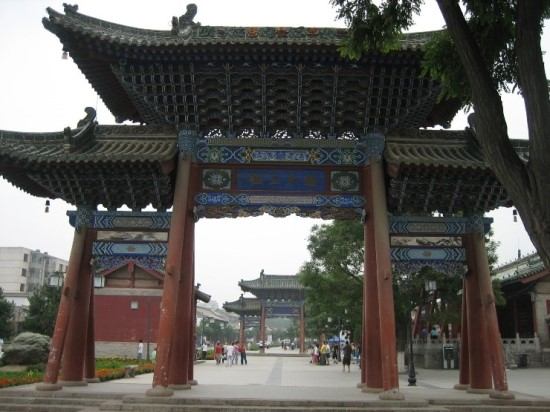
이러한 복희씨를 모신 사당이 중국의 여러 곳에 있습니다. 그 가운데 최근에 크게 증축한 하남성 회양현의 복희묘가 가장 규모가 크고 유명합니다. 그런데 중국이 하남성 회향현에 있는 복희묘를 유독 부각시키는 데에는 목적이 있습니다.
복희씨가 대륙 서쪽 깊숙한 곳(현 감숙성 천수시의 구지산 근처)에서 태어나 중국의 중앙부인 하남성에 도읍을 정하고 그것에서 돌아가셨다는 것을 말하려는 것입니다. 한마디로 복희씨가 대륙의 서쪽에서 동진하였다고 주장하려는 것입니다.
하지만 환단고기에 의하면 태호복희씨는 배달의 신시(지금의 백두산)에서 태어나 지금의 산동성 미산현에 묻혔습니다. 복희씨는 대륙의 북쪽에서 아래로 남하하면서 동방 신교문명을 일으켰던 것입니다.
결론적으로 중국이 회양현의 복희 사당을 내세우는 것은, 복희씨의 출생지와 활동 지역을 날조하여, 중국 본토에서 태어나 평생 그것에서 살다 간 완벽한 중국인으로 만들기 위한 것입니다.
왜 복희씨를 완벽한 중국인으로 만들려고 하는지, 그에 대한 답을 우리는 고풍스럽게 장식한 회양현 사당의 정면에 걸린 현판 인문시조(인류 문명의 첫조상)에서 찾을 수 있습니다. 복희씨를 온 인류의 큰 조상으로 내세워, 복희씨의 후손인 현 중국을 전 세계 사람들의 어버이 나라로 만들려는 것입니다.
중국 정부는 동이족의 조상인 복희씨, 신농씨, 치우천황을 자기네 조상으로 모심으로써 한족과 55개 소수 민족으로 구성된 다민족 국가인 중국에서 소수 민족의 조상들은 모두 중국의 조상이라는 억지 논리를 정당화시키려 합니다.
하지만 이것은 문화적 열등감을 덮으려는 어리석은 행위이고, 남의 조상을 자기네 조상으로 삼는 환부역조(換父易組)의 죄를 범하는 일입니다.

————
Alongside Chiwoo Cheonhwang, Taihao Fuxi is another great sage-king of the Baedal era. What does China say about him? Fuxi, who lived around 5,600 years ago, is regarded as the founder of civilization who greatly advanced human life and culture. He is also known as the originator of the Eight Trigrams (Bagua), making him the symbolic forefather of the Taegukgi, the national flag of Korea.
There are multiple shrines dedicated to Fuxi across China. Among them, the most renowned and recently expanded is the Fuxi Temple in Huaiyang County, Henan Province. However, there is a specific intention behind China’s emphasis on this particular shrine in Huaiyang.
China asserts that Fuxi was born deep in the western interior of the continent (near Mount Guji in Tianshui, Gansu Province), established his capital in the central region of China (Henan Province), and died there. In short, they claim that Fuxi moved eastward from the western parts of the continent.
However, according to the Hwandangogi, Taihao Fuxi was born in Sinsi of Baedal (present-day Mount Baekdu) and was buried in what is now Misan County, Shandong Province. Fuxi migrated southward from the northern parts of the continent, initiating the Eastern Divine Civilization along the way.
Ultimately, China’s promotion of the Huaiyang shrine serves the purpose of falsifying Fuxi’s birthplace and areas of activity, aiming to portray him as a pure Chinese figure who was born, lived, and died in mainland China.
The reason China seeks to portray Fuxi as a completely Chinese ancestor can be found on the plaque at the front of the elaborately decorated Huaiyang shrine, which reads “Progenitor of Human Civilization.” By positioning Fuxi as a grand ancestor of all humanity, China seeks to elevate itself, as his descendant, into a symbolic parent country for the world.
The Chinese government claims Fuxi, Shennong, and Chiwoo—ancestors of the Dongyi people—as their own ancestors. This serves to justify the narrative that all ancestors of China’s ethnic minorities belong to China, legitimizing their identity as part of a multi-ethnic nation composed of the Han and 55 other ethnic groups.
However, this is a foolish act meant to cover cultural inferiority, and it constitutes the crime of hwanbuyokjo (換父易組)—replacing one’s ancestors with those of another.