

환단고기에 따르면, 고조선의 중심이었던 진조선이 망하고(BCE238), 40여 년 후 번조선도 중국 사람 위만에게 탈취되는(BCE194)동안, 진조선 땅에서 일어난 북부여(BCE239)가 고조선의 대통을 계승하였습니다. 하지만 한국의 강단사학자 대부분은 이러한 북부여를 무시하고, 한 무제가 설치한 한사군이 위만정권 멸망 이후 한민족을 지배하였다고 주장합니다.
중국 사서에서 한사군에 대한 기록은 [사기-조선열전]에 가장 먼저 나타납니다. 그런데 저자 사마천은 한사군이 설치되는 직접적 계기가 된 한나라와 고조선(위만정권)사이의 전쟁(BCE109)를 목격하였지만, 조선을 평정하고 군을 설치했다고 할 뿐, 4군의 구체적 이름과 위치를 기록하지 않았습니다. 역사 기록을 현장 답사로 꼼꼼히 확인했다는 사마천이 한사군의 이름을 거론하지 않은 것은 이해가 되지 않는 부분입니다.
4군의 구체적 명칭은 사마천이 죽고 백 년이 더 지나서, 중화사관이 뚜렷한 반고가 쓴 [한서]에 처음으로 나타납니다. 하지만 한서의 기록도 한사군의 실체에 대해 명확하게 밝히지 못하였습니다. [부제본기]는 “우거의 목을 베고 그 땅을 낙랑, 임둔, 현도, 진번군으로 삼았다”라고 하여 4군을 모두 적었습니다. 그러나 [지리지]는 “낙랑과 현도는 무제 때 설치되었다”라고 하여 24군을 [오행지]는 “두 장군이 조선을 정벌하고 3군을 열었다”라며 3군을 기록하였으므로, 군의 수가 서로 어긋납니다.
중국 사서의 일관성 없는 기록은, 한사군에 대한 사기의 그 짤막한 기록이 과연 사마천 자신의 서술인지 의문마저 들게 합니다. 사기의 이 구절은 후대의 역사 학자가 삽입하였을 가능성이 큽니다. 한사군이란 것이 설치된 적이 없기 때문에 사마천은 한사군에 대해 구체적으로 기록하지 못한 것입니다.
그 진실은 우리는 환단고기에 수록된 북부여기에서 확인할 수 있습니다. 한나라 무제가 우거를 멸하더니 그 곳에 4군을 설치하려고 군대를 일으켜 쳐들어왔습니다. 이에 고두막한이 구국의 의병을 일으켜 한나라를 격파하였다는 기록으로 볼 때, 한사군은 한나라의 희망사항이었을 뿐 결코 실현된 적이 없었습니다. 이렇게 그 실존 사실조차 의심스러운 한사군을 한국 강단사학계는 확고부동한 역사의 진실로 말할 뿐 아니라, 그 위치를 낙랑-대동강 유역, 현도-압록강 중류, 진번-황해도, 임둔-함경남도 등으로 비정합니다.
하지만이 한사군은 일제가 조선 지배를 합리화하기 위해 조작한 내용일 뿐입니다. 일제는 한국사의 주요 흐름을 한사군 -> 임나일본부 -> 조선총독부로 연결시키고, ‘조선의 역사는 한사군이라는 중국의 식민지로 출발하였으니 일제의 지배를 받는 것이 당연하다’는 논리를 세웠습니다. 이것을 해방 후에 등장한 강단사학자들이 실증주의란 미명 아래 한국사의 주류 학설로 만들었습니다. 뿐만 아니라 한사군이 한반도 내에 존재하지 않았다는 견해를 제시하는 학자를 재야사학자로 몰아 강단사학계에서 추방하였습니다.
한나라와 고조선 사이의 전쟁 이후에 설치되었다는 한사군이 실존했다고 가정하더라도, 4군의 위치에 대해 중국 사서들은 지금의 대릉하 이남의 요령성과 하북성 일대로 전하고 있습니다. 한사군의 수도인 낙랑의 위치를 확인하는 것으로 이 문제를 살펴본다면, 낙랑의 위치를 찾기 위한 가장 쉽고도 명확한 단서가 바로 갈석산입니다.
[사기색은-하본기]에 인용된 [태강지리지]의 주석에 “낙랑 수성현에는 갈석산이 있는데 만리장성의 기점이다”라는 구절이 있습니다. 갈석산이 있는 지역이 바로 낙랑군이 있었던 위치입니다. 갈석산은 중국에서 한국의 설악산, 금강산만큼 유명한 산으로 현재 하북성 창려현에 있습니다. 한사군이 실제로 설치되었다 하더라도 그 위치를 한반도 땅으로 말하는 중국 기록은 어디에서도 찾아볼 수 없습니다.
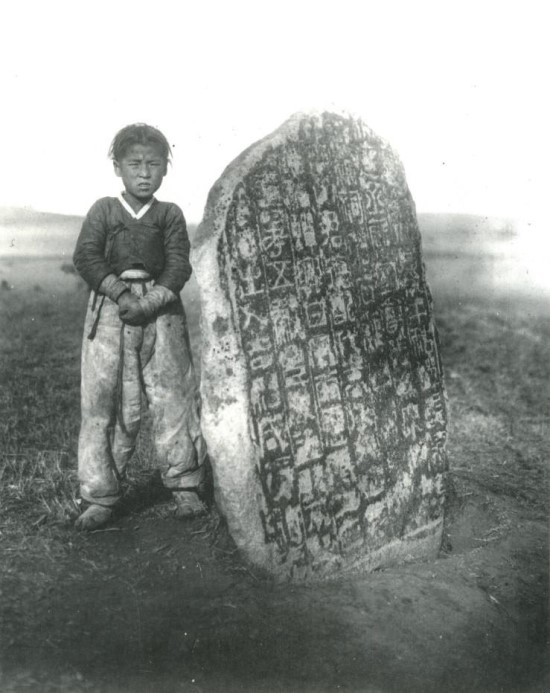
일제는 이러한 한사군을 어떻게 한반도 땅으로 옮길 수 있었을까요? 이 역사 왜곡의 만행에 앞장 선 인물도 역시 이마니시 류입니다. 그는 한사군이 한반도에 있었다는 근거로, 자신이 1913년 평안도에서 발굴하였다고 주장한 점제현 신사비를 제시하였습니다.
[한서-지리지]에 낙랑군의 속현으로 점제현이 나오는데, 그 점제현의 우두머리가 백성들을 위해 산신제를 지낸 내용이 새겨진 비석을 평안도 용강군(현 온천군)에서 발견하였으니, 한사군은 분명히 한반도에 설치되었다고 이마니시는 단정하였습니다. 사방이 탁 트인 평야 지대에 2천 년 동안 서 있던 비석을 그전까지 아무도 못 보았으나 희안하게도 이마니시가 단번에 발견한 것입니다. 또한 이마니시는 한나라 시대의 기와와 봉니까지 발견하여 평양 일대를 낙랑군 유적으로 만들었습니다.
광복 후 대한민국 사학계는 일제가 조작한 역사 기록을 답습하였고, 지금의 대한민국 중장년층은 이 날조된 역사를 학창시절에 열심히 외우고 다녔습니다. 결론적으로 한국 사람이 알고 있는 한사군은 이덕일의 말처럼 “중국이 밑돌을 깔고 일본이 못 박은 조작된 역사”에 지나지 않습니다. 중국이 일차적으로 왜곡하고, 그 날조된 내용을 일본이 다시 왜곡시킨 한민족사의 원형은 과연 언제나 회복될 수 있을까요?

—————–
According to Hwandangogi, after the fall of Jin Joseon—the central entity of Gojoseon (in 238 BCE)—Buyeo of the North was established (239 BCE) on its territory, succeeding the legitimacy of Gojoseon. However, most mainstream Korean historians disregard this Northern Buyeo and instead assert that the Four Han Commanderies, established by Emperor Wu of the Han Dynasty after the fall of Wiman Joseon, came to dominate the Korean Peninsula.
The earliest Chinese record of the Han Commanderies appears in the Records of the Grand Historian (Shiji), specifically in the “Joseon Yeoljeon” (列傳). Interestingly, its author, Sima Qian, personally witnessed the war (109 BCE) between the Han Dynasty and Wiman Joseon—an event that directly led to the supposed installation of the commanderies.
Yet he only states that the Han pacified Joseon and set up military governance, without specifying the names or locations of the four commanderies. Given Sima Qian’s known rigor in cross-verifying historical facts with on-site inspections, this omission raises serious questions. His silence on the commanderies’ specifics casts doubt on whether the passage was authored by him at all, suggesting a later interpolation by other historians.
It wasn’t until more than a century after Sima Qian’s death that Ban Gu, a historian known for his Sinocentric bias, provided the first concrete names of the commanderies in his Book of Han (Hanshu). However, even Ban Gu’s records are riddled with inconsistencies. For example, the Annals of Emperor Wu (Buje Bon’gi) lists all four commanderies—Lelang, Imdun, Xuantu, and Zhenfan. Yet the Geographical Treatise (Dilizhi) mentions only Lelang and Xuantu as having been established during Emperor Wu’s reign.
Meanwhile, the Five Elements Treatise (Wuxingzhi) references only three commanderies being set up after the conquest by two generals. These discrepancies suggest that the number, identity, and even existence of the commanderies were not clearly established or historically reliable.
Such inconsistencies in the Chinese classics lend credence to the hypothesis that the brief mention in Shiji may not have been written by Sima Qian. It is plausible that he omitted detailed mention of the commanderies because they were never truly established.
Support for this interpretation is found in the Bukbuyeogi section of Hwandangogi. It recounts how, after Wiman’s fall, Emperor Wu of Han attempted to invade and establish the commanderies, but was repelled by the patriotic militias led by Godeumakhan. This account suggests that the Four Han Commanderies were never successfully implemented, remaining nothing more than a failed ambition.
Despite this, mainstream Korean academia continues to treat the commanderies as an indisputable historical truth. They assert that Lelang was located in the Daedong River basin, Xuantu along the middle Yalu River, Zhenfan in Hwanghae Province, and Imdun in South Hamgyong Province.
Yet these locations derive from colonial-era distortions. During Japan’s occupation of Korea, the theory of the Han Commanderies was manipulated to rationalize Japanese rule. The historical trajectory was intentionally framed as: Han Commanderies → Mimana Nihonfu → Japanese Governor-General of Korea. This fabricated sequence served to justify the notion that Korea began as a Chinese colony and thus rightfully fell under Japanese dominion.
After liberation from Japanese rule, Korean historians inherited this framework under the guise of positivism. Any scholar who challenged the commandery theory or questioned their presence in the Korean Peninsula was labeled a fringe “pseudo-historian” and systematically excluded from academic discourse.
Even if we assume the Han Commanderies were indeed established after the war with Gojoseon, Chinese texts place them in what is today southern Liaoning and Hebei provinces, south of the Liao River—not in the Korean Peninsula. The location of Lelang, the supposed capital of the commanderies, can be determined using the mention of Mt. Galseok.
In Sagi Seogeun-Habon’gi, a footnote from the Taegang Jiriji states, “In Suseong-hyeon of Lelang is Mt. Galseok, the starting point of the Great Wall.” Mt. Galseok, long celebrated in Chinese geography alongside Korea’s Mt. Seorak and Mt. Geumgang, is located in modern-day Changli County, Hebei Province. Thus, even if the Han Commanderies did exist, no Chinese text places them within the Korean Peninsula.
So how did Japan relocate the Han Commanderies into Korea? This historical fabrication was led by Imanishi Ryū. In 1913, he claimed to have discovered the “Stele of the Shrine to the Mountain Spirit in Jeomje-hyeon” in Yonggang-gun (modern Oncheon-gun), Pyeongan Province. Since Hanshu records Jeomje-hyeon as a subordinate district of Lelang, Imanishi argued that this stele proved the existence of Lelang in Korea.
This stele, allegedly inscribed with a tribute to the mountain deity by a local official, had stood unrecognized in a flat plain for 2,000 years—yet Imanishi somehow discovered it instantly. He also claimed to have found Han-era tiles and seals, fabricating the archaeological basis for situating Lelang in the Pyongyang area.
Post-independence Korean academia simply inherited this fabricated historical narrative. As a result, the middle-aged population of South Korea today memorized and internalized this distorted version of history during their school years. In the words of historian Lee Deok-il, “What Koreans know as the Four Han Commanderies is merely a manipulated history—first laid down by China, then nailed into place by Japan.”
The distortion began with China, was compounded by Japan, and continues to obscure the true origins of Korean civilization. Whether and when the authentic narrative of Korean history will be restored remains a pressing question.