

4. 청동기 시대를 개창
치우천황은 갈로산에서 광석을 캐내어 청동기 시대를 열었습니다. 그리고 제련한 금속을 이용하여 선진무기를 만들어 무패의 신화를 이룩하였습니다.
사기의 주석으로 유명한 당나라 때의 역사학자 사마정은 사기색은에서 이렇게 말하고 있습니다.
관자에 ‘치우가 노산의 금을 얻어 다섯 가지 병기를 만들었다’고 하였다(사기 색은-오제본기)
당나라 때의 또 다른 사기의 권위자 장수절은 사기정의에서 용어하도를 인용하여 이렇게 말하였습니다.
“황제가 섭정을 할 때, 치우는 형제가 81*명이 있었는데 짐승의 몸에 사람 말을 하였고 구리 머리에 쇠이마를 하였으며 모래와 돌을 먹었다. 칼, 창, 큰 활 등의 병장기를 만들어 천하에 위세를 떨쳤다.“ (사기정의 오제 본기)
송나라 때 이방이 편찬한 태평어람에는 이렇게 기록되어 있습니다.
“치우는 형제가 81*명이 있었는데 짐승의 몸에 사람 말을 하였고 구리 머리에 쇠 이마를 하였으며 모래와 돌을 먹었다”
* 헌원 집단으로는 염제 세력을 포함해 8개의 부족이 참여하였고, 치우천황의 배달은 81개의 씨족 연합군이 참여 했습니다.
규원사화에는 다음과 같이 전하고 있습니다.
“갈로산의 쇠를 캐어 칼, 갑옷, 창과 가닥진 창, 큰 활과 싸리나무 화살 등을 많이 만들어 정비하고 탁록을 떠나 구혼에 올라 연전연승하니, 기세가 마치 비바람과 같아서 세상 만민이 두려워 엎드리니 그 위세가 천하에 떨쳤다”(규원사화-태시기)
관자, 태평어람, 주례주소, 산해경, 후한서에는 다음과 같이 전하였습니다.
“갈로산에서 물이 나올 때 쇠가 따라 나왔다. 치우가 이를 받아서 칼, 갑옷, 창, 가닥진 창 등을 만들었다. 이 해에 아홉 제후를 아울렀다. 옹호산에서 물이 나올 때도 쇠가 나오므로 치우가 이를 제련하여 옹호극이라는 창과 예과라는 창을 만들어 12제후를 병합하였다“
태백음경에 “치우는 쇠를 녹여 병기를 만들고 가죽을 베어 갑옷을 만들었으며 5병제를 시작하고 기치를 세웠다”라고 하였습니다.
시자에 “야련을 시작한 사람은 치우이다”라고 하였습니다.
“치우에게 제사 지내는 것은….다섯가지 병기인 모矛, 극戟, 검劒, 순楯, 궁弓 과 고鼓와 그 병기를 만든 사람을 기리는 것이다. 치우는 뭇사람 중 강자이다. 어떤 병기라도 능히 만들었다. 병기 제조에 최고이다“(주례주소-사사)
“치우는 병기를 만든 사람이다. 치우가 병기를 만들어 황제를 토벌하였 다.”(대황동경, 대황북경)
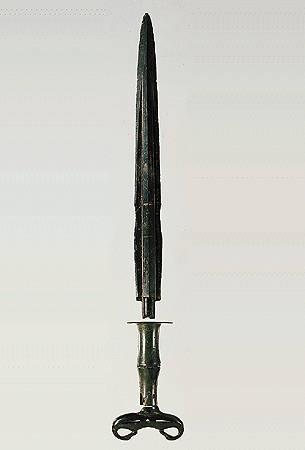
이 외에도 치우가 금속으로 병기를 만들었다는 수많은 사서의 기록이 금속 무기의 원조가 치우천황임을 밝히고 있습니다. 실제로 치우천황이 다스리던 시기(신시개천 1191, BCE2707~신시개천 1300, BCE2598)인 약 4,700년 전(BCE27세기)에 동아시아 지역에서는 이미 청동이 사용되고 있었다는 사실이 유물을 통해 밝혀졌습니다.
요서 지방과 내몽골 일대에서도 하가점 하층문화라 불리는 청동기 문화가 약 4,400년 전부터 존재했습니다. 신석기시대 홍산문화의 후기 유적인 요령성 건평현 홍산 우하량 유적에서 도 5,000년 전에 이미 청동기를 제작하였다는 새로운 사실이 밝혀지고 있습니다.

———————————
- Chiwoo Cheonhwang opened the Bronze Age by mining ores from Mount Gallo. Using smelted metals, he crafted advanced weapons and established an undefeated legacy.
Sima Zheng, a Tang dynasty historian renowned for his annotations on the Shiji, wrote in the Shiji Suoyin:
“The Guanzi states that Chiwoo obtained gold from Mount Nosan and made five types of weapons.” (Shiji Suoyin – Annals of the Five Emperors)
Zhang Shoujie, another Tang authority on the Shiji, citing the Yonghe Hadotu, recorded:
“When the Yellow Emperor acted as regent, Chiwoo had 81 brothers. They had the bodies of beasts but spoke human language, with copper heads and iron foreheads, and ate sand and stone. They forged weapons such as swords, spears, and great bows, spreading their might across the realm.” (Shiji Zhengyi – Annals of the Five Emperors)
In the Taiping Yulan, compiled during the Song dynasty by Li Fang, it is also written:
“Chiwoo had 81 brothers, with the bodies of beasts, human speech, copper heads, iron foreheads, and they ate sand and stone.”
(Note: Xuanyuan’s coalition included eight tribes such as the Yan Emperor’s faction, while Chiwoo Cheonhwang’s Baedal united 81 clans.)
The Gyuwon Sahwa states:
“Mining iron from Mount Gallo, he manufactured swords, armor, spears, halberds, great bows, and willow arrows in great number, fully equipping his forces. Leaving Zhuolu, he advanced to Guhon, winning victory after victory. His momentum was like storm and rain, striking fear into all peoples, and his might shook the world.” (Gyuwon Sahwa – Taesi-gi)
The Guanzi, Taiping Yulan, Zhouli Zhushu, Shan Hai Jing, and Hou Hanshu record:
“When water flowed from Mount Gallo, iron came forth with it. Chiwoo collected it and made swords, armor, spears, and halberds. That year he subdued nine lords. When water flowed from Mount Yongho, iron too appeared, and Chiwoo smelted it to forge the spear Yongho-ge and the lance Yegwa, thereby annexing twelve lords.”
The Taebaek Eumgyeong states:
“Chiwoo smelted metal to make weapons, cut leather to craft armor, instituted the Five Arms System, and raised banners.”
The Shizi records:
“The one who began casting weapons was Chiwoo.”
The Zhouli Zhushu explains:
“The sacrifices to Chiwoo commemorate the five kinds of weapons—mao (lance), ji (halberd), jian (sword), shun (shield), gong (bow)—and the drum, honoring the one who forged them. Chiwoo was the strongest among men, capable of creating any weapon, the supreme master of arms manufacture.”
The Daehwang Donggyeong and Daehwang Bukgyeong also declare:
“Chiwoo was the one who forged weapons. With the weapons he made, he campaigned against the Yellow Emperor.”
Across numerous historical texts, it is consistently recorded that Chiwoo forged metal weapons, establishing him as the progenitor of metallurgy in arms-making. Archaeological evidence supports this: during the era when Chiwoo ruled (Shinshi Gaechun 1191, BCE 2707 – Shinshi Gaechun 1300, BCE 2598), approximately 4,700 years ago (27th century BCE), bronze was already in use in East Asia.
In Liaoxi and Inner Mongolia, the Lower Xiajiadian culture, a Bronze Age civilization, existed about 4,400 years ago. Furthermore, discoveries at the Hongshan culture site of Niuheliang in Jianping County, Liaoning, dating back 5,000 years, reveal that bronze artifacts were already being produced in the late Neolithic period.