따라서 규정의 테두리를 벗어나는 일을 해야 할 경우라면, 그 규정을 깨는 것이 아니라 규정 내에서 다른 방법을 찾아야 한다.
예를 들어 실적이 우수한 어떤 대리상이 지역적으로 사무실 임대료가 매우 비싸서 회사 지원 기준으로 사무실 운영이 어렵다면, 규정을 깨고 임대료를 올려주는 것보다 매출 실적 대비 특별 장려금을 통해 부족분을 지원해주는 한편, 매출도 독려하는 방법이 더욱 좋을 것이다.
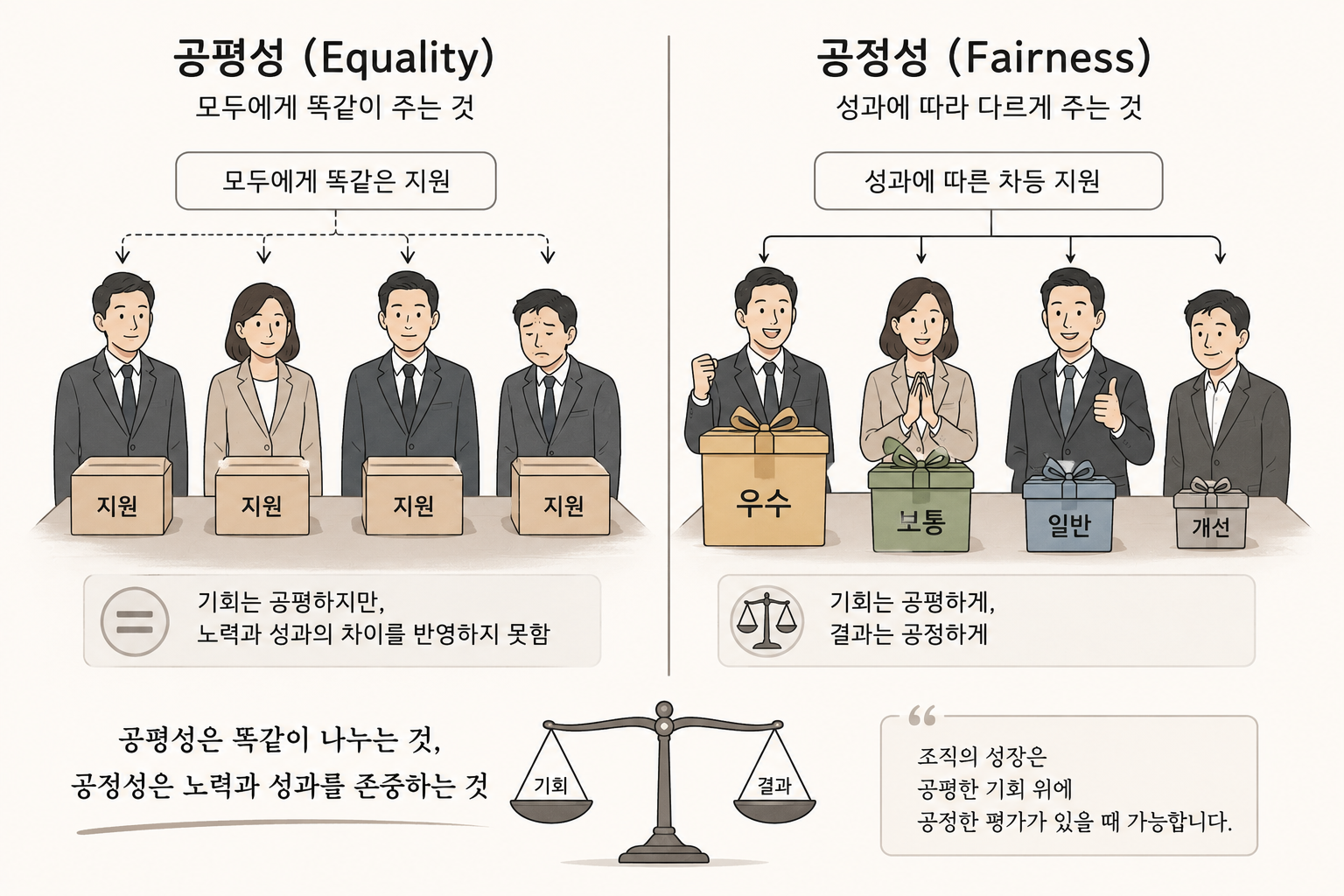
한 사람에게 사무실 임대료 지원 규정을 깨는 순간, 자칫 소문이라도 나면 실적과 상관없이 다른 이들에게도 공평하게 해줄 수밖에 없기 때문이다. 공평성과 공정성은 다른 것이다. 우리는 공평성과 공정성에 대해 혼동하지 말아야 한다.
회사의 규정은 언제나 공평하게 주어지지만, 대리상들의 판매 실적에 따른 결과는 절대 공평하지 않고 성과에 따라 공정하게 평가되어서 차등이 주어져야 한다는 사실이다. 그래서 기회는 공평하게, 결과는 공정한 것이 조직을 운영하는 가장 기본적인 리더십의 원칙이 되어야 할 것이다.
사람들은 이렇게 차등적인 평가를 차별로 오인하고 불공평하다고 탓할 수도 있겠지만, 잘하는 사람과 못하는 사람에게 똑같은 보상을 해준다는 것만큼 잘하는 사람에게 불공평한 것은 없을 것이다.
과거 찬란한 문명을 구가하던 지구상의 초강대국 중국이 공산주의 국가가 된 후 쇠퇴한 이유도, 잘하든 못하든 똑같이 분배하는 사회에서는 일 잘하는 사람들에겐 분명 불공평한 일이었기 때문일 것이다. 그러니 이런 사회에서 누군들 남들보다 더 잘하려는 노력을 하였겠는가?
우리나라가 한국전쟁을 겪고 난 60년대 초기에 분명 중국은 우리나라보다 더 잘 사는 나라였다. 그런데 모든 것이 공평한 중국과 노력한 만큼의 대가가 다른 한국은 삼십 년이 지난 후 천지 차이로 바뀌어 버렸다. 그리고 중국이 자본주의를 받아들인 지 이십여 년이 지난 지금, 과거에 머물러 있는 한국과 급진하는 중국과의 전세는 또 역전되어 가고 있는 것도 사실이다. 세상은 이렇듯 매사가 공정하게 돌아가고 있는 것이다.
나는 영업을 맡아 중국 전역을 돌아다니다가, 대리상들로부터 참으로 아이러니한 말을 들었다. 그동안 장 상무가 너무도 불공평했다는 것이다. 나는 장 상무만큼 도가 지나칠 정도로 대리상들이 요구하는 대로 잘해준 사람도 없다고 생각했는데, 불공평하다는 게 이상하다며 이유를 묻자, 그들의 대답이 이구동성으로 가관이었다.
“누구는 이걸 해줬고, 누구는 저걸 해줬는데, 왜 나는 안 해주는 것이냐? 너무 불공평하다.”
한 마디로 장 상무가 자기만 빼고 다른 대리상들에게 너무 잘해 준다는 것이다. 그들은 하나같이 자신이 받은 혜택은 당연히 받아야 하는 것이었고, 남들에게 해준 혜택은 불공평한 처사라고 생각하는 것이다.
결국 장 상무가 자기 편한 대로 수시로 규정을 깨고 특별히 지원해 준 일은 전혀 고마운 일이 아니라 마땅한 일로 간주되었으며, 나중에는 부메랑이 되어 그의 뒤통수를 강하게 때리게 되었다.
또한 사업자들 입장에서 그의 불공평한 처사는 불만의 대상이 되어, 장기적으로는 조직에서 이탈하는 대리상도 생기고 매출 실적에도 악영향을 주었으며, 결국 그는 영업 총괄 자리에서 물러나게 되었다. (계속)
Therefore, whenever a situation arises that appears to require going beyond the company’s established rules, the answer is not to break those rules but to find another solution that remains within the framework of the policy.
For example, suppose an outstanding distributor operates in an area where office rents are exceptionally high, making it difficult to cover expenses under the company’s standard office subsidy policy. Rather than violating the policy by increasing the office rent allowance, it would be far wiser to provide additional support through a special performance incentive based on sales achievements. In doing so, the company not only fills the financial gap but also encourages even stronger sales performance.
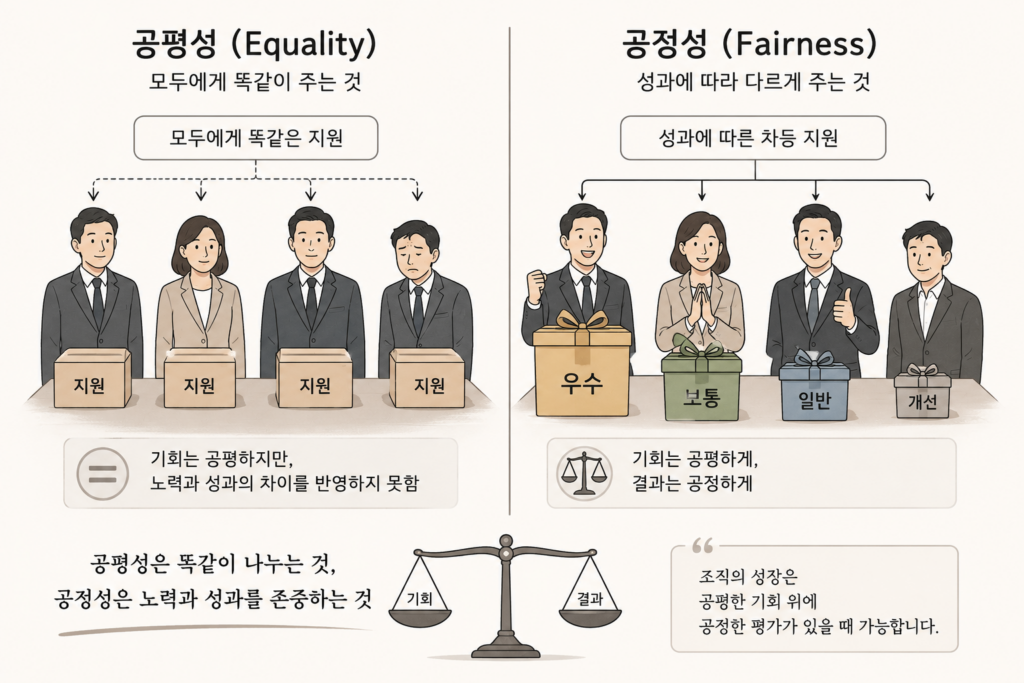
The moment the company makes an exception to its office rent policy for one distributor, word is likely to spread. Once that happens, the company may find itself under pressure to extend the same benefit to everyone else, regardless of their performance.
This is why we must clearly distinguish between equality and fairness.
Company policies should always be applied equally to everyone. However, the results that distributors achieve should never be treated equally. They should be evaluated fairly, with rewards differentiated according to performance.
Equal opportunity and fair outcomes—this, I believe, is one of the most fundamental principles of organizational leadership.
Some people may mistake differentiated rewards for discrimination and complain that they are unfair. Yet nothing is more unfair to high performers than rewarding them exactly the same as those who perform poorly.
Perhaps this also helps explain why China, once one of the world’s greatest civilizations and superpowers, declined after adopting a communist system. In a society where everyone receives the same rewards regardless of effort or achievement, hardworking and capable people inevitably feel they are being treated unfairly. Under such circumstances, who would be motivated to work harder than everyone else?
In the early 1960s, after the Korean War, China was unquestionably more prosperous than South Korea.
Yet three decades later, the situation had completely reversed. While China pursued a system emphasizing equal distribution, South Korea rewarded people according to their efforts and achievements, producing dramatically different outcomes.
Ironically, after China embraced market-oriented reforms and elements of capitalism some twenty years later, the balance began shifting once again. China accelerated its growth, while South Korea struggled to maintain its earlier momentum.
History reminds us that, in the long run, societies tend to reward systems that value fairness over simple equality.
As I traveled throughout China managing the sales organization, I heard something deeply ironic from many of our distributors.
They all insisted that Executive Director Zhang had been terribly unfair.
At first, I found this difficult to understand. In my view, no one had accommodated distributors’ requests more generously than Zhang—often to an excessive degree.
So I asked them why they considered him unfair.
To my surprise, they all gave virtually the same answer.
“He approved this request for someone else.”
“He gave that benefit to another distributor.”
“So why won’t he do the same for me? That’s completely unfair.”
In other words, Zhang had been too generous to everyone except them.
Each distributor believed that whatever benefits they themselves had received were only what they rightfully deserved, while every special favor granted to someone else represented unfair treatment.
Ultimately, all of the special exceptions Zhang had made by repeatedly ignoring company policies were never appreciated as acts of generosity. Instead, they quickly came to be regarded as entitlements.
Eventually, those very exceptions returned like a boomerang and struck him from behind.
From the distributors’ perspective, his inconsistent treatment became a constant source of dissatisfaction.
Over time, some distributors abandoned the organization altogether, sales performance suffered, and in the end, Zhang was forced to step down from his position as Head of Sales.
(To be continued)