우리는 태어나면서부터 본능적으로 아기가 젖을 달라고 우는 것부터 협상을 시작한다. 그리고 자라면서 사회생활을 하면서 항상 협상의 상황에 봉착하게 된다.
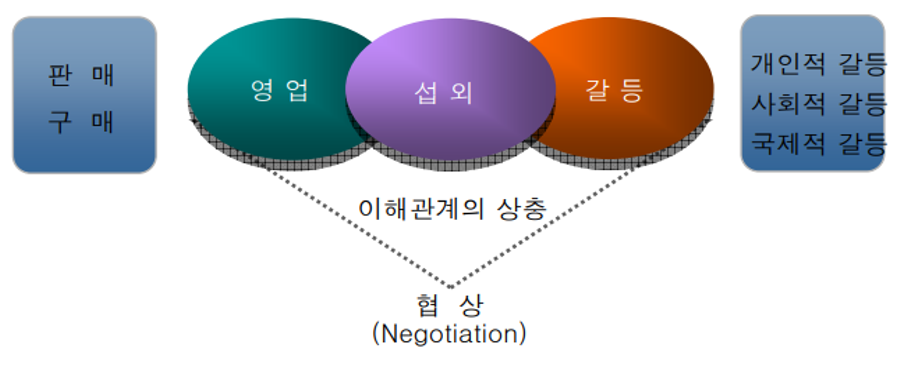
정보를 얻고자 할 때, 인허가를 받고자 할 때, 그리고 특히 상품이나 원료와 장비 등을 사고 팔고자 할 때 등, 서로 다른 쌍방은 이해관계가 상충되어 갈등이 일어나고 협상을 하게 된다. 그래서 협상은 힘들고 어려운 과정이 아니라 자연스런 일상임을 이해해야 한다.
그런데 사람들이 모두 현재의 상태에 만족한다면 협상을 벌일 이유는 없을 것이다. 그러나 기업이나 사람들은 기존의 현상에 만족하지 않고 꾸준히 새로운 것을 요구하고, 이럴 때마다 어떤 변화와 갈등이 생겨서 협상은 반드시 필요하게 된다. 그래서 협상은 현재가 아니라, 미래에 변화를 주기 위한 것이기 때문에, 절대적으로 전략이 필요한 게임인 것이다.
그렇다면 왜 협상에 실패하는 것일까?
그것은 협상이 필요할 때를 인지조차 하지 못하고 협상을 하지 않기 때문이며, 협상을 하더라도 어떻게 준비를 해야 할지 몰라 협상 준비가 소홀하거나, 협상 테이블에서 불필요하거나 엉뚱한 발언을 하여 현명한 합의 도출에 실패하거나, 거래를 성사시키고자 하는 욕심에 너무 많이 양보하여 손실을 입거나, 합의 후 팔로업(Follow-up)을 제대로 하지 않아 실패하는 경우 가 대부분이다.
따라서 협상에 성공을 하기 위해선 원하는 것을 쟁취하고자 하는 목적을 잊어서는 안 된다. 그렇다고 협상이 적대관계처럼 무조건 이기기 위한 게임이 되어서도 안되고, 상호 공생관계를 형성하기 위해 장애물을 제거하고 합의하는 과정임을 명심해야 한다.
그래서 협상은 내 요구를 주장하고 관철시키는 것보다, 상대방의 이야기를 들어주는 자세가 더욱 중요하다. 그렇기 위해선 내가 답을 알고 있다는 생각이 들 때 조차도, 상대에게 질문을 던지고 상대의 말을 적극적으로 듣고 있음을 보여줘야 한다.
그런 점에서 협상은 욕망을 얻어내는 것보다, 욕망 중 일부를 포기하는 것이 맞다고 할 수 있다. 스티브 잡스가 전략은 무엇을 하겠다는 것보다, 무엇을 하지 않겠는가를 결정하는 것이 더 중요하다고 말한 것과 일맥상통하는 일이다.
그렇다고 상대방에게 저자세로 일관해서 일방적으로 끌려가면 협상에 성공할 수 없다. 다음에 나오는 협상의 3대 변수인 힘(Power), 정보(Information), 시간(Time)을 전략적으로 적절히 활용해서 성공적인 협상을 이루어야 할 것이다.
——————————————-
From the moment we are born, we instinctively start negotiating, beginning with a baby’s cry for milk. As we grow and navigate social life, we constantly find ourselves in negotiation situations.
Whether seeking information, obtaining permissions, or especially when buying and selling goods, raw materials, and equipment, conflicting interests arise, leading to negotiations. Thus, it’s essential to understand that negotiation is not a difficult and strenuous process but a natural part of daily life.
If everyone were satisfied with the current state, there would be no reason to negotiate. However, individuals and businesses are rarely content with the status quo and consistently demand new things. Each time this happens, changes and conflicts arise, making negotiation necessary. Negotiation is therefore not about the present but about creating future changes, which is why strategy is crucial in this game.
So, why do negotiations fail?
Negotiations often fail because people do not recognize when negotiation is necessary and therefore do not engage in it. Even when they do, they may not know how to prepare properly, resulting in poor preparation. In the negotiation process, unnecessary or irrelevant remarks can hinder wise agreement, excessive concessions due to the eagerness to close a deal can lead to losses, and failure to follow up post-agreement often results in failure.
Therefore, to succeed in negotiations, one must not forget the objective of achieving what is desired. However, negotiations should not be treated as a game to win at all costs, nor should they create adversarial relationships. It’s important to remember that negotiation is a process of removing obstacles and reaching an agreement to form a mutually beneficial relationship.
Thus, in negotiations, listening to the other party is more important than asserting and enforcing your demands. Even when you think you have the answers, you should ask questions and demonstrate that you are actively listening to the other party.
In this sense, negotiation is more about relinquishing part of your desires than obtaining them. This aligns with Steve Jobs’ statement that strategy is more about deciding what not to do than what to do.
However, consistently maintaining a submissive posture and being led unilaterally by the other party will not lead to successful negotiations. To achieve a successful negotiation, you must strategically and appropriately utilize the three key variables of negotiation: Power, Information, and Time.