

항상 사업자들에게 어떤 문제나 어려움이 있냐고 물어보면 누구나 쉽게 대답하는 말이 판촉이 부족하다, 장려금과 마진을 더 달라 등…, 회사에서 더 지원해 달라는 말들만 한다. 회사가 해줄 수 있는 기본적인 규정 이상은 더 이상 해줄 수 없는 상황에서, 자신이 처한 문제를 인식하지 못하고, 현재 자신의 어려움을 회사의 부족함으로 돌리는 전형적인 나쁜 태도이다.
그럴 때면 나는 간결하게 대답한다. 회사가 해줄 수 있는 범위는 여기까지이다. 하지만 당신이 그 범위 내에서 어떤 문제를 발견하고 해결하려고 노력한다면, 다른 측면으로 도와 줄 수 있다는 것이다. 즉, 점장 및 대리상 교육을 지원해주거나, 사업자 설명회에 내가 직접 가서 신규 거래처들이 우리와 거래하도록 마인드를 바꿔 줄 수도 있다. 그래서 먼저 스스로를 돌아보고 내가 바꿀 수 있는 가장 작은 문제부터 찾아야 한다. 그리고 이를 하나씩 해결해 나가다 보면, 분명 회사가 주는 것보다 더 좋은 성과를 스스로 얻을 것이다.
직원들도 마찬가지다. 사람이 부족해서, 시간이 부족해서, 예산이 부족해서 하는 식이 대부분이다. 과연 먼저 자신에게 문제는 없는 것일까? 나의 업무 방식에 문제는 없는 것일까를 생각해 보는 것이 중요하다.
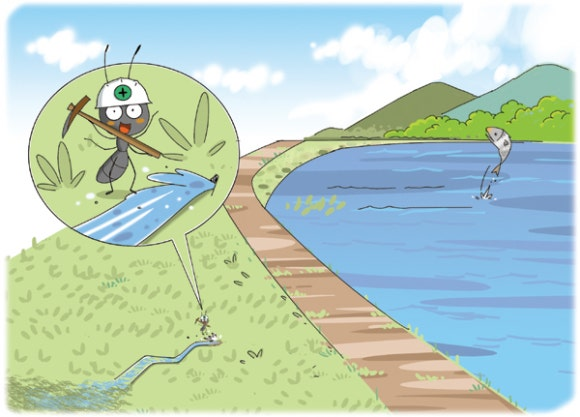
한비자는 “양자강이나 넓은 바다는 작은 시냇물도 버리지 않았기 때문에 저토록 넉넉해진 것이다”라고 말하며, 사소하고 작은 것이 모여 큰 것을 이룬다고 했다. 그러나 사실 미세하고 작은 일들이 큰 일을 망치기도 한다며, 한비자는 ‘제궤의혈(堤潰蟻穴)’이란 말도 했다. 즉, 큰 제방(堤)도 개미구멍(蟻穴)으로 무너진다(潰)는 뜻으로, 사소한 결함이라도 곧 손을 쓰지 않으면 큰 재앙을 당하게 된다는 말이다.
전국시대 홍수를 예방하는데 큰 공을 세운 바 있는 위(魏)나라 재상 백규(白圭)에 대해 한비자는 ˝백규가 수재를 막은 것은 제방의 구멍을 막았던 것이다[白圭之行堤也 塞其穴]˝라고 했다. 다시 말해서 백규의 홍수대책이란 것이 별게 아니라 제방을 쌓고 그곳에 생기는 구멍을 막았을 뿐이지만, 그것이 엄청 대단한 일이었던 것이다.
둑은 아무리 튼튼하게 쌓는다 해도 시간이 흐르면서 조금씩 구멍이 생기게 마련인데, 백규는 개미구멍이라도 찾아내면 지체 없이 막아 버렸다고 한다. 이렇게 철저하게 둑을 관리한 덕에, 백규가 재상으로 재임하는 동안 위나라는 한번도 수재가 발생하지 않았다고 한다. 사실 재난이란 것은 사소한 방심(放心)과 부주의 때문에 발생하는 일이 비일비재하기 때문이다.
그래서 한비자는 ˝천길 제방은 땅강아지와 개미구멍 때문에 무너지고, 백 척의 높은 집도 굴뚝 사이의 자그마한 연기구멍 때문에 타버린다.˝라고 말하였다. 한마디로 말해서 큰 일은 항상 미세한 작은 일에서 시작된다는 것이다. 그래서 개미구멍 같은 작은 문제라도 이를 놓치지 않고 발견하여 고칠 수 있는 세세함이 필요한 것이다.

실행력은 어떤 대단히 어렵고 큰 일을 어쩌다 홈런 치듯 한 방에 해결하는 것이 아니라, 짧은 안타를 자주 치듯이 작은 일들을 하니씩 해결해 가는 지속적인 과정이다. 그래서 실행력의 시작은 작은 문제들을 발견하는 것부터이다. 누구나 할 수 있는 작은 일이기 때문에 쉽게 실행할 수 있는 것이고, 그런 작은 실행에 의한 작은 성공체험이 나중에는 큰 일도 실행할 수 있는 경험과 원동력이 되어, 더 큰 문제를 미리 예방하거나 해결하게 만든다.
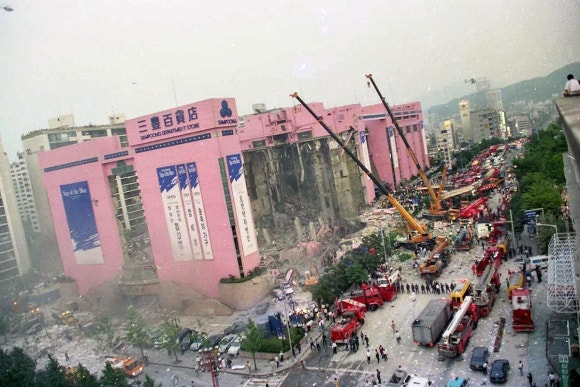
그런데 문제는 이런 사소한 일들은 별거 아니라 생각해서 안 하거나, 아니면 문제인지 조차 발견하질 못해 실행하지 못하는 경우가 대부분이란 것이다. 과거 체르노빌 원자력 발전소의 폭발도, 삼풍 백화점의 붕괴도, 매년 여름이면 찾아와 되풀이 되는 수재조차도, 보이는 문제를 안일하게 대응하거나 문제인지 조차 인식하지 못한 대 참사들이었다.

그래서 무엇보다 먼저 문제를 체계적으로 찾아내는 방법이 필요하다. 나는 팀장들에게 문제의식에 대한 얘기를 할 때면, 항상 다음과 같은 말을 했다.
“3M1S에 대해 문제의식을 갖고 일해야 한다. 문제는 항상 현장에 있다. 그리고 그 현장에는 언제나 사람(Man)이 있으니, 먼저 그 사람에 문제가 없는지를 파악해야 한다. 다음으로 업무운영 방법(Method)과 시스템(System)을 살펴 보고, 마지막으로 각종 지원 및 자원(Money/Material)을 살펴 봐야 한다. 회사의 자원이 부족해서 문제라는 것은 깊게 고민하지 않은 너무나 쉬운 일이다.”
3M1S를 통해 나를 돌아 보고, 작은 문제들을 체계적으로 발견하고 우선순위에 따라 중요하고 급한 일부터 하나씩 실행해 나간다면, 회사도 마땅히 자원을 더 투여하게 될 것이다. 이처럼 실행은 시스템적으로 이루어져야 한다.
GE의 부회장을 역임한 바 있는 래리 보시디는 그의 저서 “실행에 집중하라”에서 체계적인 실행의 3대 핵심 프로세스를 말하였는데. 이를 요약해 보면, 인력, 전략, 그리고 운영 프로세스로 실행해야 한다는 것이다. 이게 무슨 너무도 당연한 이야기라고 할 수 있겠지만, 그런 것일수록 더욱 체계적으로 지키기 힘든 일일 수도 있다.
유능한 인재를 적재적소에 배치하여 효율적으로 활용하고, 현실적이고 실행 가능한 전략에 의거하여 세부 운영계획을 짜고, 이를 실행하고 그 결과에 대해 공정하게 평가하는 것은 가장 기본적인 실행의 원칙이지만, 그만큼 실행하기도 어려운 일인 것이다.
——————–
Whenever I ask business operators what kinds of problems or difficulties they face, they almost always respond in the same way: “We lack sales promotions,” “We need more incentives and margins,” and so on — essentially, requests for more support from the company. But when the company has already done everything possible within reasonable limits, failing to recognize one’s own problems and instead blaming the company’s shortcomings is a typical example of a bad attitude.
At such times, I respond concisely: “The company’s support can only go this far. But if you identify problems and make efforts to solve them within this range, we can help you in other ways.” For example, we can provide education for store managers and agents, or I can personally attend business presentations to persuade new partners to change their mindset and start working with us. Therefore, one must first look inward and identify the smallest issues within their control. Solving those issues one by one will eventually yield better results than anything the company could have given.
The same principle applies to employees. Many claim they cannot perform well because of a lack of manpower, time, or budget. But the real question is whether there might be problems within themselves — or within their own way of working.
Han Feizi once said, “The Yangtze River and the vast seas became so immense because they never rejected even the smallest streams.” Small things accumulate to make great things. However, Han Feizi also warned that small things can destroy great ones, as in his saying “堤潰蟻穴” — “A great embankment collapses because of an ant hole.” It means that even a trivial defect, if neglected, can lead to a major disaster.
Han Feizi also mentioned Bai Gui (白圭), the chancellor of Wei (魏), who made great contributions in flood prevention during the Warring States period: “Bai Gui prevented floods by plugging the holes in the dikes.” In other words, his flood-control policy was nothing special — he simply built dikes and promptly sealed any holes that appeared. Yet this seemingly simple act was of tremendous importance.
No matter how solid a dike is, small holes inevitably appear over time. Bai Gui was known for immediately sealing even an ant-sized hole, which is why the state of Wei never suffered floods during his tenure. Disasters often arise from momentary carelessness and negligence.
Thus, Han Feizi warned, “A thousand-foot embankment collapses because of earthworms and ant holes, and a hundred-foot building burns down because of a small crack in the chimney.” In short, great failures always begin from the smallest causes. Detecting and correcting those “ant holes” requires a meticulous eye for detail.
Execution is not about accomplishing grand, difficult tasks in a single stroke — it is a continuous process of solving small problems one by one, like consistently hitting short base hits rather than relying on an occasional home run. The beginning of execution lies in discovering small problems. Because these are small and manageable, they can be easily acted upon, and the repeated experience of small successes becomes the driving force for tackling larger challenges and preventing major crises later on.
However, most people neglect these small matters, dismissing them as trivial, or fail to recognize them as problems at all. The Chernobyl nuclear disaster, the collapse of the Sampoong Department Store, and the recurring floods that strike every summer — all were catastrophic consequences of complacency and the failure to recognize visible warning signs. Therefore, a systematic method of identifying problems is crucial.
When I talk to team leaders about problem awareness, I always say: “You must work with awareness of 3M1S.” Problems always exist on-site, and where there is a site, there are always people (Man). So first, determine whether the problem lies with the person. Then examine the Method (how the work is done) and the System, followed by Money/Material (resources and support). Claiming that problems exist simply because the company lacks resources is the easiest — and laziest — excuse.
By reflecting on oneself through the 3M1S framework, systematically identifying small issues, and addressing them in order of urgency and importance, the company will naturally be motivated to allocate more resources. In this way, execution must be carried out systematically.
Larry Bossidy, former Vice Chairman of GE, stated in his book “Execution: The Discipline of Getting Things Done” that there are three core processes essential to systematic execution: people, strategy, and operations. While this may sound obvious, such fundamentals are often the hardest to maintain. Assigning capable people to the right positions, building realistic and executable strategies, and establishing fair evaluation based on concrete results — these are the basic principles of execution, yet also the most difficult to practice.