

펭귄은 지구에서 가장 추운 남극의 추위를 선택하여, 날개를 포기하는 대신 바다에서 수영하는 새로 변화하여 그곳에서 가장 많은 종족으로 살아 남았다. 또한 남극에서 가장 큰 포유류인 혹등고래는 따듯한 남태평양에서 새끼를 낳았음에도 불구하고, 그 새끼와 함께 자그마치 25,000km라는 험난한 바다를 거슬러, 먹이(크릴새우)가 풍부한 남극까지 헤엄쳐 온다.
그러나 모든 동물들이 추운 남극 대륙을 좋아하는 것은 아니다. 어떤 동물은 반대로 강한 추위를 견디지 못하고 먹이가 풍부한 따뜻한 남쪽 나라를 찾아 떠나는 길을 선택한다. 나는 그 중 추운 시베리아 벌판을 피해 따뜻한 인도까지 날아가는 재두루미를 살펴보았다.
오래전 KBS에서 특집 “세계의 지붕 히말라야, 그 곳에 사는 동물들”이라는 방송을 봤다. 히말라야라는 위대한 산은 물고기부터 원숭이, 늑대, 화려한 공작새까지 다양한 동물들의 보금자리로 자리잡고 있었지만, 재두루미에게는 무엇보다도 먼저 넘어야하고 극복해야 할 거대한 장애물이었다.
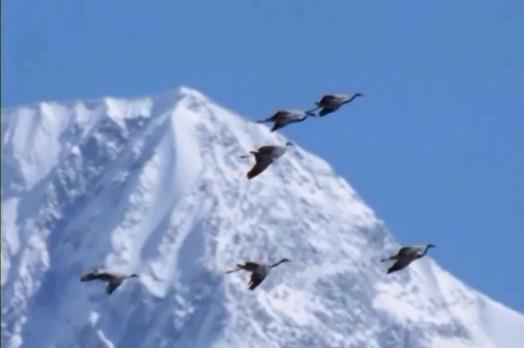
재두루미는 시베리아에서 히말라야까지 자그마치 7,000km를 날아온다. 재두루미는 여느 철새들처럼 V자 대형을 유지하며, 거센 비바람과 어려움을 헤쳐 히말라야 산까지 간신히 도착하였다.
하지만 산넘어 산이란 말은 이런 것을 말하는 것인가? 세계의 지붕이라고도 불리우는 해발 8,000m의 히말라야 산을 넘는 것은 장장 7,000km를 날아 오며 지칠대로 지친 재두루미들에게는 또 다른 시련이었다. 영하 40도의 강추위와 희박한 산소로 무장한 히말라야 정상은 지친 그들에게는 넘을 수 없는 거대한 장벽처럼 보였을 것이다.
그들은 망설이지 않고 날아올랐다. 한 순간 히말라야 정상 뒤에 숨어있던 강한 역기류가 그들을 휘감으며 어림도 없다는 듯이 그들을 밑바닥으로 몰아부쳐 뿔뿔이 흩어지게 만들었다. 그렇게 첫 도전은 실패로 끝났다.
그러나 다음 날 아침, 재두루미들은 다시 한번 비상하였다. 또 한번 역기류가 그들을 몰아부쳤지만, 그들은 어제의 그들이 아닌 양, 두 날개를 강하게 퍼덕이며 정상을 향해 질주하였다. 그리고 결국 정상에 도사리고 있던 날카로운 적의 공격을 극복한 재두루미들은 순풍을 타고 날개를 활짝 편 채 행글러이더 마냥 몸을 바람에 맡기었다. 이제 그들을 막고 있는 장벽은 더 이상없었다. 눈물겨운 날개짓도 더이상 필요 없었다. 이젠 꿈같은 풍요로운 땅으로 바람에 실려 내려가기만 하면 되는 일이었다.
갑자기 수 개월 동안 고난의 시간이 한 순간 영상처럼 뇌리를 스쳐지나가자 재두루미 한 마리는 이제 다끝났다는 듯이 안도의 비행을 하고 있었다. 바로 그때 지칠대로 지치고 안도의 한숨을 내쉬고 있는 재두루미를 향해 검은 독수리 하나가 공격하였다.
깜짝 놀란 재두루미는 간신히 공격을 피하였으나, 그걸 기다렸다는 듯 다른 독수리 한 마리가 재두루미를 낚아채 갔다. 한 순간의 방심으로 무리에서 이탈된 재두루미 하나가 그렇게 안타까운 생을 마감했다. 그런데 어쩌면 한 마리의 희생으로 여러 마리의 재두루미들은 무사히 따뜻하고 풍요로운 땅에 도착할 수 있는 것일지도 모른다. 그것이 자연의 법칙인 것이다.
추위를 선택해 남아있는 펭귄이나 추위가 싫어 떠난 재두루미나 그들은 인생의 큰 선택을 한 것이다. 내 친구 중 두 명은 각각 현대증권과 우리은행에서 신입사원으로 입사하여 30년 넘게 다니다 회사를 떠난 반면, 나는 회사를 10번이나 옮겨 다녔다.
그 친구들은 나보고 능력이 뛰어나 회사도 잘 옮긴다고 부러워 하면서 자기들은 여기뿐이 없어 어쩔 수 없다며 넋두리 하지만, 나는 오히려 그들이 능력이 뛰어나 한 회사에 오래 살아 남았고 나는 결국 떠났기 때문에 그 회사에서 실패한 것이라고 말한적도 있다.
하지만 분명한 것은 남아있던 떠났던 그 선택의 여정은 무엇 하나 쉬운 일이 아니라는 것이다. 남극에 남은 황제펭귄의 고통스런 혁신과 협동이 있었듯이, 먼 길 떠난 재두루미의 고통스런 혁신과 협동력도 있기 때문이다.
그럼 과연 재두루미는 어떻게 그 긴 여정을 극복해냈을까?
우리가 흔히 진화라고 하는 긴 세월의 변화를 재두루미도 하였다. 큰 몸 속에 불필요한 무거운 내장을 줄이고 가볍게 날 수 있도록 두 개의 공기주머니를 채웠으며, 크고 강한 날개가 날개짓을 줄여 줬다. 이건 단순한 변화가 아닌 신체를 최대로 경량화한 대단한 혁신이었다. 또한 사전 운동 및 철저한 영양 비축 시스템은 재두루미가 장거리 여행을 견딜 수 있는 필요 조건이다.
또한 V자 대형은 비단 적으로부터 몸을 지키는 것뿐만 아니라, 강한 맞바람을 극복하기 위한 협동의 지혜로써 선두의 새가 힘들면 후진의 새가 교체를 하며 힘의 안배를 하는 한편, 서로가 함께 날아줌으로써 일정한 속도를 유지하며 혼자 나는 것보다 더 힘을 낼 수 있는 협력의 힘이었다.
그렇게 혁신하고 단합하여 히말라야까지 극복했지만 이제 성공했다는 안일한 한 순간의 방심으로 천적에게 목숨을 잃기도 하는 것은 아무리 스스로를 혁신하고 아무리 단합된 힘을 보여줘도 과거의 성공에 취해 현재를 안주하는 이는 여지없이 도태된다는 경종을 우리에게 울려준다.
회사를 떠나 다른 회사를 가거나 새로운 사업을 하는 것 등은 모두 재두루미처럼 길고 험난한 여정이다. 아니 우리네 인생 자체가 바로 긴 여정의 연속이다. 그 여정 속에 우리가 살아남고 성공이라는 단물을 만끽하기 위해서는 재두루미가 어려움을 극복하고 무사히 히말라야를 넘어 풍요의 땅에 안착하였던 놀라운 감동과 뼈아픈 죽음을 잊지 말아야겠다. (계속)

—————-
Penguins chose the harsh cold of the Antarctic, giving up flight in exchange for becoming adept swimmers in the sea. They have survived and thrived in those icy conditions, becoming one of the most populous species there. Meanwhile, the humpback whale, the largest mammal in Antarctica, gives birth in the warm waters of the South Pacific. Yet, despite the distance, the mother and calf undertake the arduous 25,000 km journey to reach the krill-rich waters of the Antarctic.
However, not all animals are fond of the cold, barren continent. Some animals choose to flee the harsh cold, opting for the journey to warmer regions with more abundant food. I’ve taken a closer look at the white-naped crane, which escapes the cold Siberian plains to migrate to the warm lands of India.
Years ago, I watched a KBS special titled “The Roof of the World, Himalayas: Home to Animals.” The majestic Himalayas, the world’s tallest mountain range, serve as a habitat for a wide array of creatures—from fish to monkeys, wolves, and vibrant peacocks. But for the white-naped crane, it represented a massive obstacle to overcome.
The cranes migrate an astounding 7,000 km from Siberia to the Himalayas. Much like other migratory birds, they fly in a V-formation, enduring harsh winds and storms, eventually arriving at the base of the Himalayan mountains.
But the saying “one mountain after another” fits perfectly here. After flying a grueling 7,000 km, the cranes, exhausted beyond measure, now face yet another trial: crossing the towering Himalayas, standing at 8,000 meters, also known as the “Roof of the World.” For these fatigued birds, this mountain, with its -40°C temperatures and thin air, must have appeared like an insurmountable wall.
Yet, they did not hesitate. They took flight again. As they ascended, a fierce downdraft concealed behind the summit caught them off guard, scattering them in all directions, pushing them back to the base. Their first attempt had failed.
But the next morning, the cranes took off once more. This time, even when the downdraft struck again, they were no longer the same birds as yesterday. They beat their strong wings and soared toward the summit. Finally, the cranes overcame the sharp winds, and with wings spread wide like hang gliders, they glided on the tailwind. The barrier was no longer there. No more struggling against the winds—now, they simply let the breeze carry them to the bountiful lands that awaited.
As the grueling months of hardship flashed through their minds like a video, one crane, finally at ease, flew with a sense of relief. But in that very moment, a black eagle launched a surprise attack. Startled, the crane barely dodged the first attack, but another eagle swooped down and snatched the crane away. One brief moment of complacency, and a crane separated from the flock had tragically lost its life. Yet, perhaps this single sacrifice allowed many of the other cranes to reach the warm, bountiful lands safely. Such is the law of nature.
Whether it’s the penguins who chose to endure the cold or the cranes who fled it, they made monumental life decisions. Two of my friends each worked at Hyundai Securities and Woori Bank for over 30 years before retiring, while I, on the other hand, changed jobs ten times.
My friends often envied me, saying I had the ability to switch jobs easily, while they had no choice but to stay in one place. However, I once told them that they were the talented ones, surviving in one company for so long, while I had ultimately failed because I had to leave.
But one thing is clear: whether one stays or leaves, the journey is never easy. Just as the emperor penguins in Antarctica undergo a painful process of innovation and cooperation, so too do the cranes that travel far face painful challenges that require innovation and collaboration.
So how did the cranes overcome such a long journey?
Like any long-term evolution, cranes too have adapted. They have shed unnecessary heavy organs to make their bodies lighter, equipped with two air sacs to help them fly more easily. Their large, strong wings reduced the need for excessive flapping. This wasn’t just simple adaptation—it was a remarkable innovation that maximized body efficiency. The cranes also underwent thorough preparation, with pre-flight exercises and a carefully planned nutrition system to endure the long journey.
Additionally, the V-formation wasn’t just for protection from predators; it was a cooperative strategy to fight strong headwinds. When the lead bird tired, another would take its place, sharing the burden. Flying together allowed them to maintain a consistent speed, making them more efficient than if they flew alone. This cooperation and innovation enabled them to overcome the Himalayas, but a moment of complacency, believing they had succeeded, cost one of them their life to a predator. No matter how much innovation and teamwork are displayed, those who rest on past success and become complacent will inevitably be weeded out by the forces of nature.
Leaving a company for another or starting a new business is much like the cranes’ long and treacherous journey. In fact, life itself is a long journey. To survive and savor the sweetness of success along that journey, we must remember the inspiring resilience of the cranes who overcame hardships and safely crossed the Himalayas, as well as the painful loss of life that comes with even the slightest moment of carelessness. (To be continued)