

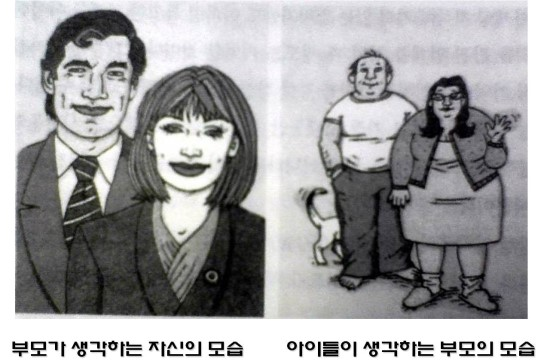
아래 그림은 스콧 로비넷(Scott Robinette)이 공저한 <감성 마케팅>이란 책에서 발췌한 것으로, 내가 직원들에게 브랜드 교육을 할 때 자주 쓰는 사례이지만, 기업의 관점의 전환이란 측면에서도 잘 맞는 것 같아 발췌해봤다.
그림에서 보는 바와 같이 잘생기고 이지적이며 세련된 왼쪽 사진은 부모가 아이들에게 보여지기를 바라는 자신들의 모습이지만, 아이들의 눈에는 그들이 오른 쪽 사진처럼 이웃 집 아줌마 아저씨와 별반 다름없이 보여지고 있을 수도 있다.

이렇듯 부모와 자식 사이에서도 큰 관점의 차이가 있는데, 하물며 생판 모르는 기업과 고객 사이에는 얼마나 많은 차이가 있겠는가?
기업은 마케팅 활동을 통해 고객의 의식 속에 브랜드를 심어 넣으려고 BI(Brand Identity) 많은 돈을 쏟아 붇지만, 이것이 기업이 의도한 데로 정확하고 뚜렷하게 잘 전달되지 않는다.
기업의 BI 활동의 결과는 고객의 입장에선 다른 BI(Brand Image)를 만든다. 고객이 어떤 브랜드에 대해 떠올리는 BI(Brand Image)는 다양한 매체나 주변 사람들의 평가, 권유, 그리고 무엇보다도 중요한 개인적인 경험을 통해 형성되는데, 그 과정에서 기업의 관점으로 섣부른 판단을 하여, 고객에게 BI(Brand Identity)를 푸시(Push)를 한다면 고객의 긍정적인 BI(Brand Image) 형성에 큰 낭패를 당하기 쉽다.
과거 코카콜라는 더 맛있는 콜라를 제공하겠다는 자신들의 관점으로 수 많은 소비자 조사를 한 결과, 코카콜라의 맛을 바꿨다가(New Coke) 전통적인 코카콜라를 선호하는 소비자들의 반대에 부딪쳐 결국 재난과도 같은 실패를 겪은 바가 있다.
반면 소비자와 거리가 먼 CPU를 기업에 납품 판매하는 인텔은 고객 관점의 전환으로 큰 성공을 거두었다. 이전까지 사용했던 286, 386, 486 등의 명칭이 법적인 보호를 받지 못해, 경쟁사(AMD)들도 똑같은 숫자를 사용하게 되자, 인텔은 1991년 IBM, 컴팩 등이 판매하는 컴퓨터에 「인텔 인사이드」라는 로고를 부착하도록 하고, 컴퓨터 회사들에게 CPU 금액의 6%를 환불하는 방식으로 무려 8년간 34억 달러의 비용을 지출하는 등 대대적인 공동 광고를 실시하였다.
그 결과 소비자들은 인텔 칩이 내장된 컴퓨터를 더욱 선호하게 되었고, 인텔은 CPU시장에서 강력한 일등이 되었다. 1998년 스위스 다보스에서 열린 세계경제포럼에서 하버드 대학 모스캔터 교수는 “인텔은 컴퓨터 칩을 감자 칩처럼 파는 회사이다. 대중과는 거리가 먼 반도체에 인텔 인사이드(Intel Inside)라는 이름을 붙인 것은 제조업의 패러다임을 변화시킨 우수한 사례이다”라고 극찬을 하였다.
이렇듯 기업관점이 아닌 고객 관점으로 생각의 틀을 조금만 깨면 그 동안 보지 못했던 것을 볼 수가 있을 것이다. 바로 소비자의 인식이라는 깊은 속 마음이다.
과거 성철 스님은 “산은 산이요. 물은 물이로다.”라는 변하지 않는 진리를 말하며 세속의 인연을 끊었다면, 세속에 사는 우리는 “산은 산이 아니고, 물은 물이 아니다”라는 이치를 깨달아야 한다. 작가 이외수는 “청춘불패”에서 다음과 같이 말했다.
“산은 정지해 있으되 능선은 흐르고 있고, 강은 흐르고 있으되 바닥은 정지해 있다.
그대가 두 가지를 다 보았다고 하더라도 아직 산과 강의 진정한 모습을 보았다고는 말하지 말라. 산은 산이 아니고 물은 물이 아니다.”
관점을 바꾸고 들여다 보면 우리가 보지 못하는 이면을 볼 수가 있고, 그때부터 더 이상 피상적인 산은 산이 아니고 물은 물이 아닌 것처럼, 우리는 그 동안 보지 못했던 역동적인 산과 고요한 물을 만날 수 있을 것이다.
기업은 고객 스스로도 잘 알지 못하는 속마음을 찾아내야 한다. 그러기 위해서 전사적 고객 마인드로 관점을 전환하는 기업만이 이 시대의 변화하는 기업이 되고 미래에도 더욱 강하게 살아남는 기업이 될 것이다.
레오나르도 다빈치는 말했다.
“세상에는 세 종류의 사람이 있다. 보려는 사람들, 보여주면 보는 사람들, 그래도 안 보는 사람들.”
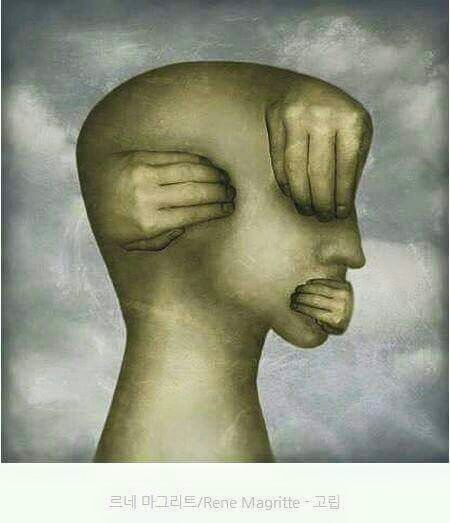
지금 나는 어떤 사람일까? 혹 자신의 고정관념에 사로 잡혀 보여줘도 보지 않으려고 눈과 귀를 꼭꼭 닫고 있는 사람은 아닌가? 그렇다면 이제 틀을 깨고 밖으로 나와야 한다. 번데기에 갇혀있던 애벌레가 껍질을 벗어내야 나비가 되어 날아가듯이 사람도 조직도 그 동안 쌓아왔던 껍질을 깨어 버려야 한다.
“껍질을 깨야 진정한 세상을 볼 수 있다.”

——————–
The following illustration, excerpted from Emotion Marketing co-authored by Scott Robinette, is one I frequently use in brand training sessions. It also aptly illustrates the necessity of perspective shift within an organization.
As shown in the image, the attractive, intellectual, and sophisticated appearance in the photo on the left represents how parents wish to be seen by their children. However, to the children, the parents may look more like the plain, ordinary people in the right-hand image—no different from any other neighborhood adults. If such a gap in perception exists even between parents and children, how much more misaligned must the perspectives be between companies and complete strangers, their customers?
Companies pour substantial budgets into marketing campaigns to implant their brand identity (BI) in consumers’ minds. However, what is intended as clear and precise messaging from the company’s perspective often ends up being interpreted differently by the customer. The resulting BI in the customer’s mind—the brand image—is shaped not by the company’s internal vision, but by a mix of media exposure, word-of-mouth, third-party opinions, and, most importantly, personal experience. When companies attempt to aggressively push their intended BI from a corporate perspective, they risk undermining the formation of a positive brand image in the customer’s mind.
Coca-Cola, for example, once conducted extensive consumer research in pursuit of a better-tasting cola and decided to change its formula. The result—New Coke—was met with fierce backlash from loyal consumers who preferred the original taste, leading to one of the most infamous marketing failures in history.
In contrast, Intel, which sells CPUs—a product far removed from everyday consumers—achieved immense success by adopting a customer-centric mindset. When its numeric product names (286, 386, 486) lost trademark protection and competitors like AMD began using the same numbers, Intel launched the “Intel Inside” campaign in 1991. They paid computer manufacturers such as IBM and Compaq 6% rebates to display the Intel Inside logo on their products and invested a total of $3.4 billion over eight years in co-marketing efforts.
As a result, consumers began actively preferring computers with Intel chips, and the company secured a dominant position in the CPU market. At the 1998 World Economic Forum in Davos, Harvard professor Rosabeth Moss Kanter praised Intel, saying, “Intel sells computer chips like potato chips. Giving a human name like ‘Intel Inside’ to a semiconductor—an otherwise distant technology—was a paradigm shift in manufacturing.”
Such examples show how a simple shift from a corporate to a customer perspective can reveal insights previously unseen—namely, the deep inner perception held by consumers.
If Seongcheol Sunim once declared the immutable truth that “a mountain is a mountain, water is water” in renunciation of worldly ties, those of us living in the secular world must realize a different truth: “a mountain is not a mountain, water is not water.” As writer Yi Oi-su wrote in Youth Invincible:
“The mountain stands still, yet its ridges flow; the river flows, yet its bed remains still.
Even if you have seen both, do not claim to know the true nature of the mountain and river.
A mountain is not a mountain, and water is not water.”
By changing our perspective and looking more deeply, we can begin to see what was previously invisible. At that point, just as mountains become dynamic and waters become serene, we encounter a whole new reality that was hidden from view.
Companies must discover the unconscious desires and unarticulated thoughts of their customers. Only organizations that shift their perspective to adopt a company-wide customer mindset can become the adaptable, forward-thinking enterprises capable of surviving and thriving in the future.
Leonardo da Vinci once said:
“There are three kinds of people: those who see, those who see when shown, and those who do not see.”
Which type of person am I now? Am I someone who, trapped by fixed ideas, refuses to see even when shown, with eyes and ears tightly shut? If so, it’s time to break free. Just as a caterpillar must shed its cocoon to become a butterfly, both individuals and organizations must shatter their old shells.
“Only by breaking the shell can we truly see the world.”