

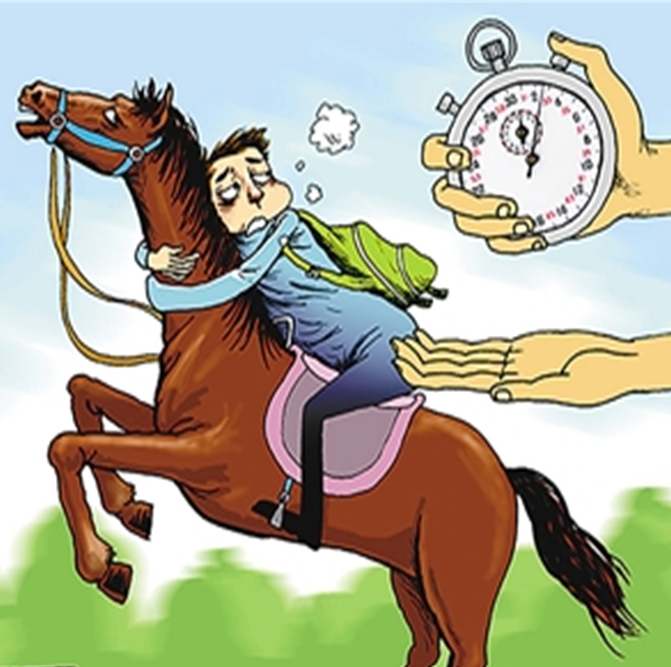
다음으로 말이 나온 김에 마샹(马上)이란 말에 대해서도 얘기해 보겠다. 마샹은 옛날에 가장 빠른 교통 수단인 말을 타고 달려가는 중이란 뜻이었니, 얼마나 빨리 가겠다는 말이겠는가?
그런데 현대에 와서도 마샹이란 단어는 한국어로 곧, 바로, 금방이란 뜻으로 계속 쓰여지고 있다. 하지만 이 말은 지금 당장이 아니라 과거 한국의 중국음식점 배달을 연상하게 한다.
“네. 곧 갑니다”
중국음식점의 이 말은 20분이 지나도, 30분이 지나도, 때론 한 시간이 지나도 음식이 오지 않아 다시 전화하면 매번 되풀이 되는 같은 말일 뿐이었다. 누구나 한국에서 가끔은 이런 경험을 해봤을 것이다. 하지만 문제는 이런 일이 중국에서는 일상처럼 비일비재하다는 것이다. 내가 뭔가 일을 지시하고 나서, 그 결과를 보고받기까지가 하 세월이기 때문이다. 참다 못해 내가 도대체 언제 되냐고 물으면 중국직원들은 이렇게 말한다.
“마샹마샹.”
그것도 한번만 말하지 않고 꼭 두번 반복해서 말한다. 마치 바로 금방 다 된다는 것처럼 반복하여 강조하는 말 같다. 중국에 처음 왔을 때 나는 이 말을 곧이 곧 대로 곧 되는 줄 알고 믿었었다. 이것이 시간관념 없는 ‘만만디(漫漫地) 중국인들이 대충 말하는 변명이었을 줄은 꿈에도 몰랐었다.
하긴 말을 그대로 해석해서 말을 타듯이 빨리 하겠다는 마샹은 현대 사회에는 너무 느린 일이 되었다. 요즘처럼 자동차와 비행기로 더욱 빨리 달리고 날아갈 수 있는 시절에 말을 타겠다는 말은 말이 안 되는 말이니 말이다.
이후 내게 마샹을 말하는 직원은 싫은 소리를 듣는다. 30분 후에, 아니면 더 늦은 두 시간 후라도, 차라리 내일 언제까지 할 수 있다고 정확한 시간을 말해야 내가 조급히 기다리지 않기 때문이다. 그 후로 우리회사에서는 마샹과 차부두어란 단어가 상당히 줄어들었지만, 여전히 완벽히 사라지지는 않았다. 누구도 한 순간에 그들의 문화와 습관을 바꿀 수는 없을 것이기 때문이다.

이벤트 팀이 사라져버렸으니 우리도 어쩔 수 없이 리허설을 계속 진행할 수가 없었다. 이미 밤 12시가 되어 외딴 연수원에는 택시도 없는 시간이었다. 나는 집으로 가겠다는 직원들을 회사차로 택시 잡을 수 있는 곳까지 내려주게 하고, 더 남아 있어야 할 사람들은 연수원에서 마련한 진행팀 숙소에서 자게 한 후, 나도 미리 예약한 내 방으로 돌아왔다.
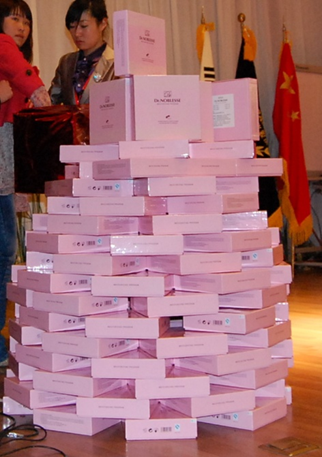
광저우에서 돌아오자마자 휘몰아친 폭풍같은 업무에 온몸이 쑤시고 피곤하였지만 잠이 오지가 않았다. 아니 오히려 정신은 더욱 또렷해지고 맑아지고 있었다. 순간 함께 남은 진행팀은 뭔 일을 하고 있을까 하는 생각에, 나는 다시 주섬주섬 옷을 입고 행사장으로 향했다. 행사장에는 서이사와 송부장, 그리고 카이를 비롯한 두 명의 직원들이 강단의 양쪽에 제품으로 탑을 쌓고 있었다.
“아니, 이게 지금 제품으로 뭐 하는 거야?”
“내일 교육할 것 준비 중입니다.” 송부장이 나를 돌아보며 대답했다.
“근데 왜? 이런 탑을 쌓지? 그러다 행사 중에 다 무너지면 어쩌려고?”
“그러게요. 여지 것 매번 이랬답니다.”
그때 서이사가 나를 보며 짧은 한국어 실력으로 떠듬거리며 부연 설명을 해주었다.
“제품을 멋지게 잘 보이게 하려고 그러는 거에요. 이렇게 진열하였다가 제품을 설명할 때 하나를 들어서 설명도 하고요…”
“그래? 그럼 나도 도와줄까?”
“아니어요. 거의 다 됐어요. 그러다가 망치면 안돼요.”
서이사가 혹시라도 공든 탑이 무너질까 봐 얼른 나를 제지하자, 나는 마지못해 제품 탑 쌓기에서 몇 발자국 떨어져 그들이 하는 것을 재미있게 지켜만 보았다. 근데 사실 내 눈에는 첨성대처럼 쌓아 올린 그 탑 모습이 그리 멋지지도 않고 좋아 보이지도 않았는데, 이들에겐 이게 멋지게 디스플레이하는 것이라 생각됐나 보다 싶었다.
그러고 보니 오늘 이벤트 대행사가 행사장을 꾸민 장식들을 보면 울긋불긋 하나같이 촌스럽지 않은 게 없었다. 그래도 어떡하겠나? 로마에 가면 로마법을 따라야 하는 것을… 나는 제품 나르는 것을 좀 도와주다가 탑들이 대충 마무리되자, ‘신쿠어러(辛苦了, 수고했어요)’라는 한 마디 말을 남기고 방으로 다시 돌아왔다. 이미 새벽 두 시가 넘은 시간이었다. 곧 몇 시간 후면 기념비적인 엄청난 하루가 나를 기다리고 있을 것이다. – 계속 –

———————-
Since the topic has come up, let me also talk about the word mashang (马上).
Originally, mashang literally meant “on horseback,” referring to someone riding the fastest means of transportation in ancient times. Imagine how fast that must have sounded back then.
However, in modern Chinese, mashang is still widely used to mean “soon,” “immediately,” or “right away.” Yet to me, this phrase often brings to mind the delivery service of old Chinese restaurants in Korea.
“Yes, we’re on our way right now.”
Anyone who has lived in Korea has probably heard this line after ordering Chinese food — and then waited 20, 30, sometimes even 60 minutes before the food arrived. Calling again would only yield the same response. The problem is, in China, this kind of thing happens all the time. It’s routine. Whenever I give an instruction and wait for a report, it feels like an eternity before I hear back. When I finally lose patience and ask, “When will it be done?”, the Chinese staff always answer:
“Mashang, mashang.”
And they always say it twice. It sounds as if emphasizing urgency — like “right away, right away!” — but in reality, it means anything but. When I first came to China, I took this expression literally, believing that mashang meant something would be done immediately. Little did I know it was just another excuse from manman di (漫漫地) Chinese people who have little sense of time.
If you think about it literally — riding a horse — even that would be too slow in today’s world. In an era of cars and airplanes that move infinitely faster, saying “I’ll do it mashang” is ironically outdated.
These days, whenever an employee says mashang to me, I give them a piece of my mind. I’d rather they tell me an exact time — “in 30 minutes,” “in two hours,” or even “by tomorrow” — than make me wait anxiously for something that never happens. Since then, the words mashang and chabuduo have become far less common in our company, though they haven’t disappeared completely. After all, no one can change a culture or habit overnight.
With the event team gone, there was no way for us to continue the rehearsal. It was already midnight, and there were no taxis around the remote training center. I had the company car drop off those who wanted to go home at a point where taxis could be found, and those who had to stay the night were assigned to the staff dormitory provided by the venue. Then I returned to my reserved room.
After the whirlwind of work that had struck the moment I returned from Guangzhou, my whole body ached with exhaustion — yet I couldn’t fall asleep. My mind grew clearer and sharper instead. I suddenly wondered what the remaining event staff were doing and, on impulse, got dressed again and went back to the hall. There, Director Seo, Manager Song, and two employees including Kai were stacking product boxes into tall towers on either side of the stage.
“What are you doing with those products?”
“We’re preparing for tomorrow’s training session,” Song replied, turning toward me.
“But why are you stacking them like that? What if they collapse during the event?”
“I know. Apparently, that’s how it’s always been done,” he said.
Then Director Seo, in her halting Korean, added by way of explanation,
“We’re doing this to make the products look nice. During the presentation, we’ll take one from the display and explain it…”
“Really? Should I give you a hand?”
“No, it’s almost done. You might knock it over,” she said quickly, stopping me from coming closer, worried I’d ruin the fragile structure.
So I stepped back a few paces and simply watched them at work, amused. To my eyes, the tower resembled a miniature Cheomseongdae — Korea’s ancient stone observatory — and didn’t look particularly stylish or impressive. But apparently, they thought it made for a beautiful display.
Come to think of it, everything the event agency had decorated earlier that day was garish and clumsy — nothing elegant about it. Still, what could I do? When in Rome, do as the Romans do. I helped move a few boxes, and once the towers were finished, I simply said, “Xinkule (辛苦了) — good work,” and headed back to my room. It was already past two in the morning. In just a few hours, an unforgettable, monumental day awaited me. – To be continued –