

김현웅과 마카이가 이른 아침부터 서둘러 칭다오에서 세시간 반을 비행하여 광저우에 도착했을 때는 점심이 다되었을 때였다. 비행기가 30여분 지연되는 바람에 두 사람은 서둘러 공항에 나오자마자 바로 길게 줄 서있는 택시를 타고 예약한 호텔로 갔다. 근 한 시간을 달려 도착한 호텔에는 용기회사 영업담당자가 이미 기다리고 있었다.
두 사람은 늦어서 미안하다는 말을 남기고 얼른 방 두 개를 잡고 짐만 놔둔 채 바로 로비로 내려왔다. 공장은 호텔에서도 약 두 시간이나 떨어진 곳이었다. 그래서 기내에서 형편없는 기내식으로 대충 아침을 때운 두 사람은 아무리 배에서 밥 달라는 소리가 요란을 피워도, 점심식사를 할 여유도 없이 바로 공장으로 향할 수 밖에 없었다.
일은 순조로웠다. 원래 간장병과 맥주병 같은 식품류의 유리용기를 주로 생산하는 이 회사는 엄청난 물량에 공장을 풀가동할 정도의 큰 규모였으나, 최근 고부가가치의 사업다각화를 위해 화장품 용기에 손을 댄지 얼마되지가 않았던 때였다.
그래서 그들은 비록 지금 당장은 물량이 적다 하더라도 장기적인 비젼을 보고 화장품 사업을 넓혀가는 점이 우리회사와 일맥상통하였다. 그런 점에서 미리 준비한 회사소개와 비젼을 프리젠테이션한 것은 적절한 조치였다.
두 사람은 체크 리스트에 맞춰 공장에 대한 정보를 파악하고 화장품 용기 품질에 대한 표준견본을 설정하였으며, 용기 생산계획 일정을 점검한 후 납기에 차질 없이 공장으로 입고될 수 있도록 당부의 말을 남기고 공장을 떠났다.
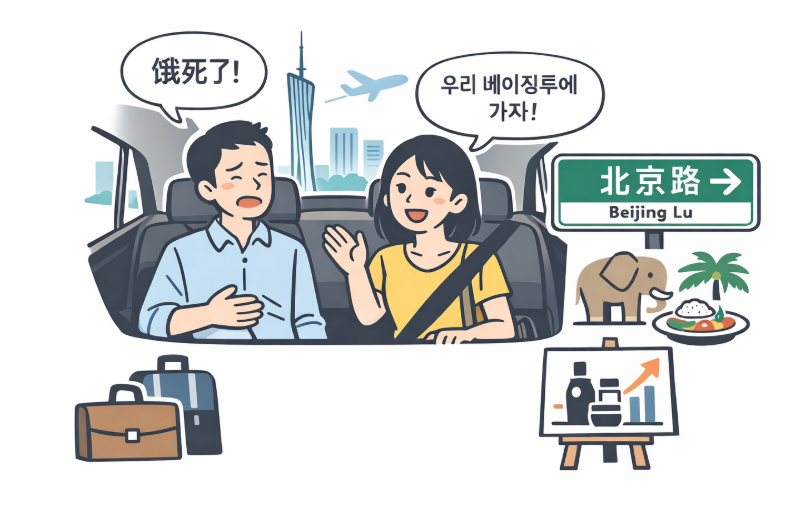
“자~ 오늘 일은 무사히 잘 마쳤고, 내일은 자유롭게 화장품 용기 시장조사만 하면 되니…. 우리 어디 좋은데 가서 저녁식사나 할까? 점심도 못 먹어서 배가 고파 죽겠네~”
김현웅은 죽겠다는 제스쳐로 배를 움켜잡고 허리를 약간 굽히며 말했다. 중국어에는 우리나라 처럼 다양한 존칭어 표현이 없다. 영어의 Please와 같이 청한다는 의미의 칭(请)이란 말을 명령어의 앞에 붙이면 존칭해서 부탁하는 표현이 된다.
즉, ‘앉으세요’를 영어로 ‘Please sit down’ 하는 것 처럼, 앉는다는 의미인 좌석 할 때의 좌(坐,주어) 앞에 칭을 붙여 칭주어(请坐)하면 된다. 김현웅과 마카이는 같은 동갑내기라서 이런 식의 존칭표현을 서로 쓰고 있지 않았기 때문에, 이제부터는 서로 말을 놓고 친구처럼 편하게 대화하는 걸로 표현하였다.
또한 중국어에도 죽겠다는 표현으로 죽을 사(死)자를 말에 붙여 쓰는 경우들이 있다. 예를들어 방금 김현웅의 말처럼 ‘배고파 죽겠다’라고 할 때는 배고프다는 뜻의 어(饿) 뒤에 사(死)가 붙어, 어쓰러(饿死了)라고 한다. 같은 방식으로 ‘피곤해 죽겠다’는 레이쓰러(累死了)가 된다. 이런 거 보면 배고프고 피곤한 건 한국이나 중국이나 모두 죽도록 힘든 일인가 보다.
마카이는 쟝수성 수저우(소주,蘇州)에 있는 대학에서 디자인을 전공 후 중국회사에 취직하여 출장으로 광저우에 여러 번 다녀 본 경험이 있었다.
지난 번 나랑 같이 출장 왔을 때는 총경리인 내가 어렵기도 했고 일정이 너무 촉박하여 경황이 없었던 관계로 제대로 식사할 시간도 없었지만, 이번에 모처럼 다시 광저우에 오니 전 직장에서 자주 갔었던 태국 음식점에 꼭 다시 가보고 싶었다. 그래서 김현웅이 저녁식사 얘기를 꺼내자 대뜸 대답하였다.
“현웅, 베이징루(北京路)에 가봤어? 그곳에 괜찮은 태국 음식점이 있는데, 분위기도 좋고 맛도 좋아.”
“베이징루? 내가 광저우에는 처음 오는 길인데 언제 가봤겠어? 게다가 태국음식이면 맨날 먹는 중국음식보다 훨씬 더 좋겠다. 우리 그리 가자~”
그들은 얼른 택시를 잡아타고 베이징루로 향했다. 이즘에서 중국을 잘 모르는 사람들을 헷갈리게 하는 것 중의 하나인 거리 이름에 대해 이야기 한번 해보자.
우린 이미 상하이에서 난징루(南京路)를 접해본 경험도 있다. 베이징이나 난징이란 도시 이름은 워낙 역사적으로도 유명해서 중국에 대해서 잘 모르는 사람도 잘 알 정도이다. 그런데 광저우 갔다는 사람이 베이징루에 갔다고 하는 경우, 잘못 들으면 광저우를 갔다 온 건지 베이징을 갔다 온 건지 도대체 아리송할지도 모르겠다.
중국은 대부분의 도시에서 거리 이름을 중국의 유명한 성(省)이나 도시 이름을 사용하기 때문이다. 그래서 여러 도시에 같은 거리 이름을 사용하는 것도 부지기수이다.
예를 들어 지금 나는 칭다오에서 매일 회사로 출근하기 위해 집이 있는 헤이롱장루(흑룡강로, 黑龙江路)를 지나 회사가 있는 충칭루(중경로, 中京路)로 출근을 한다. 그리고 칭다오 시내에는 쟝수성, 저장성, 안후이성 등 중국의 모든 성 이름이 붙은 거리들이 즐비해서, 차를 타고 시내를 한 바퀴 돌면 중국의 웬만한 성들은 다 가보고도 남을 정도이다.
따라서 종로나 테헤란로 처럼 거리 이름만 들어도 그곳이 서울인 것을 알 수 있는 것과는 달리, 중국에서는 거리에 붙여진 이름만 듣고는 그곳이 어느 성에 붙어있는 곳임을 파악하기는 쉽지 않음을 알아야겠다. (계속)

——————
By the time Kim Hyun-woong and Makai hurriedly boarded an early morning flight from Qingdao and flew three and a half hours to Guangzhou, it was almost lunchtime. Because the flight had been delayed by about thirty minutes, they rushed out of the airport and immediately joined the long taxi line to head to their reserved hotel. After nearly an hour’s drive, they arrived to find the container company’s sales representative already waiting for them.
Apologizing for being late, the two quickly checked into two separate rooms, dropped off their luggage, and came right back down to the lobby. The factory was about two hours away from the hotel. Having only managed to eat the terrible in-flight meal for breakfast, they were starving—but despite their growling stomachs, they had no time for lunch and headed straight to the factory.
The visit went smoothly. The company primarily produced food-related glass containers such as soy sauce and beer bottles, operating at full capacity with massive production volumes. However, it had only recently begun venturing into cosmetic containers as part of a high-value diversification strategy.
Although our current order volume was small, both companies shared a long-term vision of expanding in the cosmetics sector. In that sense, presenting the company introduction and long-term vision—prepared in advance—was an appropriate move.
Following their checklist, the two gathered detailed information about the factory, established quality standard samples for the cosmetic containers, reviewed the production schedule, and left after firmly requesting that deliveries proceed without delay.
“Well~ today’s work went smoothly, and tomorrow we just need to conduct some market research on cosmetic containers… Should we go somewhere nice for dinner? I’m starving to death since we didn’t even get lunch!”
Hyun-woong said this while clutching his stomach and bending slightly at the waist in an exaggerated gesture.
Unlike Korean, Chinese does not have a wide range of honorific expressions. To make a request politely—similar to adding “please” in English—the word qing (请) is placed before a verb. For example, just as “Please sit down” is used in English, adding qing before “sit” (坐, zuò) makes qing zuò (请坐).
Since Hyun-woong and Makai were the same age, they did not use formal expressions with each other. From this point on, they spoke casually like friends.
Chinese also uses the character for “death” (死, sǐ) in expressions to emphasize intensity. For example, “I’m starving to death” becomes è sǐ le (饿死了), with sǐ added after “hungry” (饿). Similarly, “I’m exhausted to death” becomes lèi sǐ le (累死了). It seems that being hungry and tired is painfully universal in both Korea and China.
Makai had majored in design at a university in Suzhou, Jiangsu Province, and after joining a Chinese company, had traveled to Guangzhou several times on business.
When she had come previously with me, I was the general manager and the schedule had been too tight to enjoy a proper meal. But now, returning to Guangzhou after some time, she wanted to revisit a Thai restaurant she used to frequent during her previous job. So when Hyun-woong mentioned dinner, she immediately replied:
“Hyun-woong, have you ever been to Beijing Road? There’s a nice Thai restaurant there—the atmosphere is great and the food is delicious.”
“Beijing Road? This is my first time in Guangzhou—when would I have gone? And if it’s Thai food, that’s way better than the Chinese food we eat every day. Let’s go there!”
They quickly grabbed a taxi and headed to Beijing Road.
At this point, let’s talk about something that often confuses people unfamiliar with China—street names.
We’ve already encountered Nanjing Road in Shanghai. Cities like Beijing and Nanjing are historically famous, so even people who know little about China recognize their names. But if someone says they went to Beijing Road while visiting Guangzhou, it might sound confusing—did they go to Guangzhou or Beijing?
The reason is that in most Chinese cities, street names are often taken from the names of famous provinces or cities across China. As a result, it is very common for different cities to share identical street names.
For example, in Qingdao, where I live, I commute to work every day by passing Heilongjiang Road—where my home is located—and heading to Chongqing Road, where the company is. In downtown Qingdao alone, you can find streets named after Jiangsu Province, Zhejiang Province, Anhui Province, and nearly every other province in China. If you drove around the city, you could practically “visit” most of China’s provinces just by reading the street signs.
Therefore, unlike in Korea—where hearing a street name like Jongno or Teheran-ro immediately tells you that you are in Seoul—in China, hearing a street name alone does not make it easy to determine which province or city you are actually in.
(To be continued.)