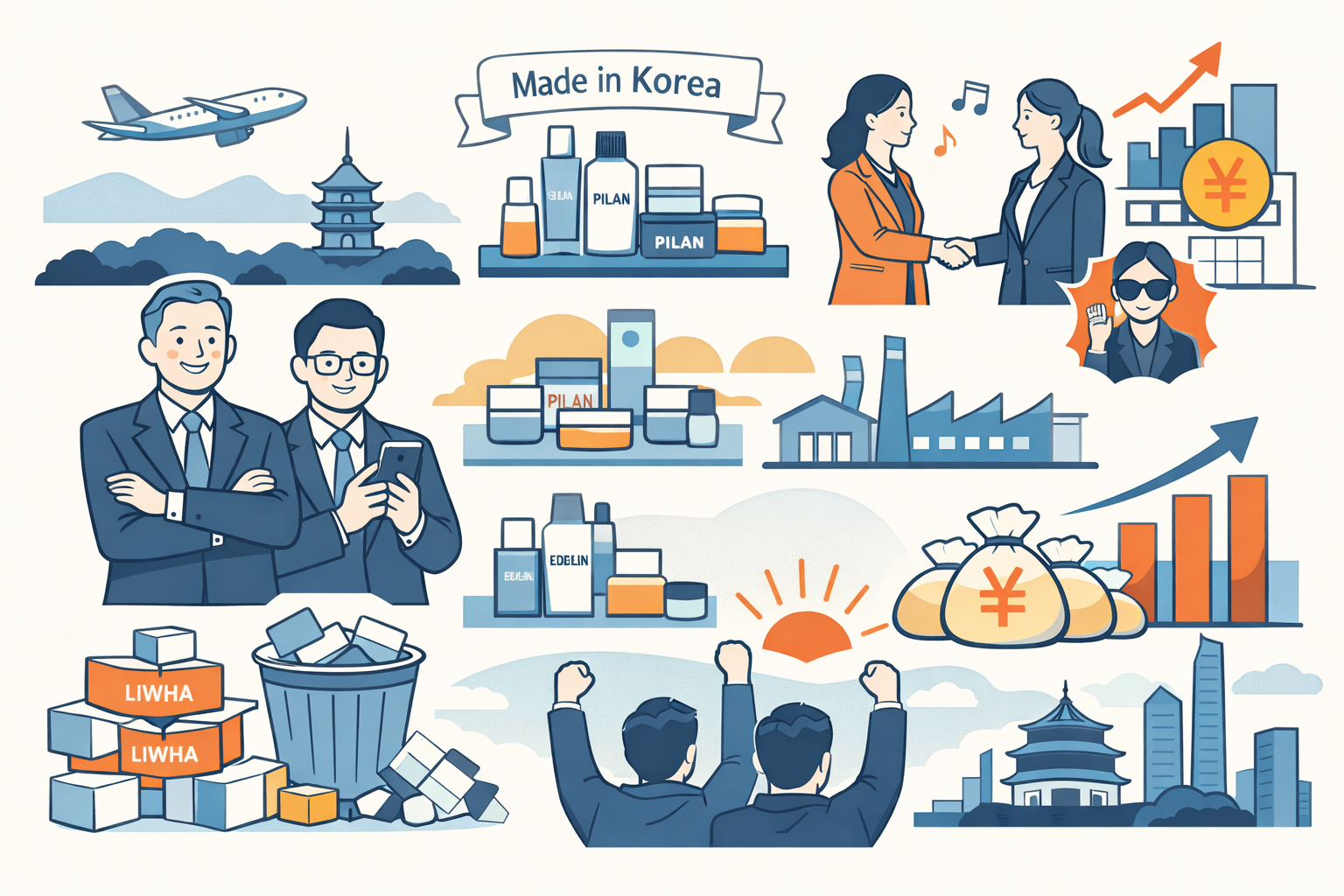
한편 장상무는 전 직장인 W사에서 거래했던 저장성 항저우의 대리상을 10월에 접촉하여 11월부터 우리와 거래를 트기로 하였다. 초창기 한국에서 샘플로 들여왔던 필란을 제시했더니 고가시장인 항저우의 대리상은 Made in Korea의 고품질 필란을 무척 마음에 들어했으며, 무엇보다도 나와 갈등을 일으키기도 했던 무리할 정도의 대리상 지원정책이 그녀에겐 만족스럽기도 하였기 때문이다.
그런 조건에서 그녀가 우리를 마다할 이유는 하나도 없었다. 단지, 필란을 제외하고는 이렇다 할 다른 품목이 없는 상황에서, 간신히 11월이면 뷰티끄가 자리를 채워주긴 하겠지만, 그래도 턱 없이 부족한 제품 구색이 가장 큰 문제였다.
그리고 이제 우리에겐 처치 곤란한 리화화장품 제품이 짐더미가 되어 오히려 비용을 들여서까지 폐기 처분해서 큰 손실을 감수할 일만 남아 있었다. 그러나 민대표는 유통기한이 1년이나 남은 리화화장품 제품이 무엇이 문제냐며, 무조건 팔아내라고 명령하였다.
그는 과거 한국에서 출시했던 남성용 브랜드를 3년이 지난 후에도 사용한 적이 있는데, 아무 문제가 없었다며 막무가내로 고집을 피웠다. 나도 이럴 때면 그가 과연 진정 소비자의 입장에서 생각하는 마케터 출신인지가 의심스럽기도 할 정도였다.
하지만 그게 사장이 명령한다고 그리 쉽게 될 일이겠는가? 고객이 구매하고 싶어하질 않는데…. 결국 우리는 극단적인 조치로 리화화장품 제품을 폐기하느니 차라리 판촉으로 쓰도록 무료로 주기 시작하였는데, 그것도 마지못해 사용했다가 나중엔 항저우 창고에 쓰레기처럼 쌓인 것들을 결국 모두 버려야만 했었다. 참으로 수억 원의 거액을 주고 쓰레기 같은 제품을 매입한 대가를 톡톡히 치른 것이다.
그래도 다행이었던 것은 예정보다 5개월이나 늦으며 한국법인에서 질질 끌었던 필란의 위생허가를 그래도 10월 중에 받아 정식수입을 할 수 있게 되었고, 내가 중국에서 뷰티끄를 개발하는 동안 한국법인 장상무에게 개발하도록 했던 미백화장품 에델린의 개발이 완료됐다는 것이다.
그러나 에델린을 정식으로 수입하려면 위생허가를 받는데 1년이나 걸리기 때문에, 당분간만 편법으로 에델린을 내용물 따로 용기와 따로 수입해서 중국 공장에서 충진만 하는 방법으로 생산하기로 하였다.
그 결과 12월부터는 에델린 브랜드도 회사의 주요 브랜드 라인에 편입될 수가 있게 되어, 4월부터 준비한 나의 브랜드 포트폴리오 전략은 6개월 만에 빛을 보게 된다. 그리고 내년 봄 즈음에 뷰티끄 하위 브랜드로 두 가지만 더 나오면, 부족하지만 어느 정도는 만족스런 브랜드 진용을 구축할 수가 있게 될 것이다.
한편 민대표는 장상무와 함께 직접 항저우로 출장을 가서 사업설명회에서 그 특유의 열띤 강의를 하였는데, 이때 내가 중국에 오기 전부터 준비했던 필란의 한국 연예인 협찬 결과와 민대표의 한국에서의 높은 인지도를 전면에 내세운 스타 마케팅이 중국인 고객들에게 크게 신뢰성을 주게 되어 결과는 성공적이었다.
그런 노력들이 하나로 집대성된 결과 항저우 대리상은 첫 달에 소비자가 기준으로 7십만위엔(약 1억2천만원)을 매입하였다. 이는 지금까지 안후이성의 리화화장품 잔당들이 6개월간 거둔 실적과 비슷한 수치였다.
한 명의 대리상이 이런 성과를 내리라고는 상상도 못했던 결과였으며, 일약 장상무는 민대표에게 높이 인정 받게 되는 계기가 되었다. 또한 비록 몸은 칭다오에 떨어져 있었어도 문자 메세지를 받은 나와 송부장은 함께 환호성을 지르며 크게 기뻐하기도 한 역사적인 순간이었다.
비록 다음 달 항저우 대리상은 기대했던 1백만위엔을 달성하지 못하고 8십만위엔(1억4천만원)에 머물렀지만, 이것이 시작이었다. 먼 중국 땅, 거대한 대륙에 와서 비로소 우리가 진정으로 첫발을 내 딛는 순간이었다. (계속)
————–
Meanwhile, Executive Director Jang contacted a distributor in Hangzhou, Zhejiang Province—one that he had previously worked with at his former company W—in October, and arranged to begin transactions with us starting in November.
When we presented Pilan, which had initially been imported as a sample from Korea, the Hangzhou distributor—operating in a high-end market—was highly impressed with the premium quality of the “Made in Korea” Pilan products. Above all, the aggressively supportive distributor policy, which had even caused friction between her and me in the past, turned out to be quite satisfactory from her perspective.
Under such conditions, there was absolutely no reason for her to refuse working with us. However, aside from Pilan, we had virtually no other product lines to offer. Although Beautique was expected to partially fill the gap by November, the severely limited product portfolio remained the most critical issue.
At the same time, we were left with a large inventory of Liwha Cosmetics products that had become more of a liability than an asset, to the point where disposal at additional cost seemed inevitable. Nevertheless, CEO Min insisted that since the products still had a full year remaining before expiration, there was no issue and ordered us to sell them unconditionally.
He stubbornly argued that he had personally used a men’s brand launched in Korea even after three years without any problems. At times like this, I seriously questioned whether he truly had the mindset of a marketer who considers the consumer’s perspective.
However, things do not work simply because the CEO gives an order—especially when customers have no desire to purchase. In the end, rather than discarding the Liwha products, we resorted to the extreme measure of distributing them for free as promotional items.
Even then, they were reluctantly accepted, and eventually, the unsold inventory piled up like garbage in the Hangzhou warehouse and had to be completely discarded. It was a costly lesson, having paid an enormous sum—amounting to hundreds of millions of won—for what ultimately became worthless inventory.
Fortunately, despite being delayed by five months due to prolonged procedures at the Korean headquarters, Pilan finally received its hygiene certification in October, allowing for official importation. In addition, while I was developing Beautique in China, the whitening cosmetics line Edelin—assigned to Executive Director Jang at the Korean office—was also successfully completed.
However, obtaining hygiene certification for Edelin would take approximately one year. Therefore, as a temporary workaround, we decided to import the contents and packaging separately and carry out the filling process at a factory in China.
As a result, starting in December, the Edelin brand was incorporated into the company’s main brand lineup. The brand portfolio strategy I had been preparing since April finally began to bear fruit after six months. Furthermore, with the addition of just two more sub-brands under Beautique by next spring, we would be able to establish a reasonably solid brand lineup, albeit still somewhat limited.
Meanwhile, CEO Min and Executive Director Jang traveled to Hangzhou for a business briefing session, where he delivered his characteristically passionate presentation. At this event, the results of Pilan’s Korean celebrity endorsements—prepared even before my arrival in China—combined with CEO Min’s strong brand recognition in Korea, were leveraged as part of a comprehensive star marketing strategy. This approach significantly enhanced credibility among Chinese customers and led to a successful outcome.
As a culmination of these efforts, the Hangzhou distributor made a first-month purchase totaling 700,000 yuan (approximately 120 million KRW) at consumer price standards. This figure was comparable to the total sales achieved over six months by the remaining Liwha Cosmetics distributors in Anhui Province.
Such performance from a single distributor was beyond expectations, and it became a defining moment for Executive Director Jang to gain strong recognition from CEO Min. Although I was physically in Qingdao, upon receiving the message, Director Song and I celebrated together with great excitement—it was truly a historic moment.
Although the Hangzhou distributor did not reach the anticipated 1 million yuan in the following month and instead recorded 800,000 yuan (approximately 140 million KRW), this marked the beginning. It was the very moment we truly took our first meaningful step on the vast land of China. (To be continued)