

삼국 시대 이후 본격 수입된 불교는 우리 고유의 신교의 낭가 사상을 지워 버리고 우리 역사를 창업한 주인공들은 온통 불제자로 만들어 버렸습니다. 앞에서 살펴본 바와 같이 고려의 승려 일연은 한민족과 인류의 시원 국가인 환국의 초대 환인천제를 한낱 불법의 수호신으로 둔갑시켰습니다.
[삼국유사]를 지으면서 “석유환국(옛적에 환국이 있었다)”옆에 “위제석야謂帝釋也”라는 불교 교리에 따른 주석을 달았습니다. 환국을 제석의 환국으로 만들고, 환인천제를 불교에서 받드는 제석환인이란 신으로 둔갑시킨 것입니다.
우리 역사에 끼친 불교에 폐해는 이에 그치지 않습니다.
사찰에는 으레 석가모니를 모신 본전이 있는데, 본전에는 대웅전 곧 ‘큰 성인을 모신 성전’이라는 현판이 붙어 있습니다. 대웅전은 우리 조상들이 환웅전을 지어 배달을 개국한 초대 환웅천황을 받들어 모신 풍습을 변질시킨 것입니다.
불교 법화경에 석가모니를 위대한 영웅이라 표현했는데, 불교가 중국에 들어올 때 대웅이라고 번역하였고 석가모니를 봉안한 전각을 대웅전이라고 불렀습니다. 그런데 불교가 우리나라에 들어오면서 이 대웅전과 환웅을 모신 환웅전의 의미가 통하는 것을 알고 환웅전에 석가모니를 대신 앉혀 한민족의 고유한 환웅 숭배 신앙을 근절시키고 대신에 석가 숭배 신앙을 이 땅에 뿌린 내렸던 것입니다.
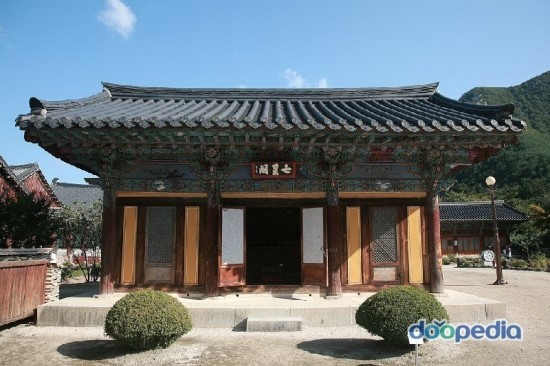
불교는 정착 과정에서 신교문화로부터 많은 영향을 받았습니다. 신교의 삼신사상과 칠성신앙이 불교에 흡수되어, 전국 사찰의 삼신각과 칠성각이 되었습니다. 삼신각은 우주의 조물주인 삼신을 모시던 신교 풍습의 자취이고, 칠성각은 인간의 수명과 복록을 관장하는 칠성에 대한 신앙의 흔적입니다. 불교의 명부전 또한 신교 전통을 변형시킨 것으로, 지장보살을 명부대왕으로 앉혀 신교의 원형을 훼손하였습니다.
또한 불교는, 북부여의 시조인 해모수단군의 건국을 기리기 위해 등을 달아 경축하던 민족 전래의 대축제일인 4월8일을 석가탄신일로 변조시켰습니다. 그 까닭은 당시 낯선 인물인 석가의 생일을 한민족에게 친숙한 해모수단군의 북부여 건국일과 동일한 날짜로 함으로써 이 땅에 불교를 빨리 정착시키고자 한 것입니다.
그리고 단군왕검께서 천제를 올린 유서 깊은 마리산摩利山을 마니산摩尼山이라 하고 불교식으로 개칭하기도 하였습니다. 요컨대 한국의 대표적 외래 종교 가운데 가장 오래된 불교는 전래 초기부터 우리의 전통 신앙인 신교를 퇴화시켰을 뿐만 아니라, 한민족의 역사를 불교사관으로 잘못 기록하는 폐해를 남겼습니다.

—————
Buddhism, which was formally introduced after the Three Kingdoms period, erased the indigenous Sin-gyo-based Nangga ideology and turned the founders of Korean history into nothing more than disciples of the Buddha. As previously mentioned, the Goryeo-era monk Iryeon distorted the historical figure Hwanin Cheonjae, the first sovereign of Hwan-guk — the primordial state of the Korean people and humanity — reducing him to a mere guardian deity within Buddhist doctrine.
In compiling the Samguk Yusa, Iryeon wrote, “Seok-yu-Hwankuk” (In the past, there was Hwan-guk), and annotated it with “Wi-je-seok-ya (謂帝釋也),” meaning “that refers to Indra,” aligning the text with Buddhist cosmology. This effectively transformed Hwan-guk into the realm of Indra, and Hwanin Cheonjae into a Buddhist deity, Je-seok Hwanin.
The harms inflicted by Buddhism on Korean history extend beyond this.
Buddhist temples customarily include a main hall that enshrines Shakyamuni Buddha, with a signboard reading Daeungjeon (Hall of the Great Hero). The origin of this term lies in the Lotus Sutra, where the Buddha is referred to as a great hero. When Buddhism spread into China, this title was translated as Daeung. The hall housing Shakyamuni was thus called Daeungjeon.
Upon Buddhism’s arrival in Korea, this title resonated with the already existing Hwanungjeon — shrines that honored Hwanung Cheonhwang, the founder of Baedal. The Buddhist establishment deliberately supplanted Hwanung in these halls with Shakyamuni, replacing Korea’s ancestral Hwanung veneration with a new Shakyamuni-centered faith.
During its localization process, Buddhism absorbed numerous elements of the native Sin-gyo tradition. The Samshingak (Shrine of the Three Divine Creators) and Chilseonggak (Shrine of the Seven Stars) found in temples today are remnants of this syncretism. Samshingak originates from the Sin-gyo belief in the three cosmic creators, and Chilseonggak preserves traces of the traditional belief in the Seven Stars, deities thought to govern human lifespan and fortune. Even Myeongbujeon (Hall of the Netherworld Kings), a Buddhist structure, is a modified form of a Sin-gyo tradition, where Ksitigarbha Bodhisattva (Jijang Bosal) was positioned as the ruler of the afterlife, thus distorting the original cosmology.
Furthermore, Buddhism appropriated April 8, which was originally a grand national festival commemorating the founding of Bukbuyeo by Haemosu Dangun. This day, celebrated by lighting lanterns in his honor, was replaced with Seokga Tansinil (Buddha’s birthday). The rationale behind this was to ease the unfamiliar concept of Shakyamuni’s birth into Korean consciousness by aligning it with the already familiar founding date of Haemosu’s kingdom, thereby accelerating the spread of Buddhism in Korea.
Additionally, the sacred site of Marisan, where Dangun Wanggeom conducted heavenly rites, was renamed Manisan, a Buddhist term, effectively reframing the spiritual geography in Buddhist terms. In sum, Buddhism, the oldest of Korea’s major foreign religions, not only displaced the indigenous Sin-gyo belief system from the outset, but also misrepresented Korean history through a Buddhist historiographical lens.