- 객관적 기준(Standard) 설정: 상대방과 우리측 모두에게 설득력 있는 객관적 기준을 모아, 상호 인정할만한 기준을 정해둔다. 이를 위해선 다음과 같은 사항들을 검토할 필요가 있다.
비슷한 선례가 있는가?
표준화된 시행 지침이 있는가?
관련 법규나 관습이 있는가?
객관적인 기준이 없다면 대신할 만한 공정한 절차는 있는가?
합의에 꼭 포함되어야 할 사항은 무엇인가?
상대방이 자신의 관계자를 어떻게 납득하게 할 것인가?
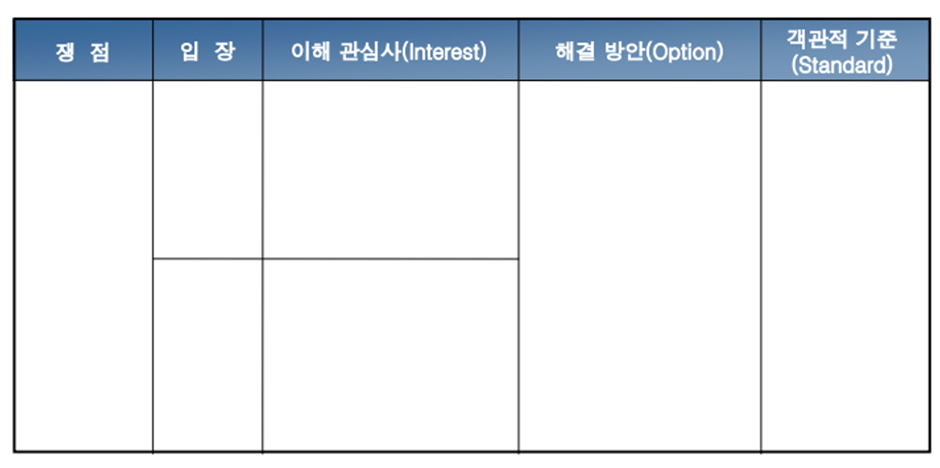
이를 통해 쟁점-입장-이해관심사-해결방안-객관적 기준을 다음과 도표처럼 정리해서, 협상에 대비할 수 있다.
- 협상카드 개발: 앞서 협상은 ‘이기지 않으면 진다’라는 경쟁적인 관계가 아닌, 쌍방이 만족할 수 있게 되는 협동적인 관계이어야 한다고 했다. 혼자만 이기는 게임이 아니라, 서로 Win-Win 할 수 있는 최선책을 만들기 위해 노력해야 한다는 것이다. 그렇기 위해선 가능한 정량적인 금액으로 환산해서 득실을 사전에 치밀하게 계산하여, 합의가 가능한 범위를 설정하는 것이 좋다. 그리고 그 범위 내에서 절대 양보가 곤란한 카드인 블루칩(Blue chip)과 양보가 가능한 카드인 바게닝 칩(Bargaining Chip)을 구분해 둔다.
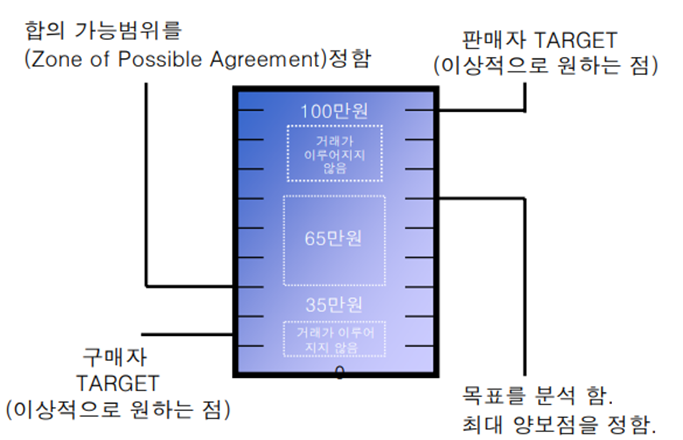
그런 후 협상을 위한 최적의 선택 안들인 BATNA (Best Alternative To a Negotiated Agreement)를 반드시 설정해야 한다. BATNA는 내가 원하는 최선책에서 차선책, 그리고 최후 양보선을 설정하고 가장 최적의 제안사항을 만드는 것이다.
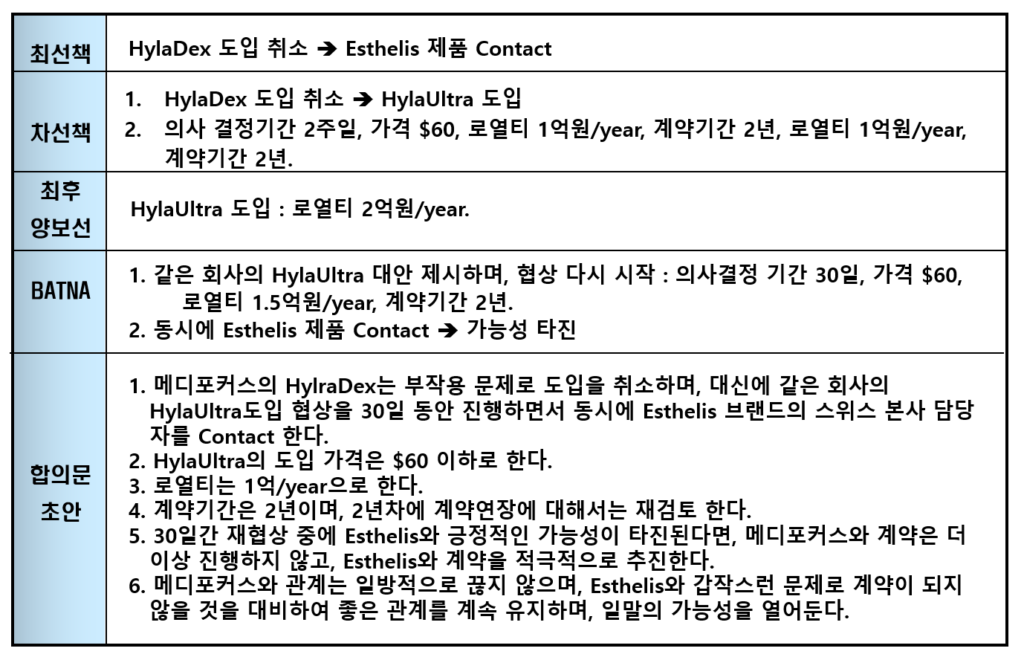
아래 사례는 내가 LG생명과학에 다닐 때, 외국산 필러(Filler)을 수입하는 과정에서, 여러 제품을 검토한 결과 최선책으로 에스텔리스 제품을 수입하기 위해 만들었던 BATNA 사례이다. 물론 결론적으로 에스텔리스 수입에 성공한 LG생명과학은 그후 피부미용시장에 진출해서 시장을 개척하였고, 나중엔 자체개발한 국산 필러로 한국은 물론 중국시장까지 필러시장을 휩쓸었다.
앞서 중국 C사에서 BATNA도 없이 홀로 무작정 하얼빈에 갔던 영업이사의 사례처럼, BATNA가 없으면 협상에서 궁지에 몰릴 수밖에 없다. 이렇듯 협상은 철저히 준비해야 할 전략적 과정으로써, 전략이 없으면 성공하기 어렵다는 사실을 명심해야 한다.
____________________________
Establishing Objective Standards: Gather objective standards that are convincing to both parties and establish mutually recognizable criteria. To do this, it is necessary to review the following points:
- Are there similar precedents?
- Are there standardized implementation guidelines?
- Are there relevant laws or customs?
- If there are no objective standards, are there fair procedures that can be used instead?
- What must be included in the agreement?
- How will the other party convince their stakeholders? Through this, issues, positions, interests, solutions, and objective standards can be summarized as shown in the table below to prepare for negotiations.
Developing Negotiation Cards: Previously, it was mentioned that negotiations should not be a competitive relationship of ‘win or lose,’ but a cooperative relationship where both parties can be satisfied. The goal is to strive for the best solution that results in a Win-Win scenario for both parties. To do this, it is advisable to calculate gains and losses in advance by converting them into possible quantitative amounts, and set a range within which agreement is possible. Within that range, distinguish between the blue chip, which is a card that is difficult to compromise on, and the bargaining chip, which is a card that can be compromised on.
After that, you must set up the best options for negotiation, known as BATNA (Best Alternative To a Negotiated Agreement). BATNA involves setting up the best-case scenario, the second-best scenario, and the final concession line, and making the most optimal proposal.
The following case is an example of BATNA I created when I was at LG Life Sciences, for importing a foreign filler product. After reviewing various products, we aimed to import the Estelis product as the best option. Consequently, LG Life Sciences succeeded in importing Estelis, entered the skincare market, pioneered the market, and later swept the filler market in Korea and China with domestically developed fillers.
As seen in the case of the sales director from Company C in China who went to Harbin without BATNA, one can only be cornered in negotiations without a BATNA. This emphasizes that negotiation is a strategic process that requires thorough preparation, and without strategy, success is difficult to achieve.