

나는 마케팅이란 모든 사람들이 하고 있는 생활 그 자체라고 생각한다. 가정에서 가족을 위해, 직장에서 상사, 부하, 동료 등의 이해관계자들에 대해, 그리고 친구들과 지속적인 우정을 위해, 사랑하는 애인과 결혼에 골인하기 위해, 우리는 항상 그들(고객)을 만족시키기 위해 자신도 모르게 마케팅 활동을 하고 있다고 생각한다.
하지만 많은 사람들은 영업과 마케팅을 혼동하고 있으며, 특히 자영업으로 매장을 운영하거나 방문판매를 하는 사람들은 그들의 활동이 마케팅이 아니라 영업이라고 생각하는 경우가 많다.
그리고 특히 영업에 대해서, 과거 많은 사람들은 영업이란 몸으로 때우는 것이거나, 인간관계가 가장 중요하다고 말들을 해왔을지도 모르겠다. 그래서 세일즈맨들은 주로 술도 잘 마시고 외향적이며 사람도 잘 사귀는 사람들이 해왔을 것이다.
하지만 내가 느낀 바로는 영업은 매우 세심하고 치밀하고 꼼꼼한 업무이다. 덤벙대는 사람이 대충 좋은 관계만으로 지속할 수 있는 일이 아니다. 그리고 처음엔 인간관계로 시작했더라도 고객에게 이익이 돌아가지 못하면 아무리 좋은 관계라도 단번에 깨질 수 있는 것이 냉정한 영업의 세계이다.
그렇기 때문에 영업하는 사람들도 판매자의 관점이 아니라 고객의 관점에서 생각하는 마케팅을 이해하고, 고객만족을 위하여 논리적이고 치밀하게 전략을 수립해서 일을 수행해야 한다.


그런 점에서 마케팅이란 말과 떨어질래야 떨어질 수 없는 단어가 하나 있으니, 바로 전략이란 단어이다. 요즘 전략이란 말은 마케팅전략뿐만 아니라 어느 곳에서도 흔히들 붙여 쓴다.
마케팅이 생활의 일부분이 되었듯이, 영업전략, 주식전략, 부동산전략, 국가전략, 결혼전략 등등…, 전략도 이미 우리들 생활의 한 부분이 되어버렸다. 그런 점에서 전략이란 도대체 무엇이기에 이토록 매사에 전략을 잘 세워야 한다고 말하는지 전략에 대해 한번 살펴보겠다.
“전략이란 무엇인가?”


전략(戰略)이란, 말 그대로 전쟁을 이기기 위한 책략이다. 한자를 풀어보면 전쟁(戰)에서 략(略)을 하는 것이고, 략(略)을 다시 풀어보면 밭 田+ 각 各이다. 여기서 밭 田은 모양 그대로 반듯하게 구획되고 정리가 된 것이며, 各은 입구(口)에 도달(止)한다는 의미이다.
즉, 제대로 계획하여 목적지에 도달하게 하는 것이 바로 략(略)인 것이다. 한자적인 의미의 전략이란 결국 전쟁에서 이기기 위한 계획을 수립하고, 그 계획에 따라 싸워서 승리라는 전쟁의 목적지에 도달하는 것이다.
전략을 영어로 스트래티지(Strategy)라고 하는데, 이 말 역시 그리스 어원 Strategia에서 나온 말로 전쟁에서 적을 속이는 술책이라는 의미라고 한다. 지금은 전략이란 말이 여러 분야에서 더 광범위하게 쓰이고 있지만 원래 과거의 전략은 전술과 별반 다르지 않은 의미로 쓰여왔다.
이렇게 우리가 흔히 사용하고 있는 경영학이나 마케팅 용어들은 상당부분이 군사적 용어에서 유래해 온 것들이 많다. 따라서 과거 전쟁에서 이기기 위한 전략은 지금 현대 사회를 살아가는 우리에게 있어서도 변함없이 경쟁자에게 이기기 위한 전략인 것이다.
전략이란 단어의 한자나 영어가 가지는 의미를 살펴보면 ‘목적 달성을 위한 올바른 계획과 실행’이란 말을 키워드로 찾을 수가 있다. 흔히들 전략을 단순히 기획/계획으로만 이해하는데 전략에는 반드시 목표가 있어야 하고 실행이 뒤따라야 한다.
그러나 만약 실행이 잘못되었다면 한번 실시한 것이라고 무조건 계속 끌고 갈 수는 없는 일이다. 따라서 전략은 목표달성을 위하여 실행을 계속 관찰하고 잘못된 것을 수정 보완하는 피드백(Feedback)이란 자정 능력이 필요하다.

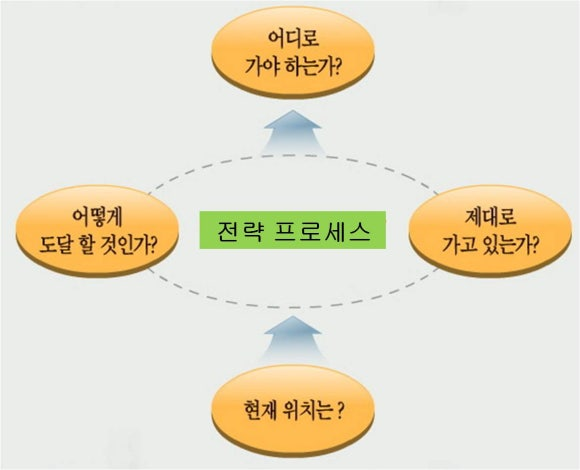
과거 전쟁에서 비롯된 전략은 현대 사회에 와서는 경영과 마케팅 전략으로 기업의 매출과 이윤 극대화를 위한 것으로 보편화되었고, 그 의미도 어원과는 달리 더욱 확장되어 왔지만, 그 근본인 네 가지 단어 – 목표, 계획, 실행, 그리고 피드백은 변함이 없어야 한다.
—————-
Marketing is essentially the life that everyone is already living. At home for the sake of family, at work for stakeholders like bosses, subordinates, and colleagues, in friendships to maintain lasting bonds, and even in romantic relationships in pursuit of marriage, we are constantly engaging in marketing activities—often unconsciously—to satisfy others (customers).
Yet many people confuse marketing with sales. Especially among those running small businesses or engaging in door-to-door sales, there is a tendency to perceive their activities strictly as sales, not marketing.
In particular, regarding sales, people have often thought of it as something achieved through physical effort or reliant primarily on interpersonal relationships. This is likely why salespeople have traditionally been sociable, extroverted individuals who are good at drinking and mingling.
However, in my view, sales is a highly detailed, meticulous, and calculated task. It’s not something that can be sustained simply through superficial rapport. Even if a relationship begins through personal connections, if the customer does not ultimately benefit, that bond can be instantly broken. Such is the cold reality of the sales world.
Therefore, salespeople must approach their work not just from the seller’s perspective, but through a marketing mindset that considers the customer’s point of view. To truly achieve customer satisfaction, they must formulate strategies with logical and detailed precision.
In this context, one word becomes inseparable from marketing: strategy. These days, “strategy” is not limited to marketing strategy—it is frequently used in various areas like sales strategy, stock strategy, real estate strategy, national strategy, marriage strategy, and so on. Just as marketing has become part of daily life, strategy too has become embedded in everyday living. With that in mind, one must ask: what exactly is strategy, and why is it so critical in everything we do?
What is Strategy?
The Korean word for strategy (전략) literally refers to a scheme to win a war. The Hanja (Chinese characters) for strategy are 戰 (war) and 略 (plan/scheme). Breaking down 略 further, it comprises 田 (field) and 各 (each). The field (田) symbolizes a space that is clearly defined and organized, while 各 indicates arriving at a destination via the mouth (口) and the stop (止). In essence, 略 signifies a well-organized plan that leads to a specific destination.
Thus, in its etymological sense, strategy is about setting up a structured plan to reach the destination of victory in war. The English word “strategy” also originates from the Greek “strategia,” meaning a general’s plan to deceive the enemy in battle. Although strategy today is applied in various non-military fields, it originally had similar connotations to tactics.
A significant number of management and marketing terms commonly used today are derived from military vocabulary. Consequently, just as military strategies were once used to win wars, modern strategies are used to win over competitors in business and life.
Both the Korean and English roots of the word “strategy” share the core idea: a proper plan and execution toward goal achievement. While some understand strategy merely as planning or scheduling, it must inherently include a goal and require execution.
Moreover, if execution fails, the plan should not be pursued blindly. Strategy must include a self-correcting function—feedback—to continually monitor and refine actions toward goal attainment.
Though strategy has evolved from its original military context to encompass corporate marketing and business practices aimed at maximizing revenue and profits, the four foundational elements—goal, plan, execution, and feedback—must remain constant.