

광동성의 성도인 광저우는 베이징, 상하이와 함께 중국을 대표하는 인구 1,400만 명의 대도시로서, 원래 광동어(홍콩어)를 사용하였다. 과거 내가 광저우에 처음 출장 왔을 때인 2002년만 해도 광저우에서 표준어(보통화)를 쓰는 사람이 그리 많지 않았다.
그것도 모르고 당시 아는 사람을 통해 조선족 통역을 조달하였지만, 같은 중국인인 그도 제대로 소통이 되지 않아 큰 곤욕을 치르기도 했을 정도였다. 그러나 10여 년이 지난 지금에 와보니 대부분의 사람들이 표준어를 다 쓰는 것이 신통방통하기도 하였고, 혹시 기껏 출장을 왔는데 말이 안 통하면 어쩌나 했던 일말의 우려가 사라지자 내심 다행스럽기도 했다.
역사적으로 광저우는 이미 한나라 때부터 해외무역을 시작하여 당나라 때 페르시아와 교역을 하였고, 청나라 때는 유럽 여러 나라로 교역을 확대하면서 중국 최대의 무역항으로 성장하였다. 이로 인해 광저우는 도매시장과 전 중국 내 유통의 물류 중심 도시로 형성되었고, 도시 외곽지역에는 많은 생산공장들이 들어서서 화장품뿐만 아니라 의류와 건축자재 등 수 많은 제품들의 부자재와 원료들이 생산되고 유통되는 도매물류의 허브 단지로 발전해왔다.
이곳의 대표적인 도매시장으로는 쭝따 원단 도매시장(中大布料市场), 셔링 피혁 및 피혁제품 도매시장 (花都獅嶺皮革皮具城), 싱파 화장품 도매시장 (兴发广场), 난안 건축자재 도매시장 (南岸裝飾材料市场), 용푸루 자동차부품 도매시장 (廣州永福汽配商街), 리우화후 의류 도매시장(流花湖服裝市场) 등이 있는데, 이중 내가 이번 출장 중에 집중적으로 방문한 곳이 바로 싱파광장(兴发广场)이라고 불리우는 화장품 도매시장이었다.
광저우는 전통적으로 도매시장과 함께 전중국으로 유통시키기 위한 도매물류가 잘 형성돼 있는데, 대표적인 도매시장으로는 광저우 쭝따 원단 도매시장(中大布料市場), 광저우 셔링 피혁 및 피혁제품 도매시장 (花都獅嶺皮革皮具城), 광저우 싱파 화장품 도매시장 (興發廣場), 광저우 난안 건축자재 도매시장 (南岸裝飾材料市場), 광저우 용푸루 자동차부품 도매시장 (廣州永福汽配商街), 리우화후 의류 도매시장(流花湖服裝市長) 등이 있다.
소매유통과 관련해서는 자생적으로 발전해온 곳과 현대적인 쇼핑몰 위주의 상권으로 나누어 볼 수 있는데, 전자의 경우는 보행 상업거리로 유명한 베이징루와 상시아지우루가 유명하며, 후자의 경우는 톈허청 일대, 중화광장 일대를 들 수 있다.
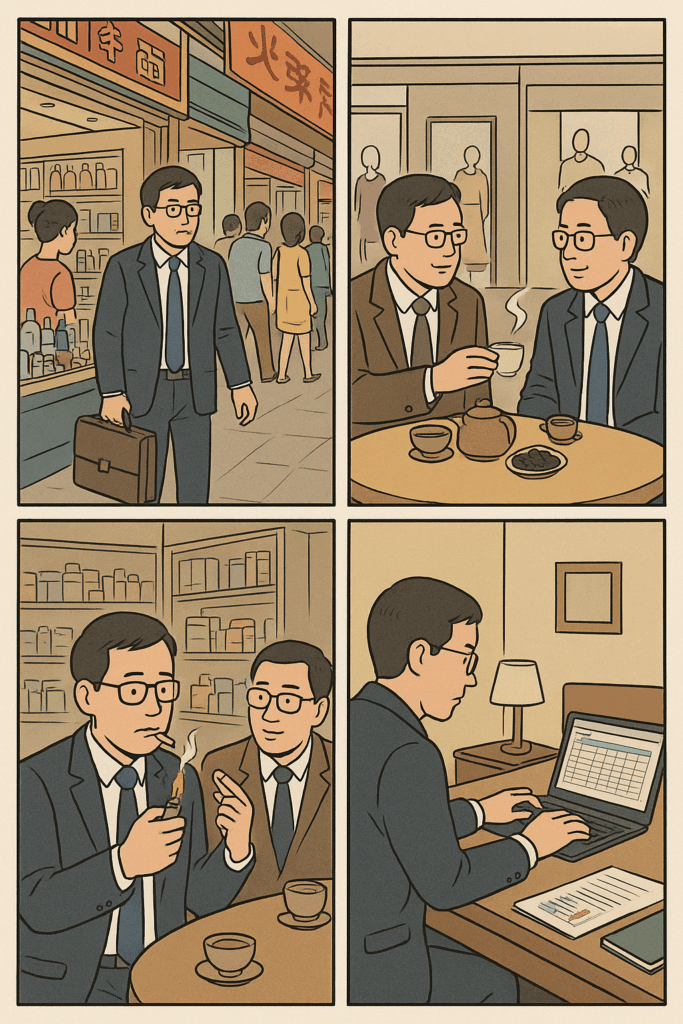
첫 날 이른 아침 비행기를 타고 광저우에 도착한 우리는 미리 예약한 호텔을 잡고 점심식사를 하자마자, 바로 숙소 인근 지창루(机场路)에 있는 싱파광장을 돌아봤다. 싱파광장은 수 많은 미용재료와 화장품 용기 및 각종 포장재들을 판매하는 생산업체들이나 중간 도매상들이 입주한, 마치 우리나라 용산전자상가 같은 대단위 화장품 종합단지이다.
이곳에는 각종 화장품 용기, 케이스, 포장지뿐만 아니라 미용기기, 재료, 거울, 소품가방, 판촉물 등, 여성들의 뷰티와 관련된 모든 물품들이 다 있었으며, 심지어는 한국산 화장품을 그대로 모방한 짝퉁제품도 버젓이 진열되어 판매되고 있었다.
그러나 아직 중국시장에서 색조제품은 시기상조인지 우리는 싱파광장에서 마음에 드는 색조용기를 찾을 수가 없어서, 둘째 날인 어제 싱파광장에서 10여분 거리에 있는 광위엔시루(广园西路)에 위치한 메이붜청(美博城)으로 자리를 옮겨, 그곳에 입주한 여러 업체의 견본을 보고 상담도 해봤지만, 대부분 싱파광장에서 본 용기들의 범주를 벗어나지 못하는 수준이라 큰 성과를 거두지 못하고 말았다.
특이한 것은 가는 업체마다 상담 테이블에 다기세트가 갖추어져 있어서 상담 중에 보이차를 마시기가 무섭게 계속 따라 주었는데, 차를 너무 마셔서 나중에는 차를 마시기도 힘들 정도였다.
또한 실내에서 아무렇지도 않게 담배를 피우는 그들은 상담자인 우리들의 의견과 상관없이 독한 중국담배를 피우면서 내게도 담배를 권하였는데, 내가 담배를 끊었기 때문에 피우지 않는다고 정중히 거절을 해도, 그들은 막무가내로 무조건 피우라고 담배 몇 가치를 내 앞에 내 던지듯이 주기도 하였다.
나는 결국 주변 사람들의 눈치를 보다가 예의 상 거절하지도 못하고 어쩔 수 없이 중국담배 한두 대를 피워야만 했는데, 참으로 곤혹스런 순간이 아닐 수 없었다. 그리고 이런 일들이 반복됨에 따라, 나는 수 년간 끊었던 담배를 지금까지 다시 피우게 되고 말았다.
그렇게 했음에도 불구하고 마땅한 결과를 얻어내지 못한 우리는 오늘 칭다오로 돌아가기 전에 마지막 남은 오전을 다시 첫 날에 갔던 싱파광장에 쏟아 붇기로 했지만, 내가 더 돌아 다닌다고 해결 될 일이 아니라 생각되어 나만 먼저 호텔로 돌아오고 만 것이다.
호텔로 들어온 나는 출장 중에 접한 용기견본의 사진과 단가를 엑셀표로 정리하고, 칭다오에서 쏟아져 들어오는 행사관련 이메일에 답을 주며, 한국본사 VIP들의 인사말을 검토 하는 등, 한시도 쉴 틈 없이 밀린 일을 하나 둘씩 처리해야만 했다. 한 회사를 창립해서 계획된 바대로 일을 꾸려 나가기도 힘든 판에, 이렇듯 우왕좌왕 예기치 못한 일에 시간을 허비하게 하는 것들이 나를 더욱 힘들게 하는 일이었다. – 계속 –

—————–
Guangzhou, the capital of Guangdong Province, is one of China’s major metropolises alongside Beijing and Shanghai, with a population of approximately 14 million. The city originally used the Cantonese dialect (similar to the language spoken in Hong Kong). When I first came to Guangzhou on a business trip in 2002, there were not many people who spoke Mandarin (Putonghua). Unaware of this, I had arranged for an ethnic Korean interpreter from China, but communication was still extremely difficult, even between two Chinese citizens. It was such an ordeal that I still remember it vividly.
However, when I returned more than ten years later, I was surprised to find that most people now spoke fluent Mandarin. I was relieved that my earlier worry about potential communication issues during the trip turned out to be unnecessary.
Historically, Guangzhou has been a center of foreign trade since the Han dynasty. During the Tang dynasty, it engaged in commerce with Persia, and in the Qing dynasty, trade expanded to numerous European countries, making Guangzhou China’s largest trading port. Consequently, the city developed into a logistics and wholesale distribution hub for the entire nation. Numerous factories were established in its suburbs, producing and distributing materials and components not only for cosmetics but also for clothing, construction materials, and many other products, transforming the area into a vast wholesale and logistics complex.
Representative wholesale markets in Guangzhou include the Zhongda Fabric Wholesale Market (中大布料市场), Huadu Shiling Leather and Leather Goods Wholesale Market (花都狮岭皮革皮具城), Xingfa Cosmetics Wholesale Market (兴发广场), Nanan Building Materials Wholesale Market (南岸装饰材料市场), Yongfuru Auto Parts Wholesale Market (广州永福汽配商街), and Liuhuahu Clothing Wholesale Market (流花湖服装市场). Among these, the one I focused on during this trip was the Xingfa Plaza (兴发广场), a large cosmetics wholesale market.
Guangzhou’s wholesale and logistics networks have long been well-developed to support distribution across China. The major markets include the Zhongda Fabric Wholesale Market, the Shiling Leather and Leather Goods Market, the Xingfa Cosmetics Market, the Nanan Building Materials Market, the Yongfuru Auto Parts Market, and the Liuhuahu Clothing Market.
In terms of retail distribution, Guangzhou has both organically developed traditional commercial streets and modern shopping mall districts. The former include the famous pedestrian streets of Beijing Road (北京路) and Shangxiajiu Road (上下九路), while the latter include areas such as Tianhecheng (天河城) and Zhonghua Plaza (中华广场).
After arriving in Guangzhou early in the morning on the first day, we checked into our reserved hotel, had lunch, and immediately headed to Xingfa Plaza, located on Jichang Road (机场路) near our accommodation. Xingfa Plaza is a massive cosmetics complex, similar in concept to Seoul’s Yongsan Electronics Market, housing numerous manufacturers and wholesalers that sell beauty materials, cosmetic containers, and various types of packaging materials.
The market offered an astonishing variety of items — from cosmetic bottles, cases, and packaging papers to beauty devices, raw materials, mirrors, accessory bags, and promotional products — essentially everything related to women’s beauty. There were even counterfeit products openly displayed for sale that imitated Korean cosmetic brands almost perfectly.
However, it seemed that color cosmetics were still premature for the Chinese market, as we could not find any satisfactory packaging for such products in Xingfa Plaza. Therefore, on the second day, we moved to Meibocheng (美博城) on Guangyuan West Road (广园西路), about ten minutes away, where we visited several companies to examine samples and hold discussions. Unfortunately, most of what we saw was similar to the items at Xingfa Plaza, and the meetings yielded little success.
Interestingly, every company we visited had a tea set prepared on the consultation table, and the hosts continuously poured Pu’er tea throughout the meeting, almost excessively. I drank so much tea that I eventually found it difficult to take another sip.
Moreover, smoking indoors seemed perfectly acceptable to them. Regardless of our opinions, they would light strong Chinese cigarettes during discussions and even insist that I join them. Although I politely refused, saying I had quit smoking, they would still toss a few cigarettes onto the table in front of me, insisting I smoke. Eventually, feeling pressured by their insistence, I had no choice but to smoke one or two cigarettes — a truly uncomfortable experience. As such encounters repeated, I eventually relapsed and began smoking again after several years of abstinence.
Despite all these efforts, we failed to achieve meaningful results. On the last morning before returning to Qingdao, we decided to spend our remaining time revisiting Xingfa Plaza. However, believing that further searching would not change the outcome, I chose to return to the hotel alone.
Back at the hotel, I organized photos and price lists of cosmetic containers we had collected, responded to numerous event-related emails from the Qingdao office, and reviewed greetings from our company’s VIPs in Korea. There was no time to rest. Running a newly established company and managing tasks as planned was already challenging, but wasting time on unforeseen, unproductive matters like this made it even more exhausting. – To be continued –